
 7.4
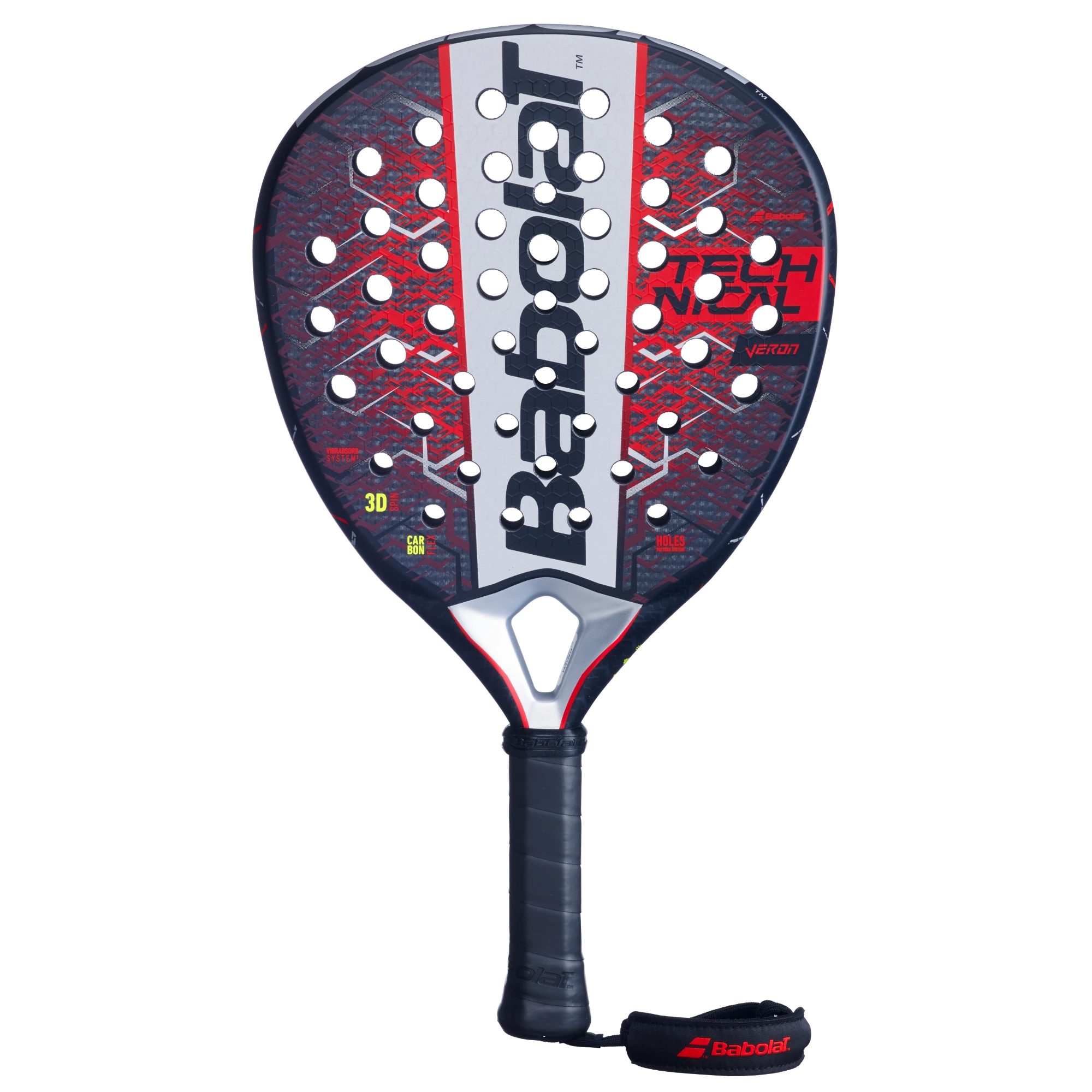
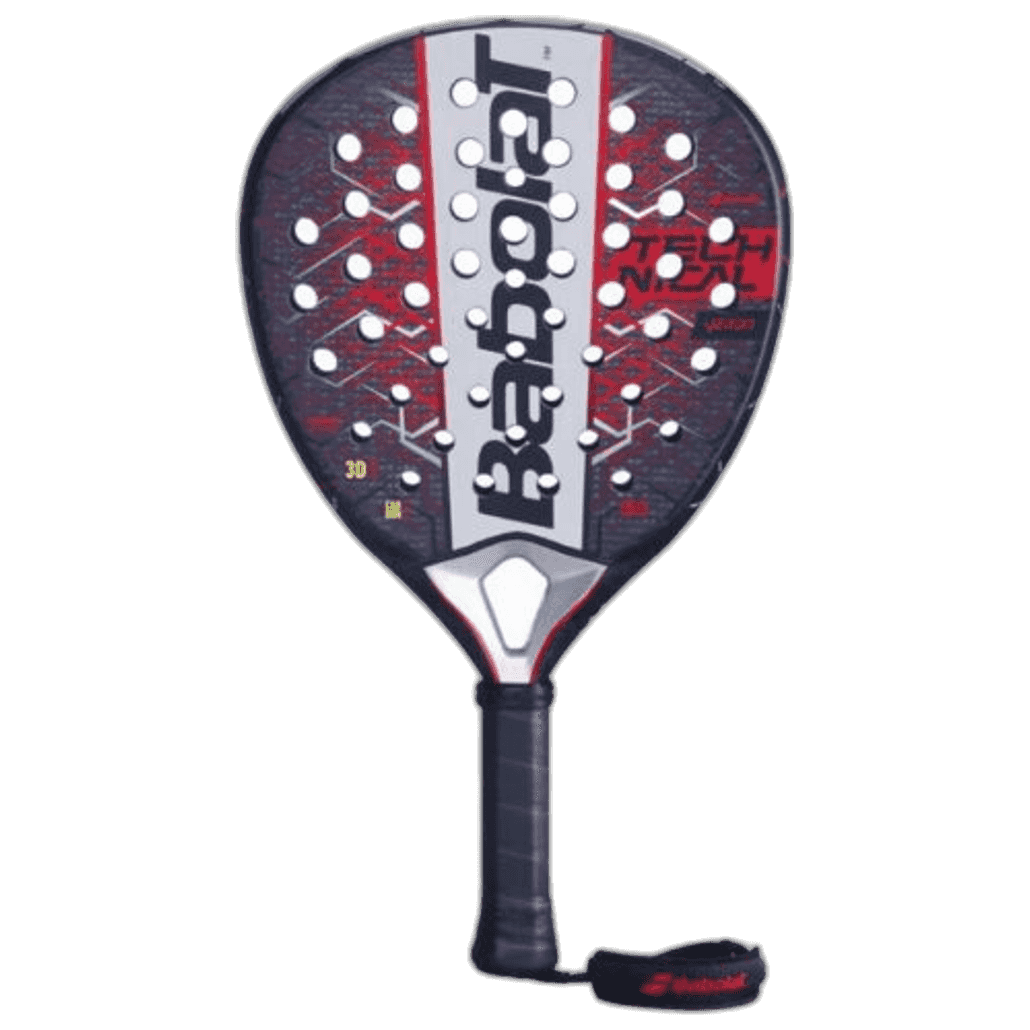
7.4Babolat Technical Veron 2025 Padel Racket
Babolat · 2025
Easy depth without a big swing
Ball escapes when you add pace and spin
PremiumHigh Intermediate
 7.5
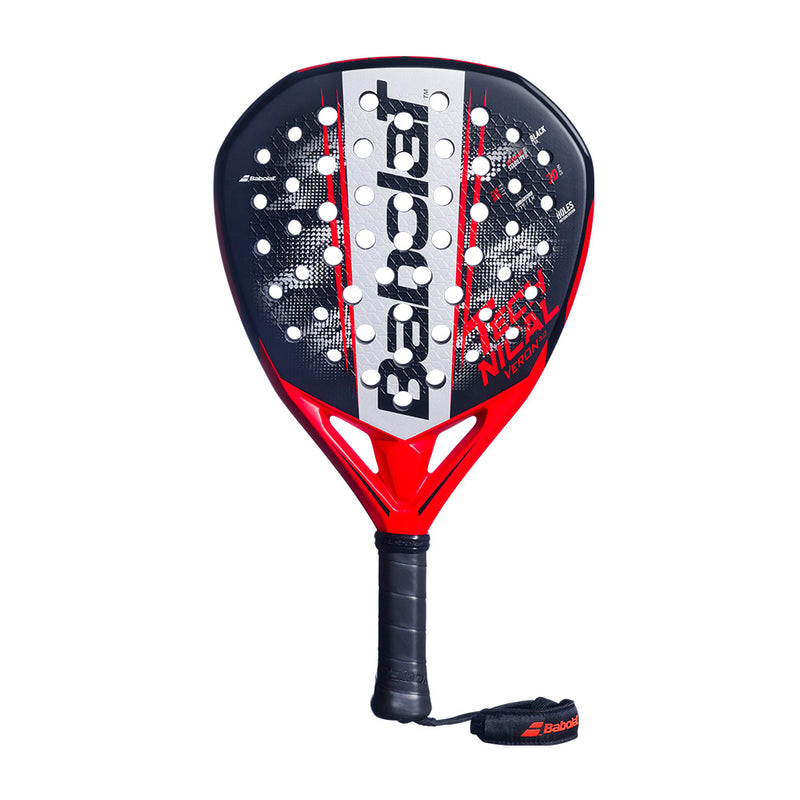
7.5The Technical Veron 3.0 2026 sits in the middle of Babolat's new Technical line: real overhead punch, reliable net play, and more margin on off-centre hits than the full-carbon Viper. It fits intermediate to high-intermediate players who want diamond-shape aggression without the full cost of a hard racket. Defence under pressure is the honest limitation.

Tactical right-side player who builds points and reads the game
Tactical right side player who is not afraid of using every trick in the book to "disturb the rhytm" of the opponent.
The Babolat Technical Veron 3.0 is the entry point into Babolat's entirely new Technical 3.0 line for 2026. Where the Viper and Viper Soft chase maximum power output through full carbon, the Veron uses a Carbon Flex face, carbon woven with fibreglass, to keep ball exit lively without the stiffness that comes with pure carbon. The mold is all new this season: a more angular diamond shape, wider sweet spot, and a redesigned throat that adds stability. On paper it looks like a pure power racket. On court, it behaves with more margin than you would expect from the shape.
What the Reviewers Say
Everyone testing the Veron 3.0 lands on the same core observation: this is the easiest racket in the Technical 3.0 line, but it still delivers real power. PADELREVIEW ENG's Emiliano Albin, who measured his sample at 366g with a 26.3 cm balance, described it as "a very balanced racket, easy to use, powerful enough, and with a really competitive price. Perfect for players who want performance without going for a super demanding racket." He scored overheads at 8/10 and ball exit at 8/10, while giving control 7/10, which tracks with a diamond racket that rewards timing.
The Padel Review Italian channel agreed, noting that "it generates power easily, without needing a high level of technique. The Carbon Flex helps a lot on defensive balls and makes the sweet spot feel bigger than it is" — a pointed distinction from the full-carbon Viper, where off-centre hits die more quickly.
pdhsports, testing all three Technical 3.0 models back-to-back on court, picked out the Veron as the best fit for intermediate players: "It's great for that intermediate player who wants the power but wants that softer feeling. The wider sweet spot allows for a few more misses." They also noted the new mold feels quicker through the air than previous Technical versions.
Zona de Pádel, testing the full 2026 Babolat collection, confirmed that the Veron reads as "more reactive than the Viper, the one that absorbs the ball the most" in the range. Their reviewer also flagged the head-heavy balance as a factor on smashes requiring precise timing, a consistent theme across sources.
Reviewers agree the Veron 3.0 is not a pro-circuit racket. No top players currently use it on tour. That is not a criticism at this price point and target level, but worth knowing if you follow professional play as a reference.
How it plays..
The Veron 3.0 is the pick if you want real overhead punch without needing technically perfect contact on every ball. Its relatively even balance at 26.3 cm keeps it manageable at the net, and the Carbon Flex faces give off-centre hits more room than the full-carbon siblings. Right-side players who build points through consistency rather than outright speed will find the controlled ball exit, reliable depth on lobs and stable directed volleys, better suited than the top-end Viper. The trade-off is defence: when you are stretched or late, the diamond shape and head-weighted feel do not help. It won't get you out of a tough position on its own.
Defense
From the back court, the Veron 3.0 holds up better than its diamond profile would suggest. When the ball arrives on time and you can swing through it, lobs come out with good depth and clean direction. The medium-feel Carbon Flex core means misfires do not die immediately. There is room for error. Under real pressure, when the pace is high or the ball sits awkward, the head-heavy balance makes placement harder to control. It is not a defensive racket, but it deals with defensive moments more cleanly than the Viper does.
Attack
Overheads are where this racket makes its case. They feel powerful without being uncontrollable, a good mix of ball speed and placement that reviewers consistently rated at 8/10 for smash. The Dynamic Stability System stiffens the frame enough to transfer energy without making the hand feel locked in. Víboras carry decent bite but ask for proper technique to get the full return. The racket gives you a clean, predictable platform to work with; it will not generate spin for you.
Netplay
At the net the Veron 3.0 is comfortable and direct. Volleys come off with authority and the frame holds steady under redirected pace. Fast hands exchanges are trickier: the diamond shape and longer handle slow transitions compared to a teardrop or round model. But if your game is about stepping in and making early contact, the ball exits reliably with good depth. The bandeja suits this racket well: easy to load, clean rebound, and it holds direction without requiring an aggressive swing.
Our Advice for New Players
The Veron 3.0 is not built for beginners. The diamond shape, head-heavy balance, and offensive character ask for solid technique and consistent racket preparation. If you are still developing groundstrokes and defensive movement, a round or teardrop model will give you more room to improve and be less punishing on off-timing.
Our Advice for Intermediate Players
This is where the Veron 3.0 fits best. Intermediate players who have solid basics and want to develop overhead play, attacking volleys, and more decisive finishing will find the Carbon Flex faces give the right amount of assistance without hiding all the flaws. It rewards improving technique without demanding perfection.
Competitive level
Advanced players who want a diamond shape with more forgiveness than the Viper should look here, particularly if net play is the priority over raw baseline power. Players who need maximum exit speed and hit consistently enough not to need the extra margin should step up to the Technical Viper 3.0. The Veron also works as a solid second racket for players who train a lot and want less physical cost on longer sessions.
How It Compares
The closest comparison is the Babolat Technical Viper 3.0 2026. The Viper is stiffer, the sweet spot is smaller, and it asks more from the player on every shot. It is the right call for advanced players who hit consistently and want maximum exit speed. The Veron fits intermediate to high-intermediate players who want the attacking shape without the full cost of a hard diamond.
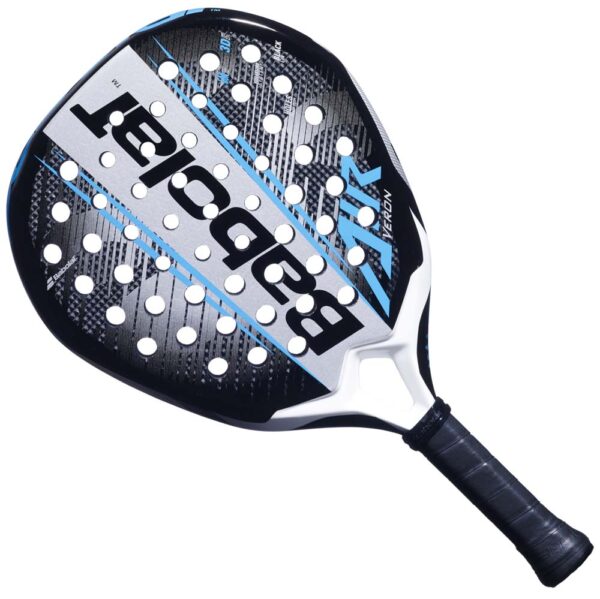
For players who run a more control-based game or prefer a teardrop, the Babolat Air Veron 3.0 2026 is worth a look: similar ball exit, better maneuverability, softer feel, and a bit less overhead punch.
Research & References
Our mission is to help you choose the right padel racket with clear, in-depth reviews that make it easy to level up your game. We start with official specs, then break down each racket’s key properties. Finally, we bring together trusted video and written reviews—summarised into one consistent, easy-to-read overview.
Drafted by Padelguru from expert video reviews with Lars Kloezeman's playing profile as an editorial lens, then reviewed and edited by Lars.
Put the rackets you are considering side by side and keep the ones you play with in your collection.
Get the Padelguru app
Recommended for
Intermediate to high-intermediate players with an offensive style who prioritize overheads, net play, and decisive finishing over baseline consistency.
Skill level
High Intermediate
Court position
Left
Play style
Power, Offensive
Best at: Power (8.0/10)
Average: 7.4/10
Babolat Technical Veron 3.0: Review In English | Power for everyone at a very tempting price
Babolat Technical Veron 3.0: Review | The easiest Technical. Power for everyone at the right price.
Babolat Technical 3.0 padel rackets review by pdhsports
BABOLAT 2026 Collection Review: Technical, Air and Counter
Shape
Diamond
Weight
Medium (356–370g)
Balance
Power-Oriented (Head-Heavy)
Touch
Medium
Core
Black Eva
Surface
Carbon Flex
Texture
Rough
Year
2026
8 rackets with characteristics, performance and appeal close to the Babolat Technical Veron 3 Padel Racket.
7.4Babolat · 2025
Easy depth without a big swing
Ball escapes when you add pace and spin
 8.2
8.2Babolat · 2026
Heavy smash without a full arm effort
Slow to react on low volleys
 7.8
7.8Babolat · 2026
Exceptional maneuverability for a teardrop shape
Limited stability under heavy drives
 8.7
8.7Babolat · 2024
Exceptional power generation for aggressive shots
Head-heavy balance may affect maneuverability for some players
 8
8Babolat · 2026
Explosive power on smashes and viboras
Small sweet spot demands precise technique
 8.3
8.3Babolat · 2023
Exceptional power generation with Carbon Flex technology
Head-heavy balance requires adaptation period
 8.3
8.3Babolat · 2022
Excellent power delivery with Carbon Flex technology
Smaller sweet spot requires precise technique
 8.8
8.8Babolat · 2025
Exceptional power generation with Carbon Flex technology
Requires advanced technique to maximize performance
Want to explore more options?
Browse all rackets