
 7.5
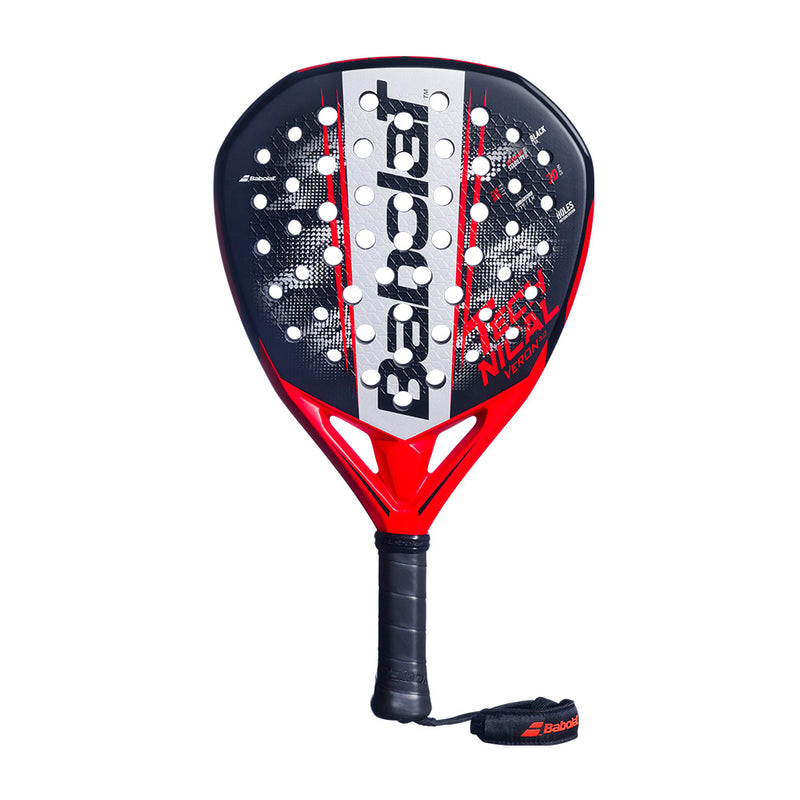
7.5Babolat Technical Veron 3 Padel Racket
Babolat · 2026
Powerful, controlled overheads
Slower in fast hands exchanges
Mid RangeHigh Intermediate
 7.4
7.4Lean on the Technical Veron and it gives you depth for almost nothing. Try to work the ball hard and it starts to fly. Good pick for an improving attacker who wants Babolat power without a punishing face, poor one for a left-side player who finishes with precision. The comfort costs you control at full speed.
Developing all-court player focused on consistency and comfort
Always gets an "A" for effort from the coach. That tells you enough about his technique.
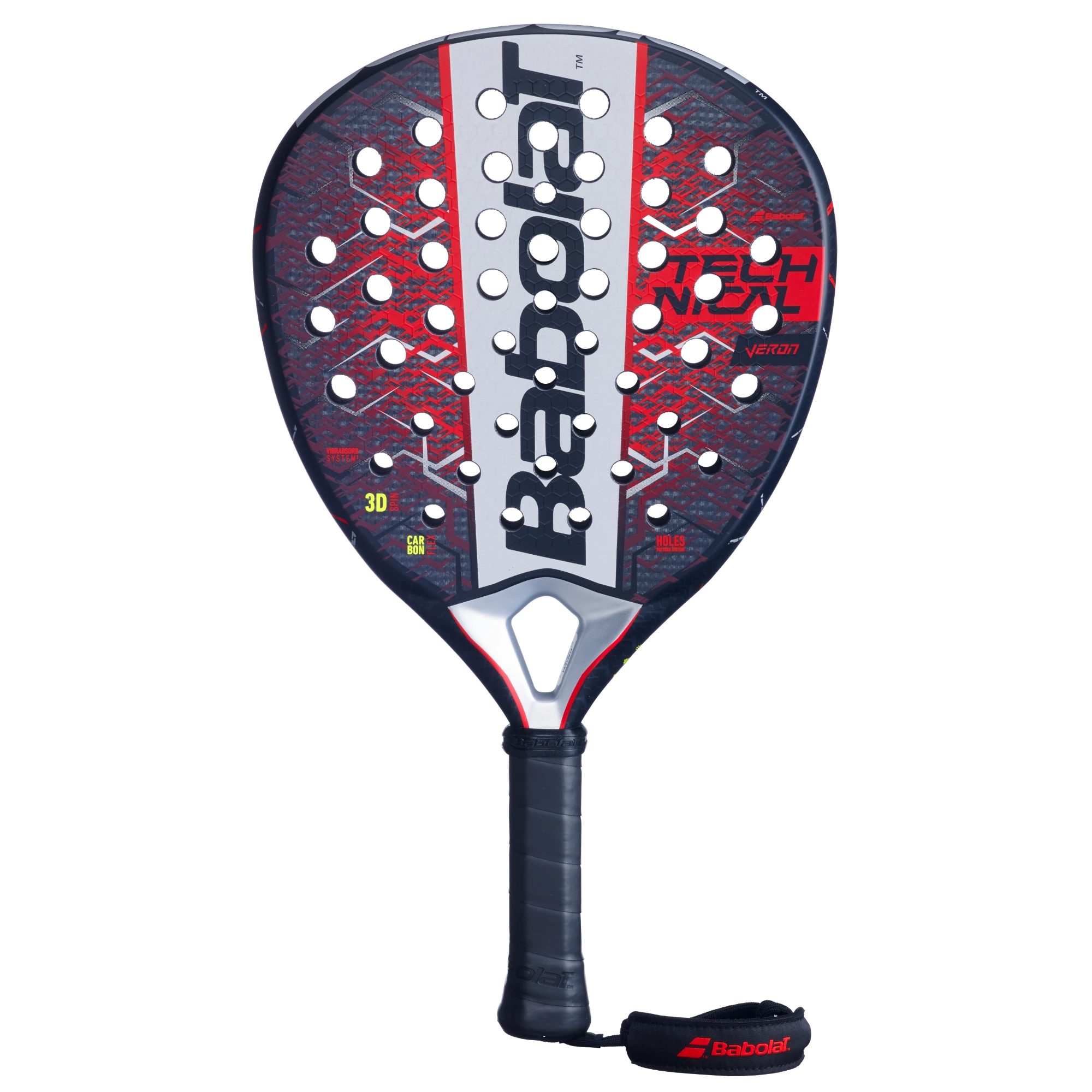
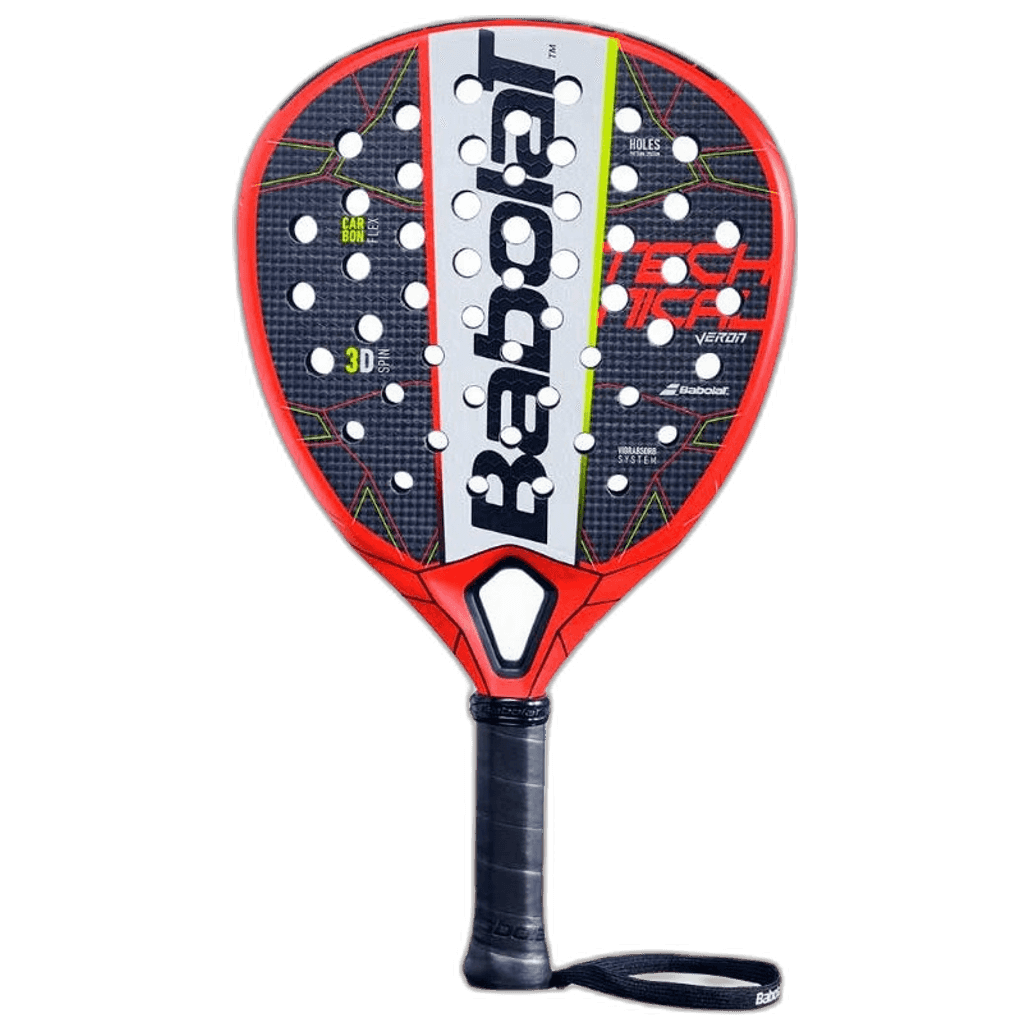
The Technical Veron is the middle rung of Babolat's 2025 Technical line, the attacking family that sits under Juan Lebron's Technical Viper. It uses the same diamond mould and the same top-loaded balance, but Babolat softened the recipe. Instead of the Viper's bare carbon face, the Veron gets Carbon Flex, a carbon and fibreglass weave that flexes on contact and pushes the ball out with less effort from you.
Against the 2024 Technical Veron the changes are small but real: second generation Vibrabsorb damping in the throat and handle, a moulded 3D texture in place of the old sprayed finish, and a matte paint job rather than the Viper's gloss. The frame also keeps the 2024 season heart, which the Vertuo carries too, while the Viper went back to an older bridge.
At roughly 365 grams with the balance sitting high at 270mm, this is still a head heavy attacking racket. It simply asks less of your arm than the one above it. List price is around 240 euro, with street prices closer to 180 to 200 euro.
What the Reviewers Say
Everyone who has hit with it agrees on the headline: the Carbon Flex face makes this a softer, easier Babolat than the Technical Viper. They do not agree on whether that is a win.
Zona de Padel put it through a full on court test and came away positive about how it moves. "The balance is spread very well, the sweet spot sits nicely across the face, and the handling is excellent," their tester said, before adding the caveat that runs through every review of this racket: "it is a touch softer than I would like." His conclusion came with a condition attached: "for the player looking for an attacking racket that is not very, very hard, this is a very good option."
Padel Review were blunter. They scored it 6.5 for sweet spot and 6 for value at the full 240 euro price, and their frustration was specific rather than vague: "at low intensity it gives you depth for free, but the moment you raise the tempo and try to work the ball, it escapes." They preferred the 2024 version and the Viper above it, and said the Veron never gave them confidence at the net.
The retail testers land closer to Zona de Padel. Tennis Warehouse frame the softer face as the whole point, writing that "the Carbon Flex hitting surface is much more user friendly thanks to its partial fibreglass weave, which helps to offset the higher balance and weight." Tennisnuts, who tested it in house, reached the same conclusion from the other direction: "the Veron is better suited to players who want a softer feel but still have the attacking ability."
Where they genuinely split is the flat smash. Padel Review called it the racket's signature shot and scored it 8.5. Zona de Padel found the opposite, that the core absorbs too much for a clean flat finish, and that the kick smash was where the frame came alive. Both agree it hits hard when you catch the ball high.
How it plays..
The Technical Veron is a friendlier way into Babolat's attacking shapes, and the comfort is not marketing: the damping and the fibreglass in the face genuinely take the sting out of a 365 gram diamond. The catch is that a softer face does not buy a bigger sweet spot, and the target still sits high on a narrow head, so off centre balls lose far more here than on a teardrop. Players still tightening their contact point get the comfort they came for, but not the forgiveness they assumed came with it.
Defense
Better than a diamond has any right to be. The Black EVA core and the flexing face absorb pace on a hard ball into the body, and both on court testers singled out how well the weight is spread for a frame with the balance this high. Lobs are the standout: the ball comes off with enough free depth that you can clear the net and reset the point without swinging hard, which is exactly what a head heavy racket usually refuses to give you. Resets off the back glass are steadier than expected, though a fast flat ball can still squirt off the upper frame if you catch it late.
Attack
This is why you buy it. The diamond head and the 270mm balance load the top of the frame, and the long handle gives real leverage through the swing, so a clean overhead leaves with serious pace. The kick smash and the x3 out of the court are the most reliable finishes, helped by the moulded texture biting the ball. The flat smash divides opinion: it is a cannon when you time it, but the softer core swallows a little of the strike if you hit through the ball rather than over it. Add heavy spin at full speed and the ball starts to wander, so the frame rewards a controlled, repeatable swing more than a violent one.
Netplay
The weakest part of the picture. It moves quickly enough between volleys, the long handle helps you reach, and Vibrabsorb keeps off centre contact from stinging. But the confidence is not there in fast exchanges: reviewers reported the ball either sticking on the face or leaving too early when they tried to shape a volley, with no obvious pattern to it. Block volleys are the exception. Stand firm, let the frame do the work, and the ball comes back deep and heavy for almost no effort. Bandejas are solid and the texture grips well. The vibora is where the softer face costs you the most bite.
Our Advice for New Players
Not for you. The balance is high, the sweet spot sits near the top of a diamond head, and 365 grams is a lot of racket to move for a full match. The comfort technology does not change any of that. Start with a round or teardrop frame with the weight lower down and a target you can actually find.
Our Advice for Intermediate Players
This is the group Babolat built it for, with one condition. If you already attack, already play the left side, and your contact point is consistent, the Veron hands you flagship power with far less harshness than the Viper. If you are still hitting plenty of balls off centre, the comfort will not save you: the narrow, high sweet spot punishes those misses, and you will play better with a teardrop such as the Air Veron.
Competitive level
Worth a hit if your arm is asking for mercy. Advanced players coming off a full carbon flagship notice the drop in harshness immediately and lose less power than they expect. What you notice just as fast is the ceiling: the face flexes when you swing hard with spin, so precision at full speed is not what it is. If you build points with shaped, worked balls rather than direct ones, the Technical Viper is the more honest choice.
How It Compares
Babolat Technical Viper 2025: same family, harder face, bare carbon instead of the fibreglass blend. The Viper is more precise, more powerful and more demanding, and it is the one to take if you have the technique and the arm for it. The Veron is the version you can play three times a week without paying for it afterwards.
Babolat Air Veron 2025: the all court sibling, lower balance and a friendlier shape, with much the same Carbon Flex feel. If you spend more of the match defending than finishing, the Air is the better tool. Take the Technical only if the overhead is genuinely where you win points.
Research & References
Our mission is to help you choose the right padel racket with clear, in-depth reviews that make it easy to level up your game. We start with official specs, then break down each racket’s key properties. Finally, we bring together trusted video and written reviews—summarised into one consistent, easy-to-read overview.
Drafted by Padelguru from expert video and written reviews of this exact 2025 model, with Kaj Kloezeman's playing profile as an editorial lens, then reviewed and edited by Kaj. Specs come from Babolat and retailer spec sheets, not estimates. No one on the Padelguru team has played this racket, so nothing here is presented as a first hand play test.
Put the rackets you are considering side by side and keep the ones you play with in your collection.
Get the Padelguru app
Recommended for
Intermediate to advanced attacking players, usually on the left side, who want a power diamond that is kinder on the arm than a flagship frame.
Skill level
Intermediate, High Intermediate, Advanced
Court position
Left, Net, Backcourt
Play style
Power, Offensive, Balanced
Best at: Power (8.5/10)
Average: 7.4/10
Zona de Padel: Coleccion Babolat 2025, Technical Viper, Veron y Vertuo
Padel Review: Babolat Technical Veron 2025, Recensione, Test e Opinioni in Campo
Shape
Diamond
Weight
Medium (356–370g)
Balance
Power-Oriented (Head-Heavy)
Touch
Medium
Core
Black Eva
Surface
Carbon Flex
Texture
3D Pattern
Year
2025
8 rackets with characteristics, performance and appeal close to the Babolat Technical Veron 2025 Padel Racket.
7.5Babolat · 2026
Powerful, controlled overheads
Slower in fast hands exchanges
 8.2
8.2Babolat · 2026
Heavy smash without a full arm effort
Slow to react on low volleys
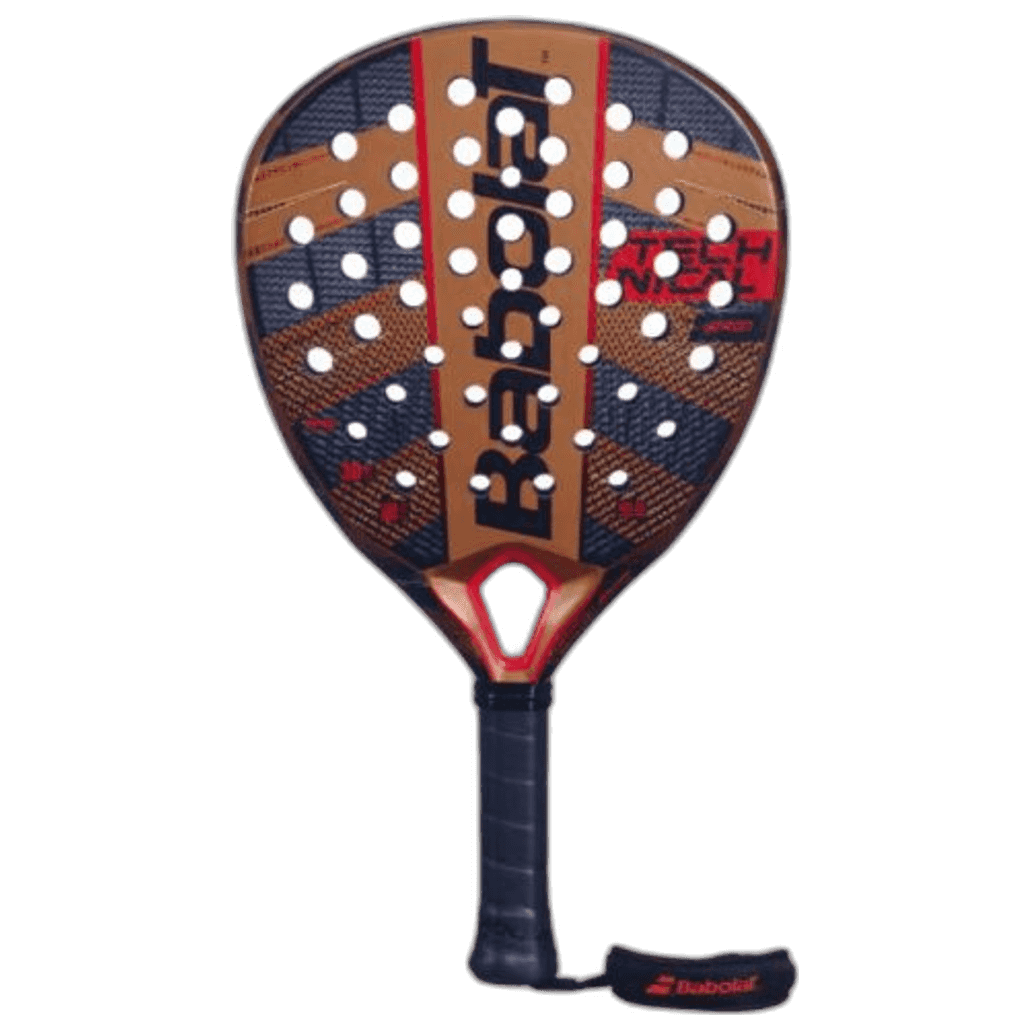 8.7
8.7Babolat · 2024
Exceptional power generation for aggressive shots
Head-heavy balance may affect maneuverability for some players
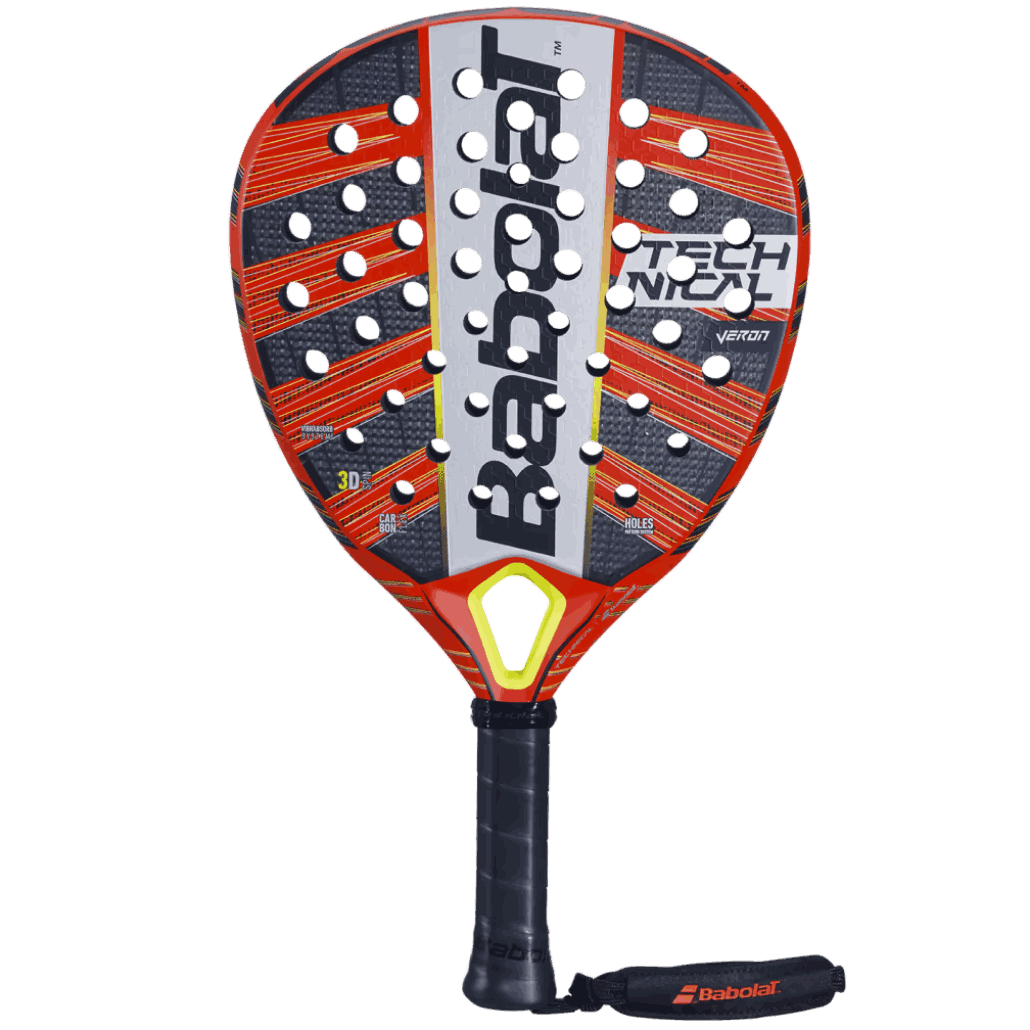 8.3
8.3Babolat · 2023
Exceptional power generation with Carbon Flex technology
Head-heavy balance requires adaptation period
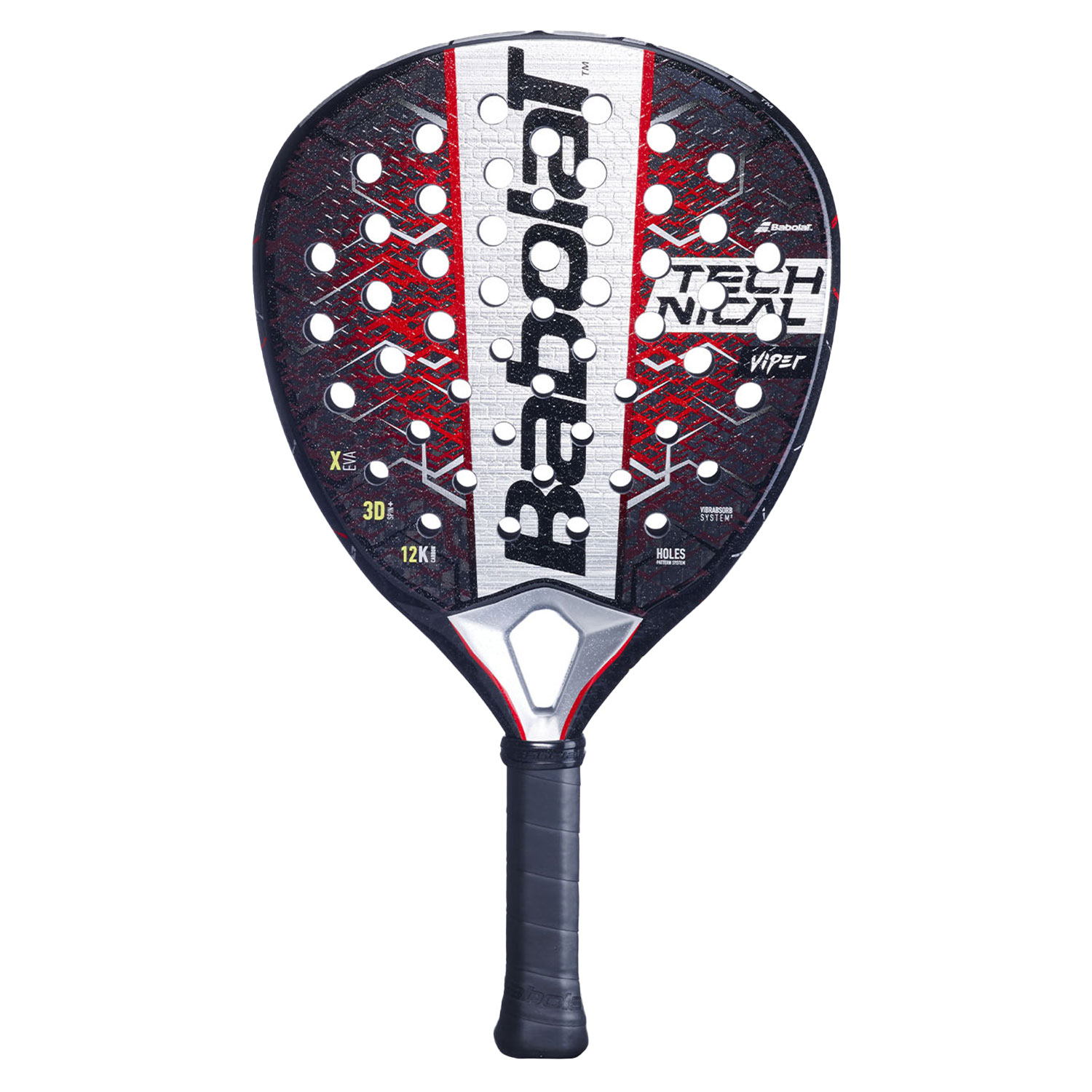 8.5
8.5Babolat · 2025
Brutal smash and vibora power
Punishing on off-center contacts
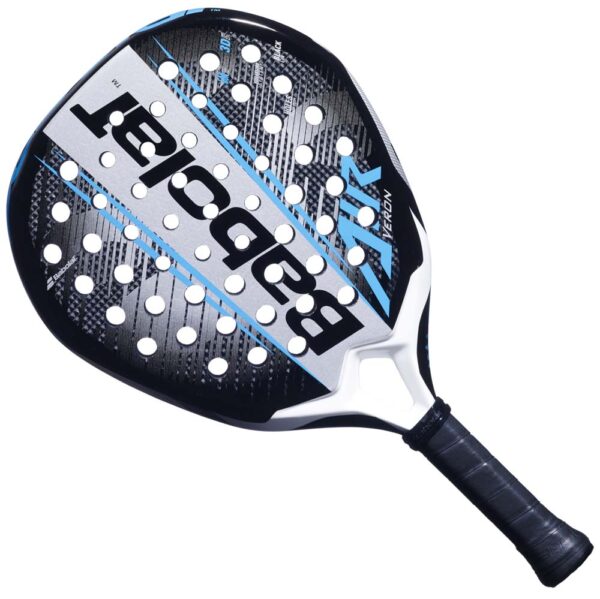 7.8
7.8Babolat · 2026
Exceptional maneuverability for a teardrop shape
Limited stability under heavy drives
 8.3
8.3Babolat · 2022
Excellent power delivery with Carbon Flex technology
Smaller sweet spot requires precise technique
 8.8
8.8Babolat · 2025
Exceptional power generation with Carbon Flex technology
Requires advanced technique to maximize performance
Want to explore more options?
Browse all rackets