
 7.5
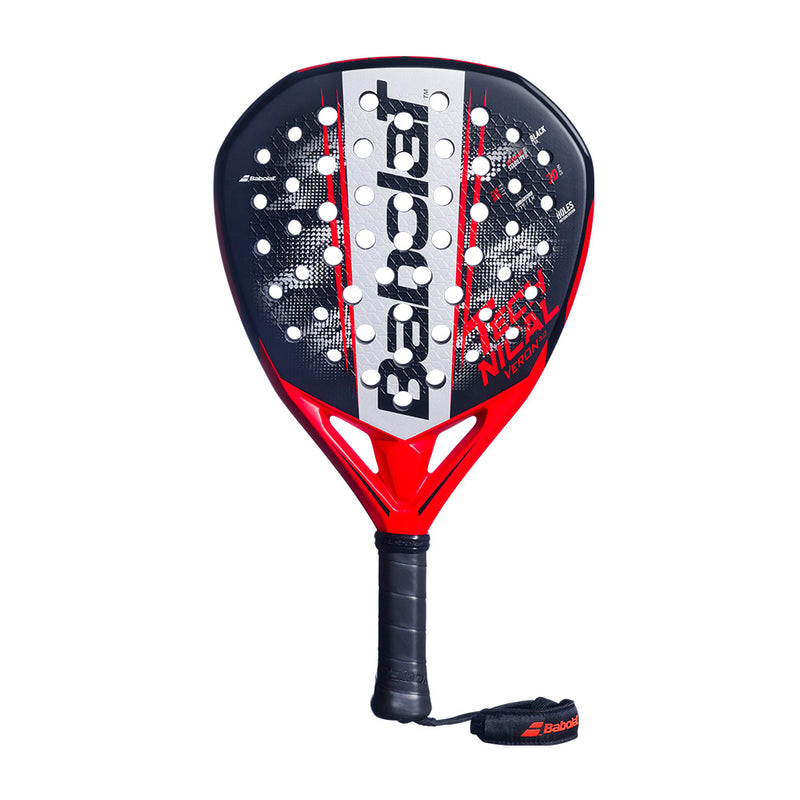
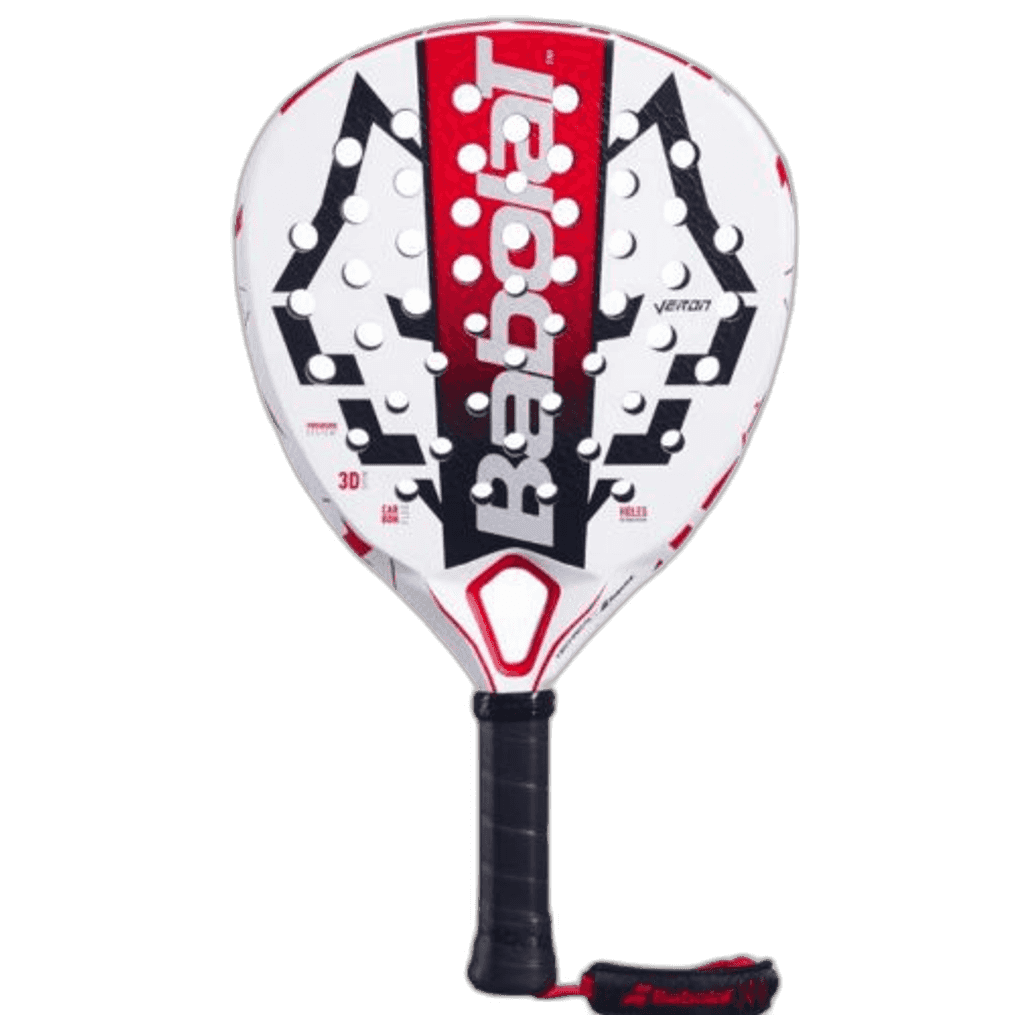
7.5Babolat Technical Veron 3 Padel Racket
Babolat · 2026
Powerful, controlled overheads
Slower in fast hands exchanges
Mid RangeHigh Intermediate
 8.2
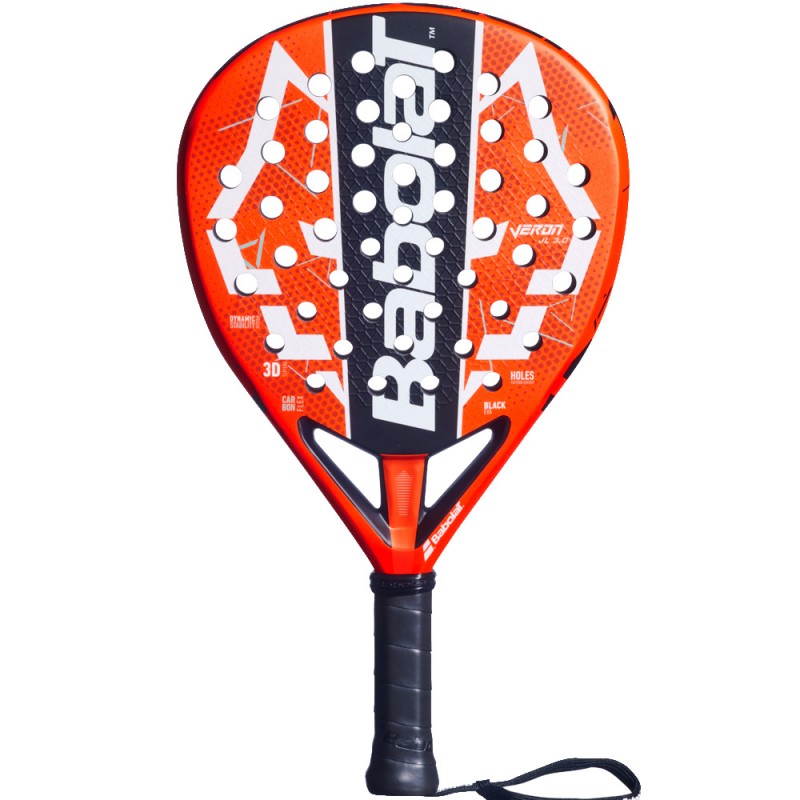
8.2Babolat moved the Veron onto the Viper mould and softened the face, so it finishes points without emptying your arm. Best for attacking intermediates and advanced players who already generate pace, wrong for defenders and anyone still learning to time the ball. The springy ball exit costs precision on touch shots.

All-court player who prizes control, feel and spin
Bowe is convinced that the racket, shoes, court are the problem, never his own abilities.
The Veron Juan Lebrón 3.0 is the most approachable racket carrying Juan Lebrón's name. For 2026 it stops being a watered down Viper and starts being built on one: Babolat moved the Veron onto the Viper mould, reinforced central bar in the heart of the frame included, so it twists less on off centre contact than the old Technical Veron 2.5 did.
What keeps it separate from the Viper is the face. Instead of a full carbon layup, Babolat weaves carbon together with fibreglass in what it calls Carbon Flex, sitting on a medium density Black EVA core. The racket still sends the ball hard, but it gives a little at contact instead of feeling dry, and at around 360g it is the lightest of the three Lebrón frames. The finish is matte this year rather than the Viper's gloss, and the surface keeps the 3D Spin relief that grips the ball on anything cut.
What the Reviewers Say
The consensus forms quickly: this is the Lebrón racket most people can actually play. Stéphane Penso at Padel Magazine frames the new face and core as a different kind of output rather than less of it. "This is power that comes from elasticity: the frame deforms to store energy and gives it back like a spring," he writes, and he rates the 2026 Veron the least technically demanding of the three Lebrón models.
Padel-Point land in the same place after putting all three side by side. "If you want to play like Juan Lebrón and you are looking for a racket that forgives you, the Veron is probably the best one in the series," their reviewer says, pointing out it is also the lightest of the three at roughly 360g.
Tennis Overload back that up on feel: "Impact is softer and more forgiving, and you still get plenty of feedback." Comfort and spin take the top scores on their card.
Fabio Ferro, who had all three frames in hand, adds a warning about the first sessions. "In the first hours the ball hardly goes anywhere, then after five or ten hours it starts to give you its real ball exit," he says. Once it opens up he calls it the easiest and most manoeuvrable of the three, with more sweet spot than the Veron 2.5 it replaces.
Where reviewers split is how much margin you actually get. PadelTestLab, who scored it 81 out of 100, keep the praise for the smash but are blunt about the balance: "That head heavy balance asks you to read the low volley early, and arriving late costs you more than it would on a medium balance racket." RacketReviewHub go further and put the limit at the sweet spot: "Its biggest strength is raw power off the back wall, its biggest weakness is a sweet spot that punishes anything but clean contact."
PADELREVIEW ENG disagree in the opposite direction, and think Babolat went too far. "It has become too easy, the ball output is exaggerated, it flies away too much and you cannot control it well," their tester says, marking control seven out of ten against eight for power and eight for the smash. They also note the Carbon Flex face grips less than a full carbon one, so sliced volleys bite less than on the Viper.
Read together the picture is consistent. Softer than the Viper, not soft. The forgiveness lives in the face and the core, not in the balance.
How it plays..
The Veron 3.0 buys its comfort with a springier ball exit, and that is the trade to weigh. Players who like to place the ball and work it with spin get a lot from the 3D Spin face, which genuinely bites on cut víboras and slice, but the Carbon Flex and medium EVA combination sends the ball back with more help of its own than a drier carbon frame would. Worth hitting a basket with it before buying if knowing exactly how far a block will travel matters to you.
Defense
Defence is the weakest part of the picture, and every source says so in its own way. Off the back wall the elastic core does help: the ball leaves the face with pace you did not have to generate, so getting length on a defensive lob takes less effort than on a stiff full carbon diamond. The problem is arriving. With 270mm of balance and the mass up in the head, low volleys and improvised gets need to be read early, and anyone who defends tight to the glass with a short swing will feel that more than most. Fine touch deep in defence is capped too. The medium density core is built to rebound, not to kill pace, so a delicate reset takes real intent rather than just a soft hand.
Attack
This is the half the racket was designed for. The diamond shape and head heavy balance put the sweet spot high, which is exactly where an overhead lands, and the smash comes off hard without a full arm effort. The Dynamic Stability System, the reinforcement bar Babolat carried over from the Viper mould, keeps the frame from twisting when the ball lands off centre, so a slightly late smash still goes where you aimed it. It asks for preparation in return. Rush the swing, or meet the ball below shoulder height on the run, and the head weight works against you instead.
Netplay
At the net the Veron is quicker than its balance figure suggests, because it is the lightest frame in the Lebrón line. Punch volleys have real bite and blocks against a hard drive stay stable. The bandeja is the pleasant surprise: the Carbon Flex face gives enough at contact to keep the ball exit predictable when you are not fully extended, so a long bandeja lands deep instead of sailing. On the víbora the 3D Spin relief earns its place, closing the angle on the slice. What it does not offer is the dry, surgical touch of a stiffer competition frame, so drop volleys and short chiquitas ask more of your hands.
Our Advice for New Players
Not a beginner racket. The head heavy balance, the diamond shape and a sweet spot that sits high all assume you already time the ball consistently, and none of them help while you are still learning where the ball meets the face. Start on a round frame with a softer core, then come back to this once the overhead is a shot you trust.
Our Advice for Intermediate Players
This is the level Babolat is aiming at, with one condition: you need an attacking game already, not just the ambition to have one. Solid intermediates who step to the net, look for the smash and generate some of their own pace get real value here, and the Vibrabsorb damping plus the elastic core make long sessions manageable in a way the Viper does not. Intermediates still building consistency will meet that tighter margin quickly.
Competitive level
Advanced attackers get a usable competition racket that will not empty the arm over three sets, which is the whole argument for it over the Viper. The peak power ceiling is lower and the feel is less surgical, so a player who wants maximum ball weight and exact feedback will still pick the stiffer frame. For an advanced player who plays a lot of matches, or who has an elbow to protect, the trade is a fair one.
How It Compares
Against the Babolat Viper Juan Lebron 2026, the choice comes down to being honest about your own game. The Viper is 370g, full 3K carbon, a hard EVA core and a small sweet spot: more raw power, far less margin, and a real physical cost across a match. Take the Viper if your technique is clean, you finish points above the net and you want every last bit of ball weight. Take the Veron 3.0 if you want most of that output with an arm that still works the next day.
The Babolat Technical Viper Soft 3.0 sits between them. It keeps the Viper's carbon feel and adds a softer core, so the ball exit is crisper and more direct than the Veron's while staying kinder than the standard Viper. Choose it if you want carbon feedback with comfort, and the Veron if you want help generating pace.
Research & References
Our mission is to help you choose the right padel racket with clear, in-depth reviews that make it easy to level up your game. We start with official specs, then break down each racket’s key properties. Finally, we bring together trusted video and written reviews—summarised into one consistent, easy-to-read overview.
Drafted by Padelguru from published expert reviews and Babolat's official specifications, with Bowe Frankema's playing profile as an editorial lens, then reviewed and edited by Bowe Frankema. Nobody at Padelguru has play tested this racket, so nothing here is presented as first hand court time.
Put the rackets you are considering side by side and keep the ones you play with in your collection.
Get the Padelguru app
Recommended for
Attacking intermediate to advanced players who live at the net, lean on the smash, and want Lebrón level power with enough comfort to play long sessions.
Skill level
High Intermediate, Advanced, High Advanced
Court position
Left, Net, Backcourt
Play style
Power, Offensive
Best at: Offense (8.9/10)
Average: 8.0/10
Babolat Juan Lebrón Series Review: Viper vs. Technical vs. Veron Comparison
Review Babolat Veron Juan Lebron 2026: Easier than last year but less powerful
Babolat Veron Juan Lebron 3.0 2026: all new and pleasant, but...
Shape
Diamond
Weight
Medium (356–370g)
Balance
Power-Oriented (Head-Heavy)
Touch
Medium Hard
Core
Black Eva (Medium Density)
Surface
Carbon Flex With 3D Spin Texture
Texture
3D Pattern
Year
2026
8 rackets with characteristics, performance and appeal close to the Babolat Veron Juan Lebron 3.0 2026.
7.5Babolat · 2026
Powerful, controlled overheads
Slower in fast hands exchanges
 7.8
7.8Babolat · 2026
Exceptional maneuverability for a teardrop shape
Limited stability under heavy drives
 7.4
7.4Babolat · 2025
Easy depth without a big swing
Ball escapes when you add pace and spin
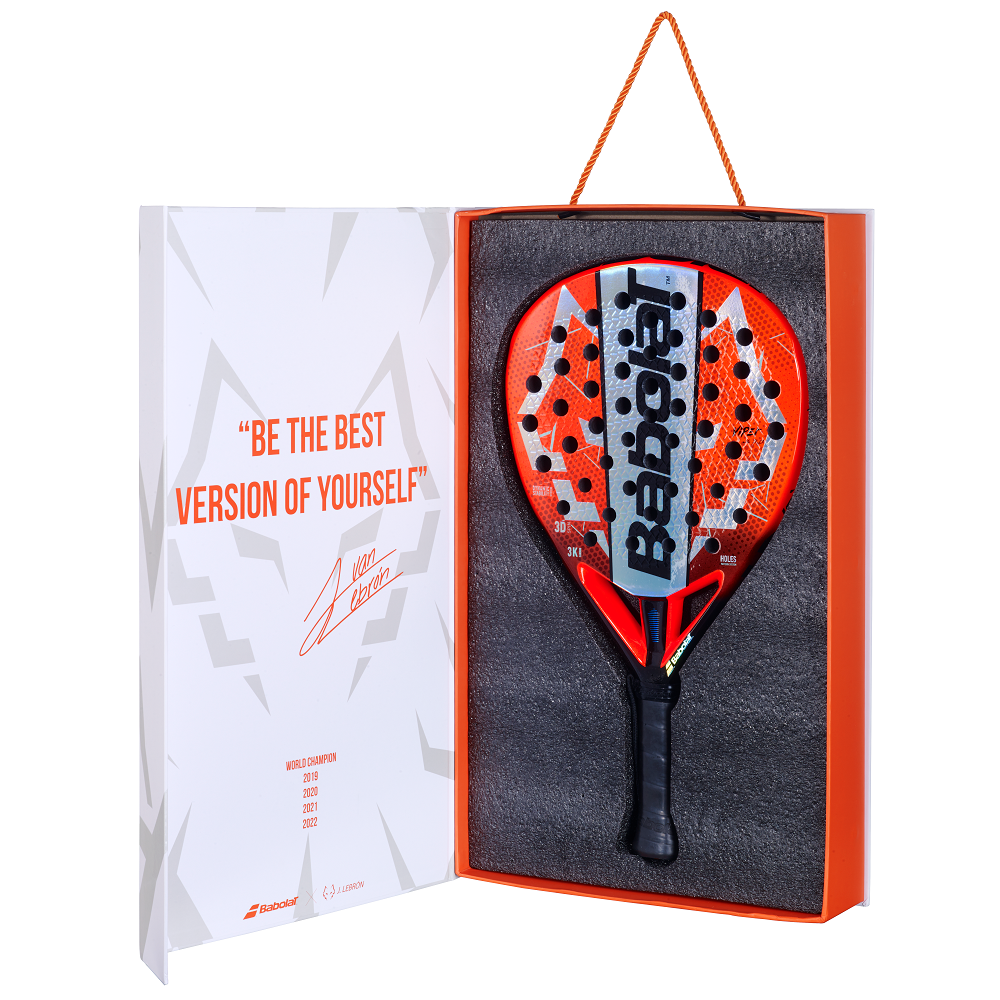 8.5
8.5Babolat · 2026
Explosive power on smashes and víboras
Very demanding in defence due to high balance
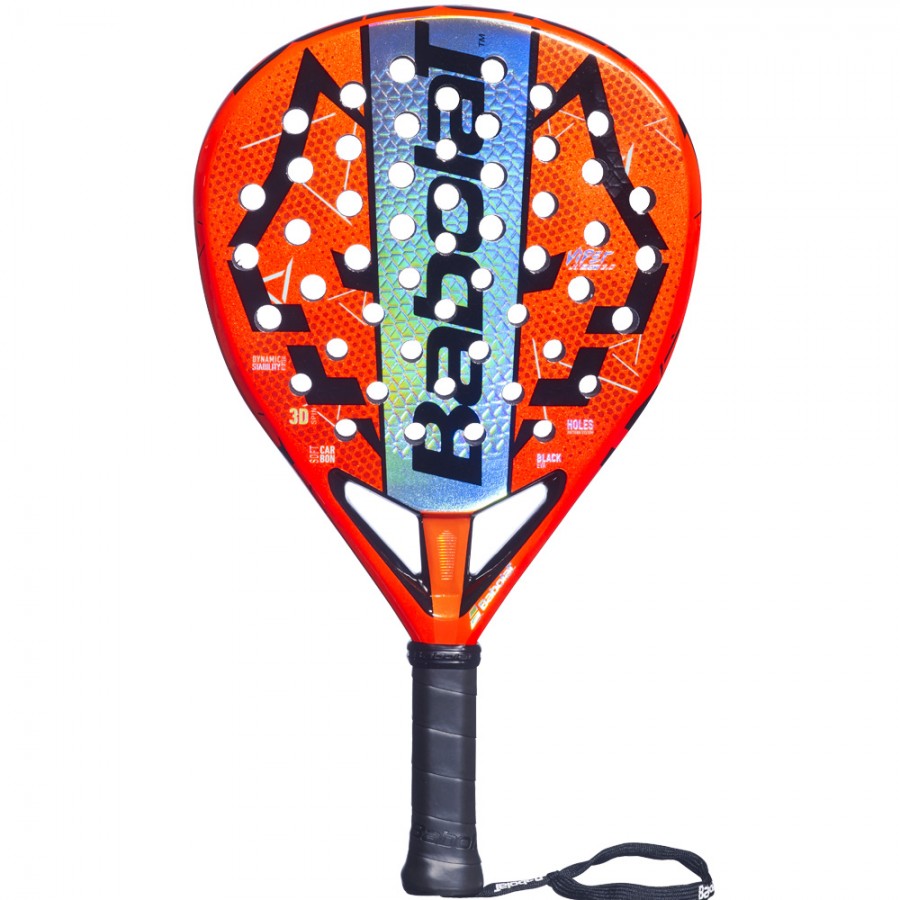 8.3
8.3Babolat · 2026
Heavy, repeatable smash without a full-throttle swing
Small sweet spot punishes late contact
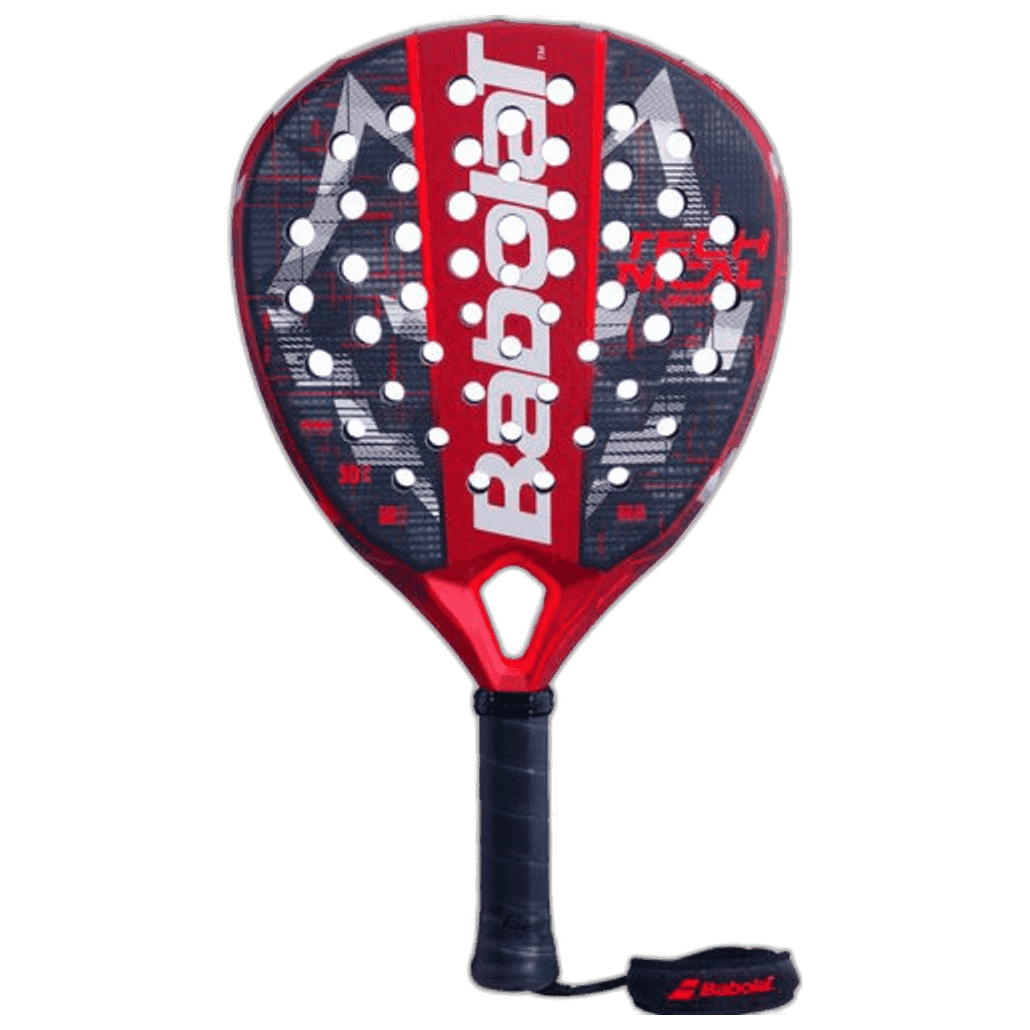 8.6
8.6Babolat · 2024
Exceptional power delivery with Carbon Flex technology
Requires advanced skill level to maximize performance
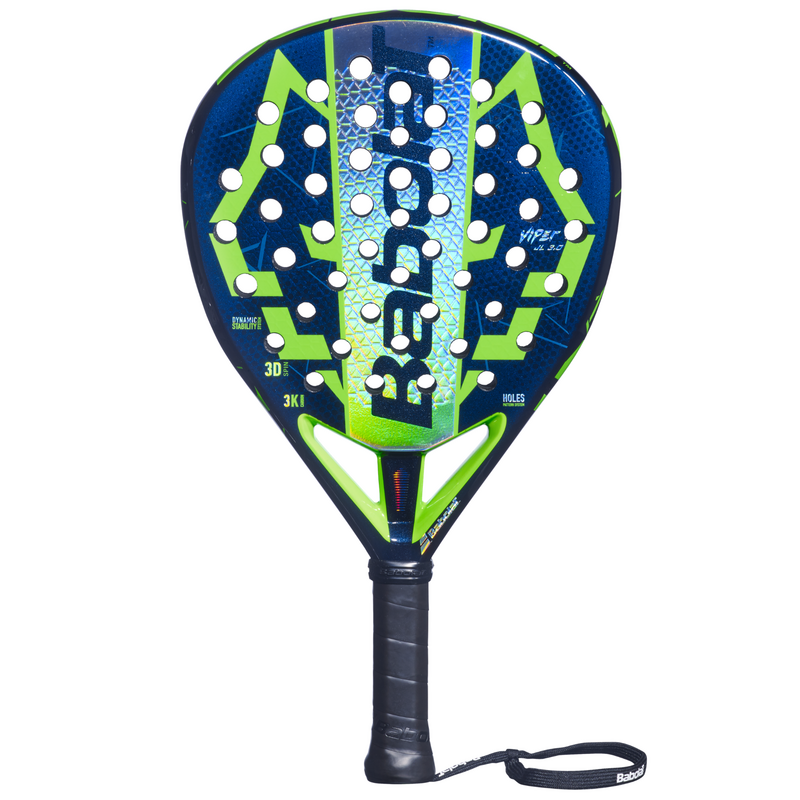 7.5
7.5Babolat · 2026
Devastating overhead power
Very demanding in passive defence
 8.8
8.8Babolat · 2025
Exceptional power delivery through Carbon Flex technology
Requires advanced technique to maximize performance
Want to explore more options?
Browse all rackets