
 7.5
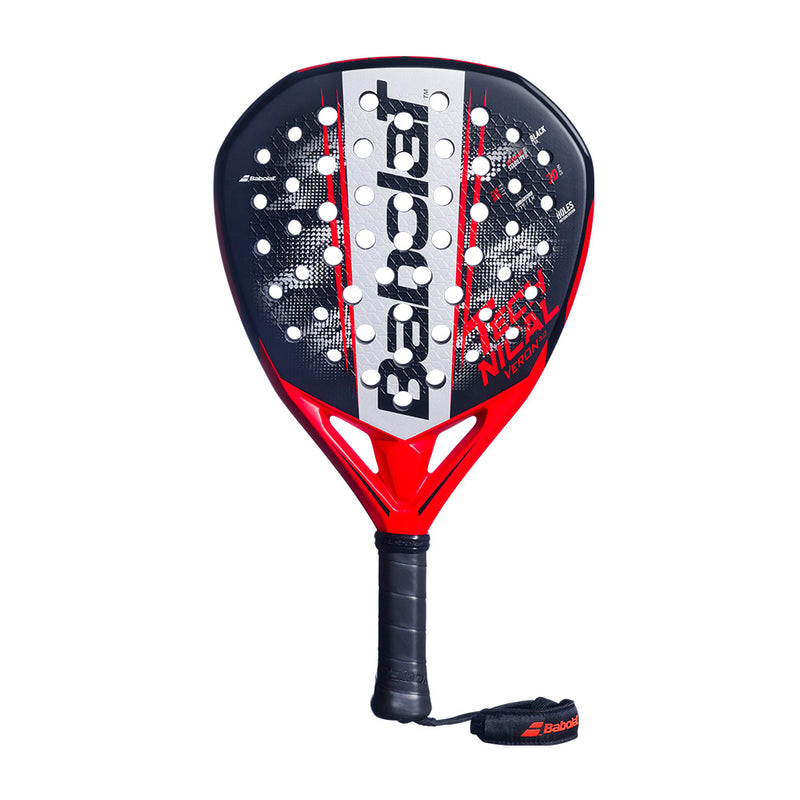
7.5Babolat Technical Veron 3 Padel Racket
Babolat · 2026
Powerful, controlled overheads
Slower in fast hands exchanges
Mid RangeHigh Intermediate
 7.8
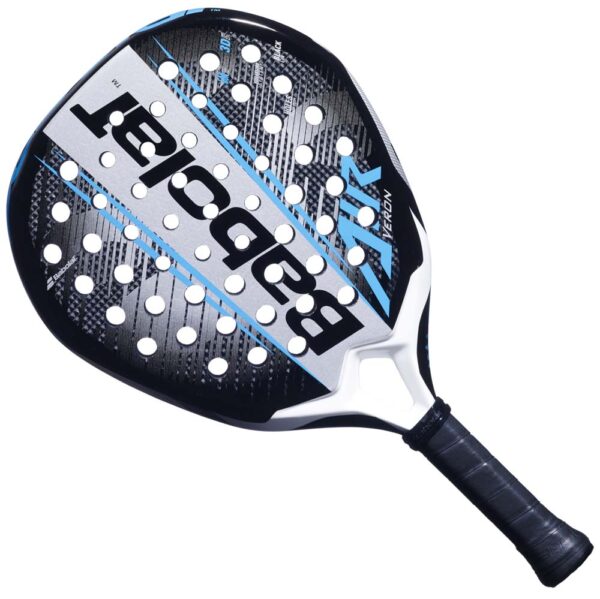
7.8The Air Veron 2.6 is the right call for intermediate to advanced players who want speed, comfort, and a forgiving face in one racket. The Carbon Flex construction and Vibrabsorb system make it one of the most arm-friendly options at this price. The stability limit is real under heavy hitting, so power baseliners should look at the stiffer Air Viper instead.
Developing all-court player focused on consistency and comfort
Always gets an "A" for effort from the coach. That tells you enough about his technique.
Babolat's Air line has always been about speed. The 2026 Air Veron 2.6 sharpens that into one priority: move the racket faster than the opposition can anticipate. Built on a teardrop mold with a 265 mm medium balance and a Carbon Flex face (carbon woven with fibreglass for elasticity), it's the comfort-first branch of the Air family. The Air Viper, by contrast, is the stiffer sibling that pushes harder on power. The 38mm beam, Black EVA core, and Vibrabsorb elastomers all serve the same goal: absorb impact, cut vibration, and let the player swing freely. At 38 RA stiffness, it's the most flexible frame in the Babolat 2026 lineup.
The 2.6 designation marks the second evolution of this shape generation. The 2026 mold is slightly more compact than the 2025 version, with a modified bridge area and Vibrabsorb inserts repositioned more precisely within the frame. Reviewers found the vibration damping measurably improved over the 2025 model.
What the Reviewers Say
PADELREVIEW ENG tested the 2.6 on court and found it a "versatile and user-friendly racket" that surprised on overhead play: "I've never hit so many portrahes (lob winners) in a single match." They clocked its biggest limitation at the net: the racket struggles to generate heavy spin because "the ball doesn't stay on the face long enough" on effect-heavy shots. Flat and aggressive volleys, though, are where it thrives.
Zona de Pádel called it the most reactive racket in the 2026 Babolat collection, noting a large sweet spot and strong ball absorption: "As soon as I get a little contact, I notice it shoots off." They also flagged the head tilt in overhead play, warning players that the tip drops quickly on bandeja and víbora movements, so contact timing is critical.
Mejora Tu Padel noted that the shiny lacquer finish on the Veron line reduces feel compared to the Viper: "The glossy coating stops me feeling the core of the racket." In warm conditions this gap closes, but in cold weather the Viper's rougher surface gives a more connected feel. The Air Veron compensates with better comfort and easier acceleration.
PadelVerdict gave the Air Veron 2.6 a score of 8.2 and called maneuverability at 8.6 "the defining number" in its profile. Their breakdown: Hybrid 8.04, Defender 8.01, Attacker 7.70. The near-identical Hybrid and Defender scores confirm this racket suits players who move rather than grind. Stability at 7.0 is the trade-off.
Tennis Warehouse describe it as "dangerously quick through the air" and a racket players can "grow with and into," noting its dual anti-vibration systems (Black EVA plus Vibrabsorb) as unusual at this price point.
How it plays..
The Air Veron 2.6 gives developing all-court players the swing speed they need to stay in rallies. The Carbon Flex face bends slightly at impact before springing back, which extends forgiveness on off-centre hits beyond what a stiffer carbon surface allows at this price. The arm-friendly build means a full season without second-guessing every bad contact. The limit shows up when absorbing a hard drive: at 355g with a flexible frame, there's less mass to stabilise under pressure. Players still building consistency will find the trade-off well worth it.
Defense
At the back of the court the Air Veron 2.6 is comfortable to reset from. The medium balance keeps the head manageable on defensive lobs, and the Black EVA core softens the impact on balls hit hard at the body. The 7.0 stability rating is the honest number here: against a powerful baseline drive, the lighter flexible frame deflects more than a heavier alternative. Defensive lobs are reliable; absorbing and redirecting pace takes more effort than the racket's ease-of-use feel might suggest.
Attack
Overhead play is where this racket genuinely comes alive. PADELREVIEW ENG noted a record number of lob winners (portrahes) in a single session, and the combination of head speed and Carbon Flex elasticity makes smashes and víboras feel explosive with a compact swing. The raw power ceiling on flat driven smashes is lower than a stiffer diamond frame delivers. The Air Veron wins on speed and timing rather than brute force, so players who accelerate through the ball get more out of it than those who try to muscle it.
Netplay
At the net the racket is quick and reactive. Flat aggressive volleys are comfortable and well-placed, and the 3D Spin+ texture adds some directional grip on angled shots. Heavy effect volleys and spin-heavy bandeja attempts are the weak point: PADELREVIEW ENG found the ball "doesn't stay on the face long enough" to generate real spin. Zona de Pádel liked it for setup play but flagged the head tilt on aerial shots, meaning the tip drops if you do not time the contact correctly.
Our Advice for New Players
Not the first choice for beginners. The teardrop mold gives some head weight that beginners may find tiring, and the price sits in the Premium bracket. Players just starting out are better served by a rounder, lighter option. That said, an ambitious beginner who plans to play regularly and wants something to grow into will not outgrow this racket quickly.
Our Advice for Intermediate Players
This is the sweet spot for the Air Veron 2.6. Intermediate players get a racket that rewards fast hands without punishing slightly off-centre contact. The Vibrabsorb system handles the arm-fatigue issue that catches many players out during longer seasons. If you play two to three times a week and want one racket that works in defense, at the net, and in overhead exchanges, this fits well.
Competitive level
Advanced players get the maneuverability advantage but will notice the stability limit sooner. If your game is built on absorbing hard exchanges from the back, the 7.0 stability score will feel real inside the first set. Advanced players who dominate through speed, positioning, and net presence rather than raw power will get more from this racket than those who rely on driving through the ball.
How It Compares
The natural comparison is the Babolat Air Viper 2.6: same mold generation, but stiffer construction, higher power ceiling, and less comfort. If you need to hit through the ball and stability under pressure is the priority, take the Viper. If maneuverability and arm comfort drive your game, the Veron is the correct choice. The overlap is smaller than the marketing suggests.
The StarVie Astrum+ 2026 is a comparable teardrop hybrid with a slightly higher overall rating (8.6 at PadelVerdict) and better spin output. It suits players who want more effect from the surface without giving up much maneuverability. The Air Veron's advantage is price and arm-friendliness.
Research & References
Our mission is to help you choose the right padel racket with clear, in-depth reviews that make it easy to level up your game. We start with official specs, then break down each racket’s key properties. Finally, we bring together trusted video and written reviews—summarised into one consistent, easy-to-read overview.
Drafted by Padelguru from expert video reviews and written sources, with Kaj Kloezeman's playing profile as an editorial lens, then reviewed and edited by Kaj.
Put the rackets you are considering side by side and keep the ones you play with in your collection.
Get the Padelguru app
Recommended for
Intermediate to advanced all-court players who prioritize swing speed and comfort over raw power, and anyone still building technique who needs a racket that forgives off-centre contact.
Skill level
Intermediate, High Intermediate
Court position
Both sides
Play style
Balanced, Defensive, Counter-attacking, Tactical, All-court
Best at: Maneuverability (9.0/10)
Average: 7.8/10
Babolat Air Veron 2.6: Review in English | Light easy power
BABOLAT 2026 Collection Review: Technical, Air and Counter
Complete BABOLAT 2026 Review: Which one suits your game?
Shape
Teardrop
Weight
Light (341–355g)
Balance
Balanced (Even)
Touch
Medium Soft
Core
Black Eva
Surface
Carbon Flex With 3D Spin+ Texture
Texture
3D Pattern
Year
2026
8 rackets with characteristics, performance and appeal close to the Babolat Air Veron 2026 Padel Racket.
7.5Babolat · 2026
Powerful, controlled overheads
Slower in fast hands exchanges
 7
7Babolat · 2026
Outstanding maneuverability for the shape
Soft core limits output for stronger hitters
 8.2
8.2Babolat · 2026
Heavy smash without a full arm effort
Slow to react on low volleys
 8.4
8.4Babolat · 2026
Outstanding maneuverability for a carbon racket
Firm feel punishes off-center contact
 8
8Babolat · 2026
Enormous forgiving sweet spot
Ball can escape at higher pace or with heavy topspin
 7.4
7.4Babolat · 2025
Easy depth without a big swing
Ball escapes when you add pace and spin
 8.2
8.2Babolat · 2024
Exceptional maneuverability and quick handling
Moderate learning curve for optimal power generation
 8.3
8.3Babolat · 2025
Excellent power-to-weight ratio with Carbon Flex technology
Medium-hard touch may require adjustment period
Want to explore more options?
Browse all rackets