
 7.8
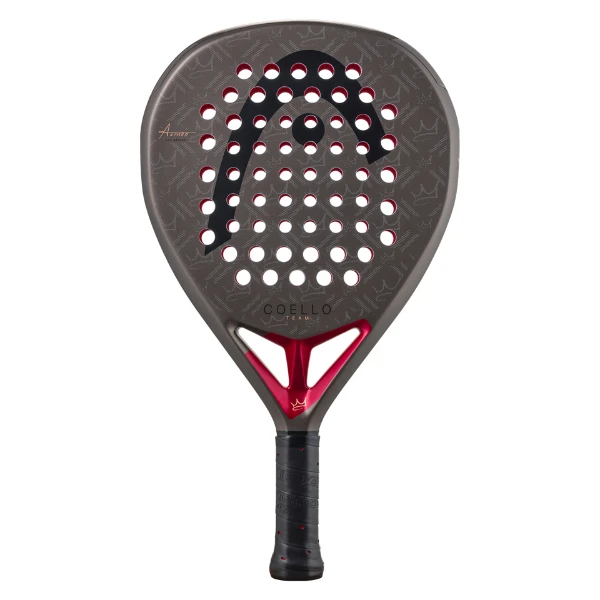
7.8Head Coello Team 2026
Head · 2026
Easy smash depth without a full swing
Smooth face gives almost no spin bite
Mid RangeIntermediate
 7.3
7.3The fibreglass face and lower density foam let you attack for two hours without your elbow complaining, which few diamonds manage. Right for intermediates who finish at the net and want easy smash depth. Wrong if you build points with spin, because the glossy surface gives the ball almost no grip.

All-court player who prizes control, feel and spin
Bowe is convinced that the racket, shoes, court are the problem, never his own abilities.
The Coello Team is the accessible model in the first racket line Head has ever built around Arturo Coello. Head put the world number one's name on a full collection for 2025, and the Team is the one priced for club players rather than tournament ones: roughly 160 to 220 euros depending on the shop, against about 280 for the Pro and the Motion.
What matters is that it is not a watered down shape. Head kept the same aggressive diamond mould across the Pro, the Motion and the Team, a mould inherited from the old Delta series that Coello used to play with himself. That is a deliberate change of direction. When the Delta became the Extreme a few seasons back, the head got rounder and friendlier. The Coello line pulls it back into a genuine attacking shape, with the weight sitting high above your hand.
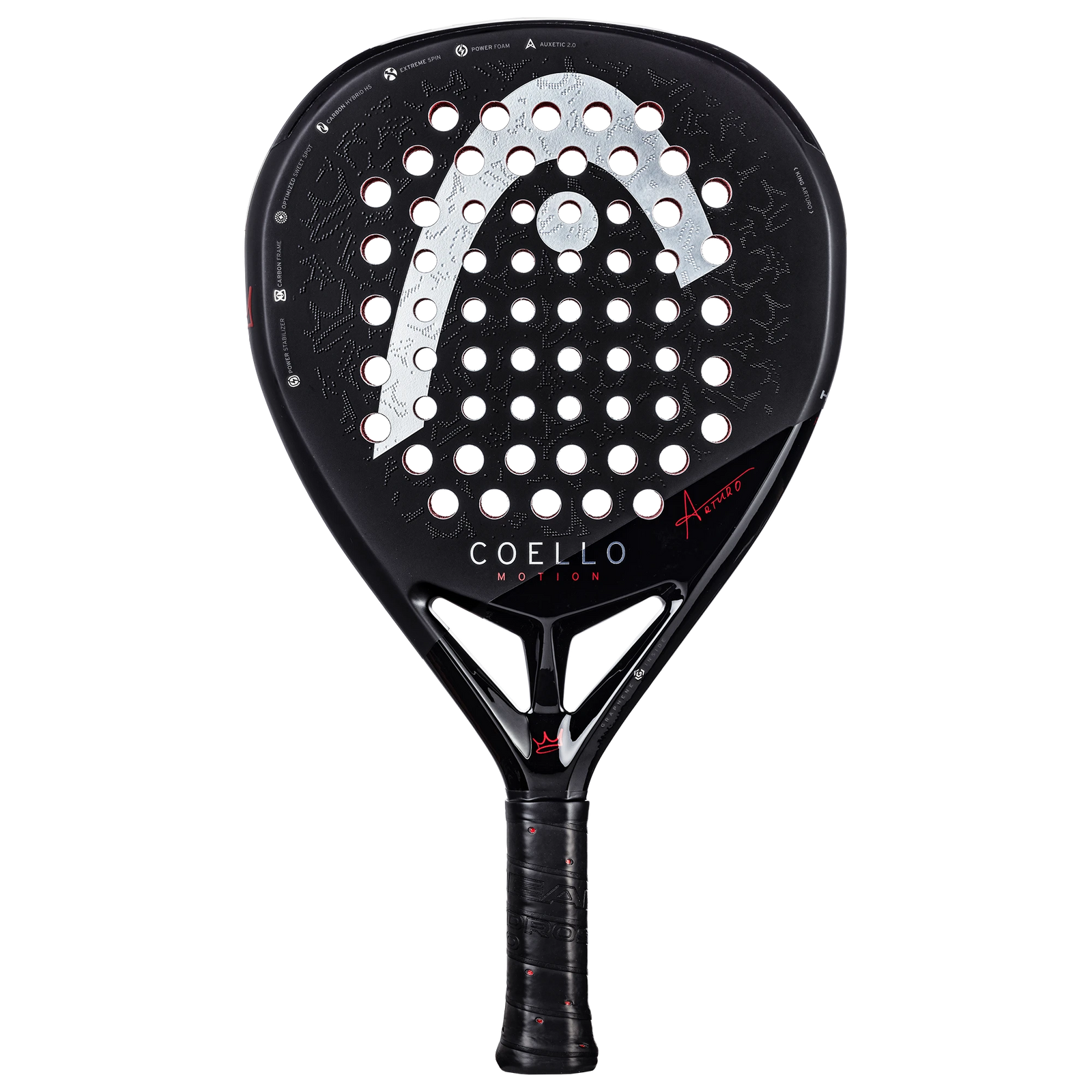
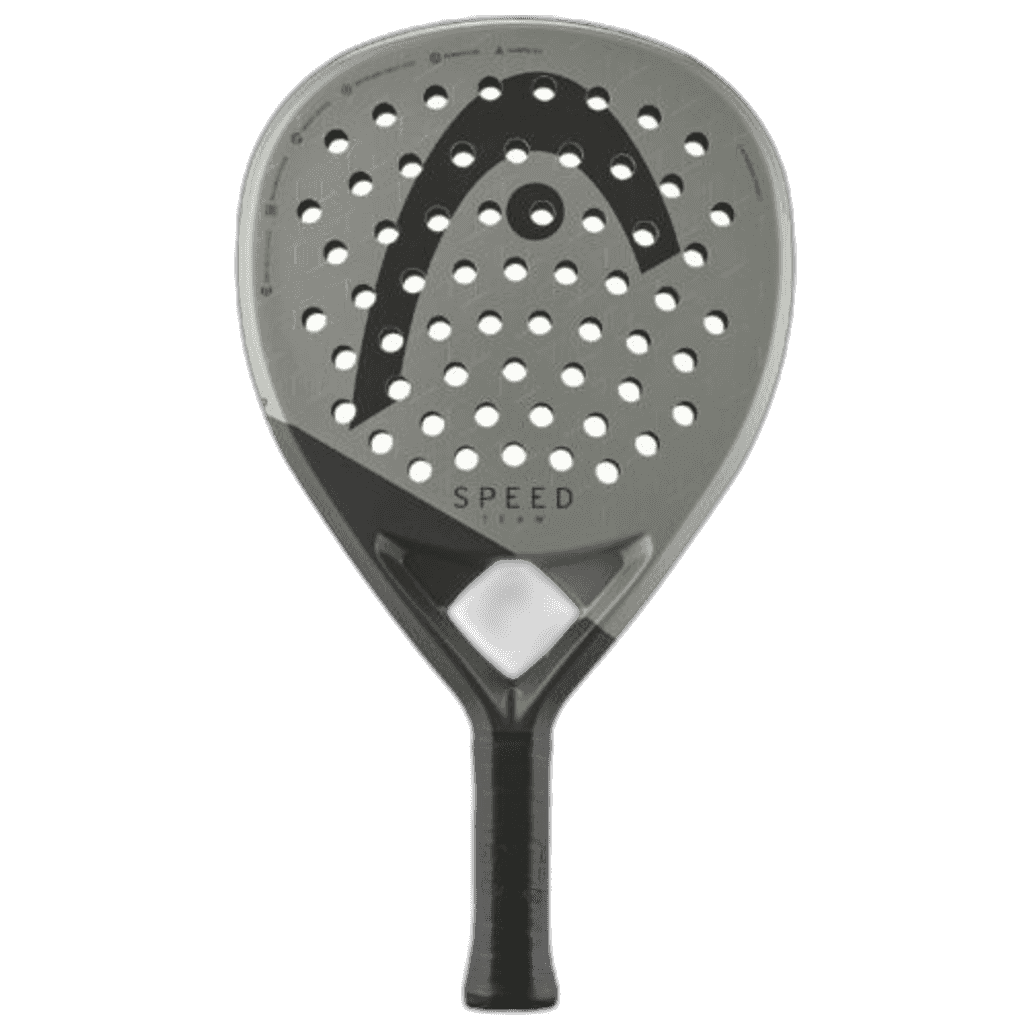
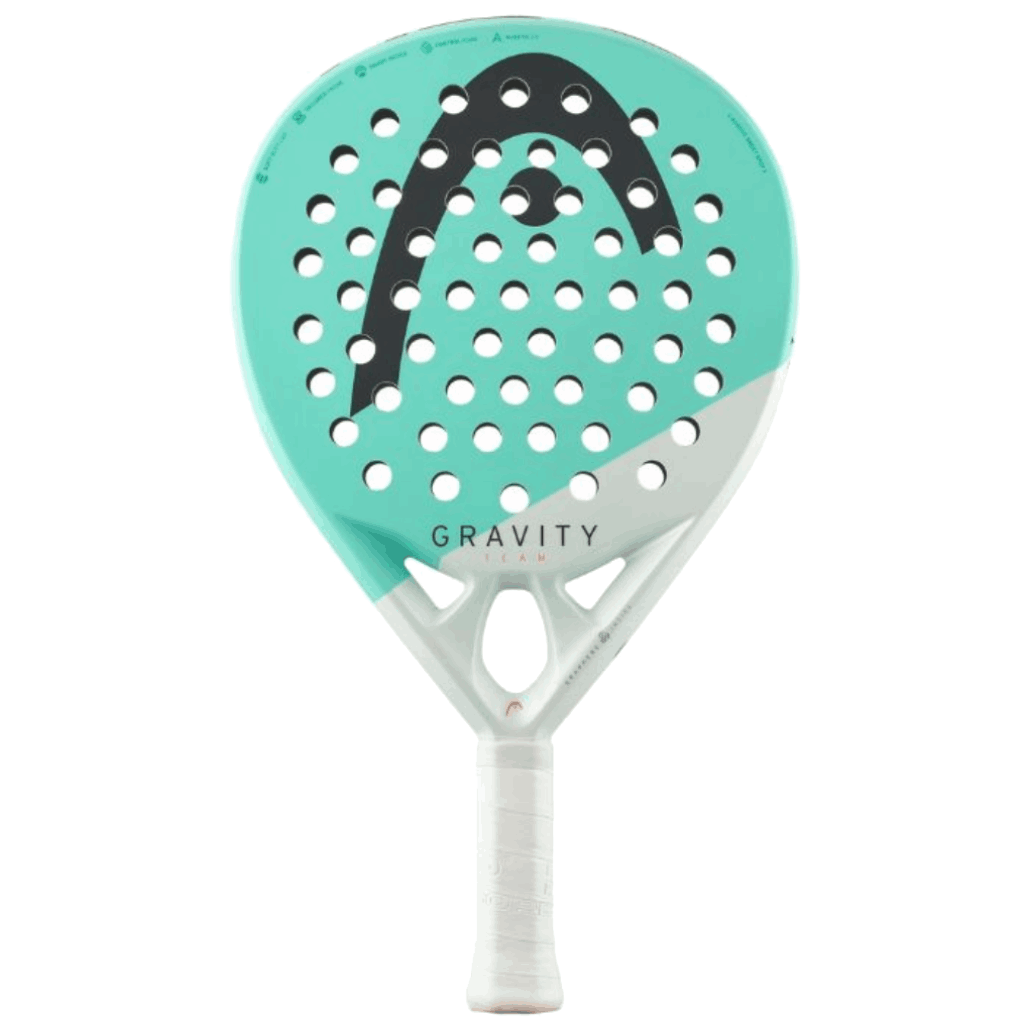
The Team reaches that shape by a different route to its siblings. Where the Pro and the Motion use a carbon and fibreglass hybrid face, the Team is pure fibreglass, and the red Power Foam inside it is a lower density version of the same rubber. The intent is a frame that still hits hard overhead but does not punish a late arm. One more difference looks cosmetic on paper and turns out to matter on court: the Pro and the Motion carry a 3D rough texture with Coello's crown across the face, and the Team is glossy and flat.
What the Reviewers Say
The reviewer at the4Set tested all three Coello models back to back in cold Madrid conditions and came away with a clear read on where the Team sits: "the ball output and the hardness are very similar across the three rackets, the Team just feels slightly softer." He was equally clear about the trade the glossy face makes, noting that the Team has no rough texture and can therefore feel a little more slippery on the ball. His warning about defence applies to the whole line: none of these rackets hand you free output, so a contact that is not clean gets no rescue.
Total Padel hit with the whole range before separating the three models by player, and put the Team's case simply: "for a fibreglass racket at 360 grams it is impressive on comfort, but on power too, so if you want that feeling of easy power at a lower ball speed, this is the one." They place it with intermediate players who want to get to the net as often as possible, which is where the rest of the coverage ends up as well.
Padel Nuestro put the range in context after hitting with it: "the Team is the entry level to intermediate version of the series, the same mould as the Pro and the Motion but with a mid balance and a softer touch, so the game is easier for players working at slower rhythms." The same review flagged something that shows up everywhere in this collection, that the sweet spot across the 2025 Coello frames feels wider than an attacking shape usually allows, which they put down to the Auxetic bridge.
Swedish professional Simon Dahlgren, who played all four Coello frames for OngoalSweden, is the useful check on that. He found the Team noticeably heavier in the hand than the Vibe, with the balance further up the frame, and named the middle of the face as the real difference between the two: "with the Vibe almost everything I hit felt fine, but here, if I am slightly late on the overhead and miss the centre, I lose pace, I lose spin, I lose the clean contact." He still got reasonable spin off the glossy face, and said the Team fits a player who already controls where the ball is going and brings some arm speed of their own, competitive players included, if they want more control and still some pace.
Racketguide is the useful counterweight, because their Racket Validator machine measures rather than describes. Their unit came in at 361g with the balance point 27.3cm up from the butt, roughly 60% of the frame, and the core measured as "quite hard" with medium flexibility. That last figure is worth sitting with: Head markets the Team as the softer stiffness model of the line, and it is softer than the Pro, but it is not a soft racket in absolute terms. Racketguide also measured the face as smooth, which settles a spec disagreement, since several regional Head pages still list the Team with the Extreme Spin rough finish it does not have.
The Spanish coverage lands in the same place. Pádel Al Revés described it as "a softer structure that gives easy power and more comfort, where the mid balance and the fibreglass face help the ball leave the racket without demanding much technique," and put it with players moving up towards advanced level.
Where reviewers genuinely disagree is how low down the ladder it goes. PadelAddict pushes it further towards the start: "this is not simply a basic racket, it is a well judged starter frame with a clear purpose, which is to make the game easier," praising the wide sweet spot and the easy handling. Just Rackets takes the opposite view in their buyer notes, saying it is probably not suitable for complete beginners because the diamond head and the higher balance demand good technique. The 16 verified owner reviews on Racketguide sit between the two at 3.5 out of 5, with one advanced player writing that he likes it "because it can be both aggressive and controlled," and an amateur reporting the flip side: "good control, but I lost power."
How it plays..
The consensus is consistent and it makes sense. The fibreglass face and the lower density foam take the sting out of a shape that would otherwise be hard work, so a decent intermediate can attack with it for two hours and not pay for it the next morning. The weak point is the surface. A glossy, untextured face on an attacking diamond is an odd combination, because the shots this racket exists for, the víbora and the kicked smash, are exactly the ones that need the ball to grip, and there is nothing here to grip with. Players who place the ball and work it with spin will find both the bite and the feedback thinner than the price suggests, while players who simply want to hit through the court will not miss either.
Defense
This is the honest limit of the racket. The balance sits 27.3cm up from the butt, around 60% of the frame length, and all of that mass is above your hand when a ball drops low off the back glass. the4Set was blunt about it across the whole Coello line: none of these frames give you free ball output, so a late or off centre defensive contact lands short instead of deep. The fibreglass face does soften the impact, which helps when you can block a hard drive rather than lift it, and the Auxetic bridge keeps a mishit from dying completely on the face. But a genuine defensive lob out of the corner comes from your legs and your timing. The racket is not going to find that length for you.
Attack
The diamond mould and the high balance do what they promise. The Power Foam is reactive enough that a moderate arm speed still produces a deep smash, and the reinforced shaft keeps the head straight through contact instead of twisting. Against the Pro the ceiling is clearly lower. You are not going to flatten a ball out of the court with this one, and the fibreglass gives up pace at the top end. What you get instead is a smash you can hit the same way every time, which for most club players is worth more than a ceiling they reach twice a match. Kicked smashes are where the smooth face costs you, because the ball slides off rather than biting into the surface.
Netplay
The best part of the racket. Block volleys against a hard drive are stable, the head does not twist, and the softer face means a ball taken slightly off centre still goes roughly where you aimed it. Bandejas come off cleanly and comfortably, with a predictable, medium height flight that is easy to repeat under pressure. The víbora is the shot that suffers. Without the 3D texture the Pro and the Motion carry, the ball leaves flatter and faster than the shape suggests it should, so the shot works as a quick placement rather than a spinning one that dies in the corner.
Our Advice for New Players
Not the right first racket, and this is where the reviewers actually disagree with each other. PadelAddict positions it as a well judged starter frame, while Just Rackets is direct that the diamond head and the high balance ask for technique a beginner has not built yet. The measured numbers back the second view. 361g with 60% of the mass above your hand is a lot to swing while you are still learning where the ball is going to be. Head's own Coello Vibe, same collection, teardrop shape and mid balance, is the model designed for that stage.
Our Advice for Intermediate Players
This is the racket's home. An intermediate who has a reliable bandeja, gets to the net, and wants more on the smash without buying a stiff carbon frame is exactly the player Head built it for. Comfort is the real argument: the fibreglass face and the low density foam mean a long session does not leave your elbow complaining, which is not something most attacking diamonds can claim at this price. The condition attached is that you already put the ball roughly where you mean to, because the racket will not repair a mishit in defence.
Competitive level
Most advanced players will outgrow it, and fairly quickly. The power ceiling and the muted feedback are both below what a competitive player wants from a frame, and the smooth face limits the spin that separates an advanced víbora from an intermediate one. There is one real exception. An advanced player coming back from elbow or shoulder trouble, who wants the Coello shape without the impact of a carbon face, is buying a sensible tool rather than a compromise. Everyone else in that bracket should look at the Motion, which is the model in this line built for them.
How It Compares
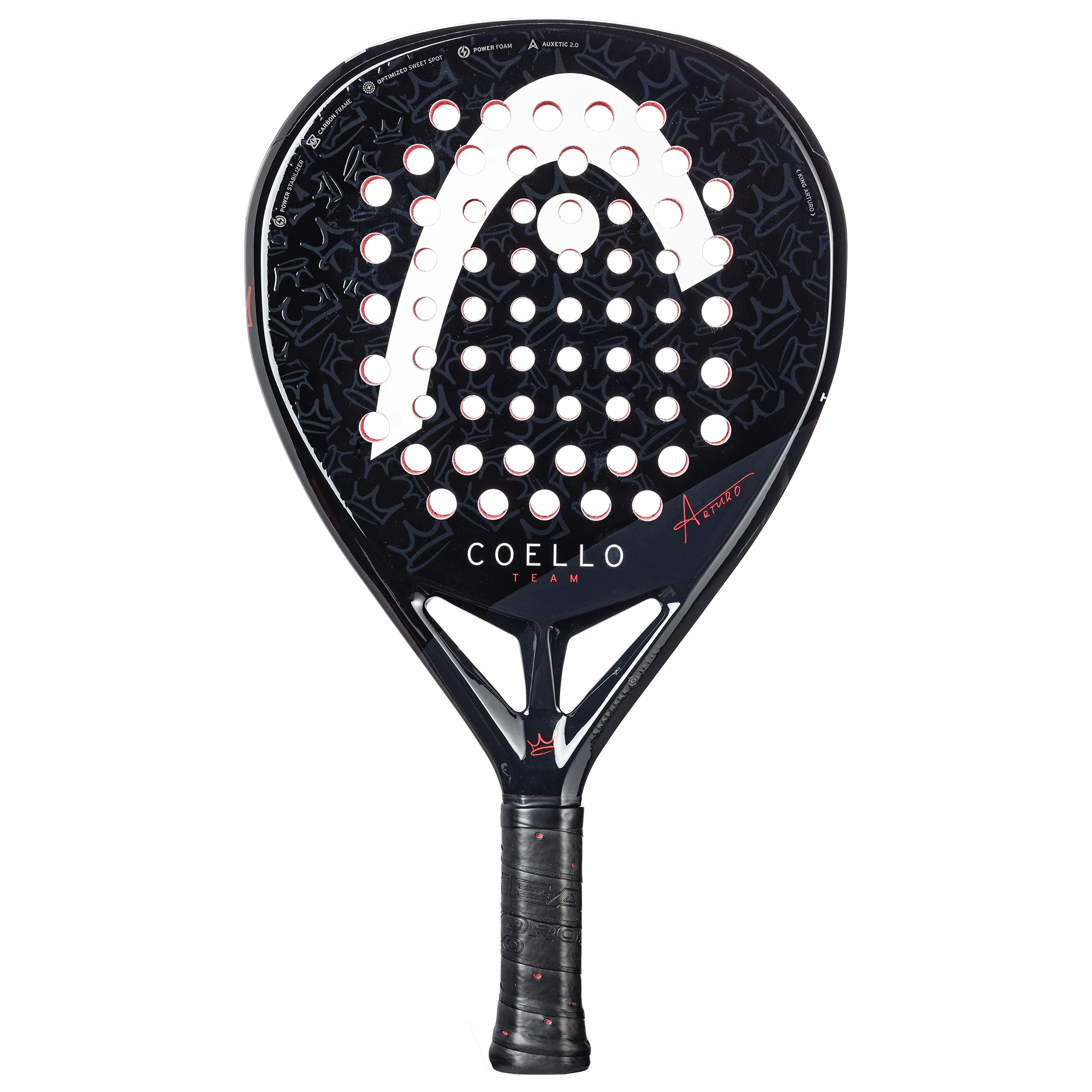
Head Coello Motion 2025 is the obvious step up and the model most reviewers preferred across the range. Same weight bracket, balance 2mm lower, a woven carbon and fibreglass face, and the 3D rough texture the Team does not have. It costs around 100 euros more and it asks for cleaner contact, but if spin and feedback are what you are missing, that is where the difference lives.
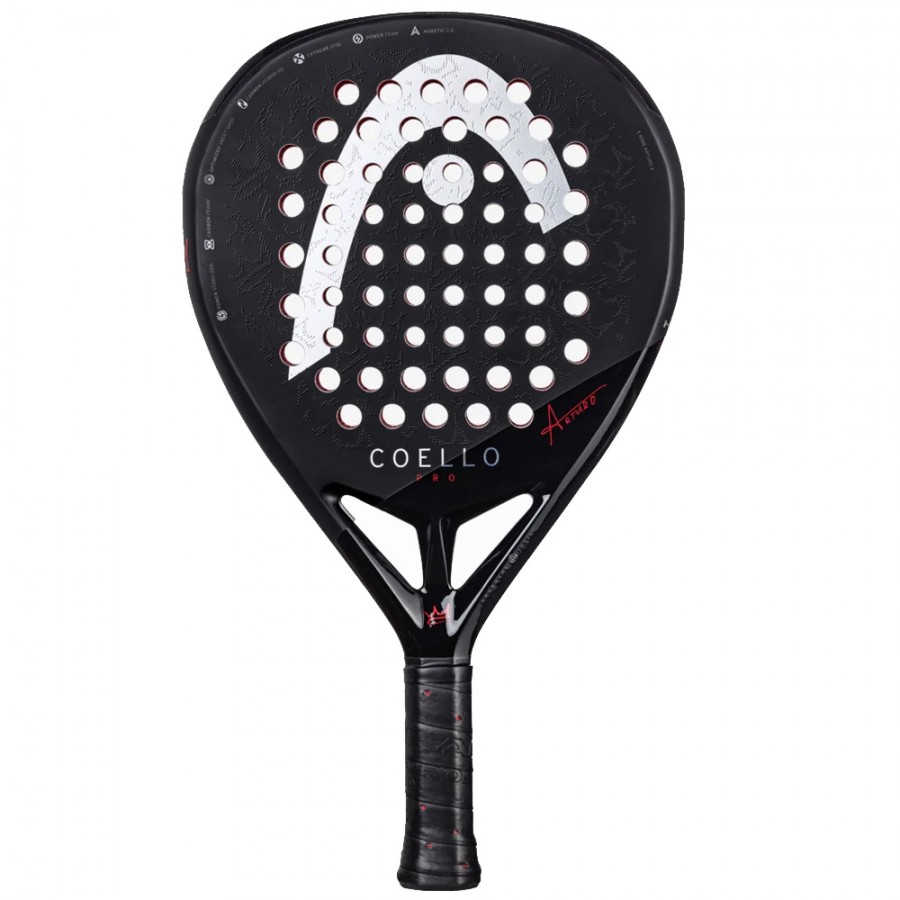
Head Coello Pro 2025 is the actual professional racket: 371 to 385g, hard touch, and a genuine physical demand. the4Set found the Pro tiring inside half an hour of hard play. It only makes sense if you are strong, technically clean, and finishing from the net most points.
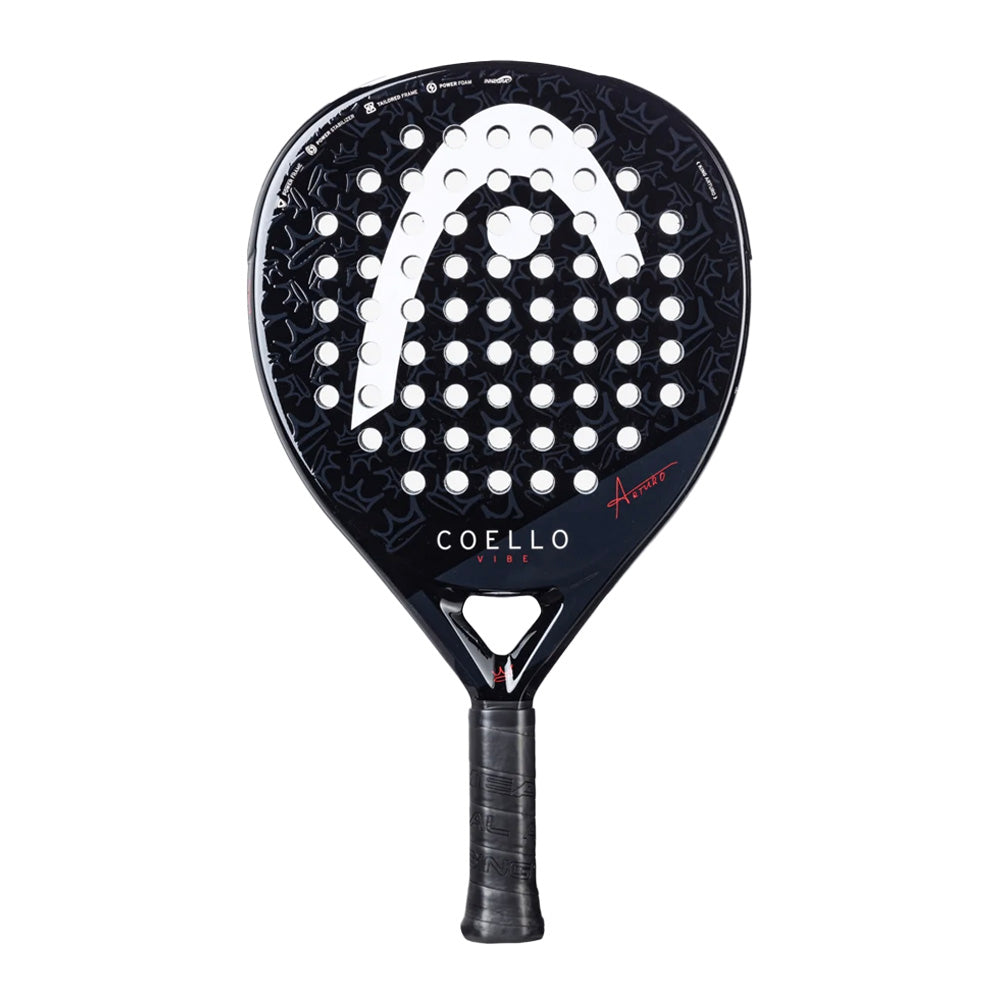
If the shape is the problem rather than the surface, Head Coello Vibe 2025 is the teardrop in the same collection. Softer, lighter in the head, and far more forgiving when you are pushed behind the service line.
Research & References
Our mission is to help you choose the right padel racket with clear, in-depth reviews that make it easy to level up your game. We start with official specs, then break down each racket’s key properties. Finally, we bring together trusted video and written reviews—summarised into one consistent, easy-to-read overview.
Drafted by Padelguru from expert video and written reviews, independent Racket Validator measurements and verified owner feedback, with Bowe Frankema's playing profile as an editorial lens, then reviewed and edited by Bowe Frankema. Nobody at Padelguru has played this racket, so nothing above is presented as a personal play test.
Put the rackets you are considering side by side and keep the ones you play with in your collection.
Get the Padelguru app
Recommended for
Intermediate and high intermediate players who attack from the net, want repeatable smash depth without a stiff carbon face, and care more about arm comfort than about spin.
Skill level
Intermediate, High Intermediate
Court position
Left, Net
Play style
Power, Offensive, Balanced
Best at: Offense (8.0/10)
Average: 7.2/10
the4Set: REVIEW NEW HEAD COELLO (PRO vs MOTION vs TEAM)
OngoalSweden: Simon Dahlgren recenserar Coellos kollektion från HEAD Padel
Total Padel: HEAD Padel Coello range, the exclusive range of Arturo Coello
Shape
Diamond
Weight
Medium (356–370g)
Balance
Power-Oriented (Head-Heavy)
Touch
Medium
Core
Red Power Foam (Lower Density Than The Pro And Motion)
Surface
Fiberglass
Texture
Smooth
Year
2025
8 rackets with characteristics, performance and appeal close to the Head Coello Team 2025.
7.8Head · 2026
Easy smash depth without a full swing
Smooth face gives almost no spin bite
 8.5
8.5Head · 2025
Exceptional power for smashes and aggressive volleys
Heavy weight (375g) requires good technique and physical condition
 7.4
7.4Head · 2025
Very forgiving on off-centre contact
No second gear on the smash
 8.2
8.2Head · 2025
Wide sweet spot for an attacking diamond
Almost no free ball output in defence
 8.1
8.1Head · 2025
Very large, forgiving sweet spot
Ball floats long at high pace
 7.8
7.8Adidas · 2026
Forgiving on off-centre hits
High sweet spot less forgiving on low defensive balls
 8.7
8.7Bullpadel · 2025
Heavy, repeatable flat smash
Nothing back at slow rhythms
 8.3
8.3Head · 2024
Exceptional control and precision
Lower power output compared to offensive rackets
Want to explore more options?
Browse all rackets