
 7.5
Siux Fenix Elite 2026
Siux · 2026
Explosive smash and vibora power
Demanding maneuverability in defense and fast net exchanges
PremiumAdvanced
 8.3
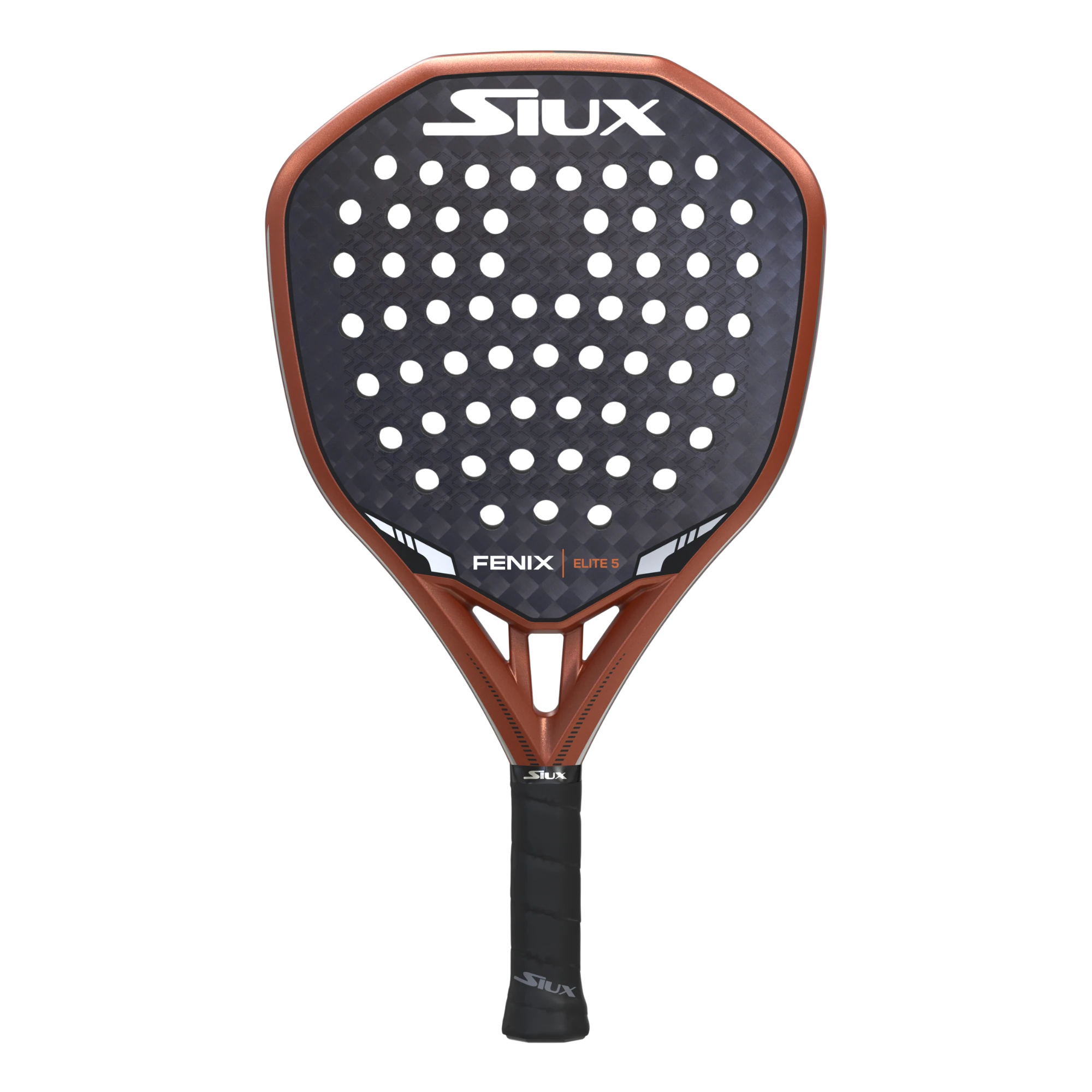
The Elite 5 turns a medium swing into a heavy víbora and still blocks cleanly when the rally speeds up. Pick it if you attack from the net and want most of the Fenix Pro 5 for less money. Skip it if you want a truly stiff racket or maximum flat-smash power: it holds the ball a touch longer than the Pro.

Left-handed right-side player with an attacking, finishing game
Always overperforms in the warm-up, always underperforms in the match. Such is life.
The Siux Fenix Elite 5 2025 is the more affordable sister of the Fenix Pro 5, the diamond Leo Augsburger uses on tour. It shares the Pro's mould and high balance but swaps the 24K carbon face for 12K, and it lists at €229, often selling for around €180 to €200.
It replaces last season's Fenix Lite 4. Two things changed: the face moved from 3K to 12K carbon, and Siux took the holes out of the centre of the face. Reviewers say the second change is the one you feel, with a slightly drier, more direct sweet spot. The hard EVA core and the rough 3D finish carry over, and on court the touch lands at medium-plus rather than truly hard.
What the Reviewers Say
The three dedicated reviews agree on the big picture: this is an attacking diamond that is easier to play than it looks, and the rough face does a lot of the work.
Probando Palas liked how well it holds up when the pace goes up, calling it "a very complete racket: at high pace it feels just as good, or almost, as a drier and stiffer one." He puts its feel close to the Head Coello Motion and rates the sweet spot at least standard size, larger than on most attack rackets.
Padel Test by Roberto Cardi scored it highest overhead: "On the smash this racket is a real powerhouse, and it is very easy to load with the arm." He was less convinced by the sweet spot at first, finding it central and not especially wide, and he measured the balance lower than the others, closer to 26 cm than 27.
Fabio Ferro tested it against the Pro and concluded that "it is not far from the Pro in many ways, it costs less, and it has more control." His measurements (356g without the strap, balance 27.5 cm) back up the high-balance claim. His one real complaint was cosmetic: the clear coat on the face marked and bubbled early in his test.
Where they differ is the ceiling. Fabio found the flat and kick smash less explosive than on the Pro 5, with a little less spin. Probando noted that players used to very hard rackets may feel the ball stay on the face a fraction longer on a flat smash.
How it plays..
The Elite 5 closes points without asking for a perfect swing, and the 3D face bites hard on the víbora and kick smash. The trade-off shows at the very top end: on a full flat smash it holds the ball a fraction longer than a stiff frame, and the Fenix Pro 5 hits harder. Right-side attackers who like to finish with the forehand volley get a quick, head-heavy frame at the net. Players who want a genuinely firm racket should go straight to the Pro.
Defense
For a diamond it defends better than you would expect. Reviewers found a sweet spot of at least standard size, good ball output at medium pace and enough help to lift the ball out of the back wall; Roberto Cardi scored both low and high wall exits well. The rough face also helps on a slow chiquita. The high balance is the limit: long defensive rallies ask more of the arm than a teardrop would, and off-centre blocks lose some precision.
Attack
This is where the racket earns its price. The head weight and the 3D finish send the víbora deep with plenty of spin, and a sliced smash kicks up without a big arm action. The flat smash is powerful but not the last word: next to the Fenix Pro 5 it is a little less explosive, and players coming from very hard rackets may feel the ball sink into the face slightly.
Netplay
Volleys gain depth as soon as you drop the tip, and the drier centre of the face gives firm blocks that still go deep at high pace. Slice volleys carry a lot of spin. The drop shot works well because the rough face takes speed off the ball, though you need to lengthen the stroke a little. The bandeja is fine but takes a bit more effort because of the balance.
Our Advice for New Players
Not a good first racket. The high balance and the medium-sized sweet spot punish a swing that is still developing. A round or teardrop racket with more free ball output will help you improve faster.
Our Advice for Intermediate Players
Strong intermediates with a sound swing who want to attack more will get the most out of it. It gives easy power overhead and more control than the Pro, and Roberto Cardi also sees it as a good attacking option for women because of its weight. If you mostly defend from the back, pick something with less weight in the head.
Competitive level
A strong choice for advanced attackers on either side who want a diamond that stays controllable at high pace. If flat-smash power or a truly stiff feel matters most, the Fenix Pro 5 is the better tool.
How It Compares
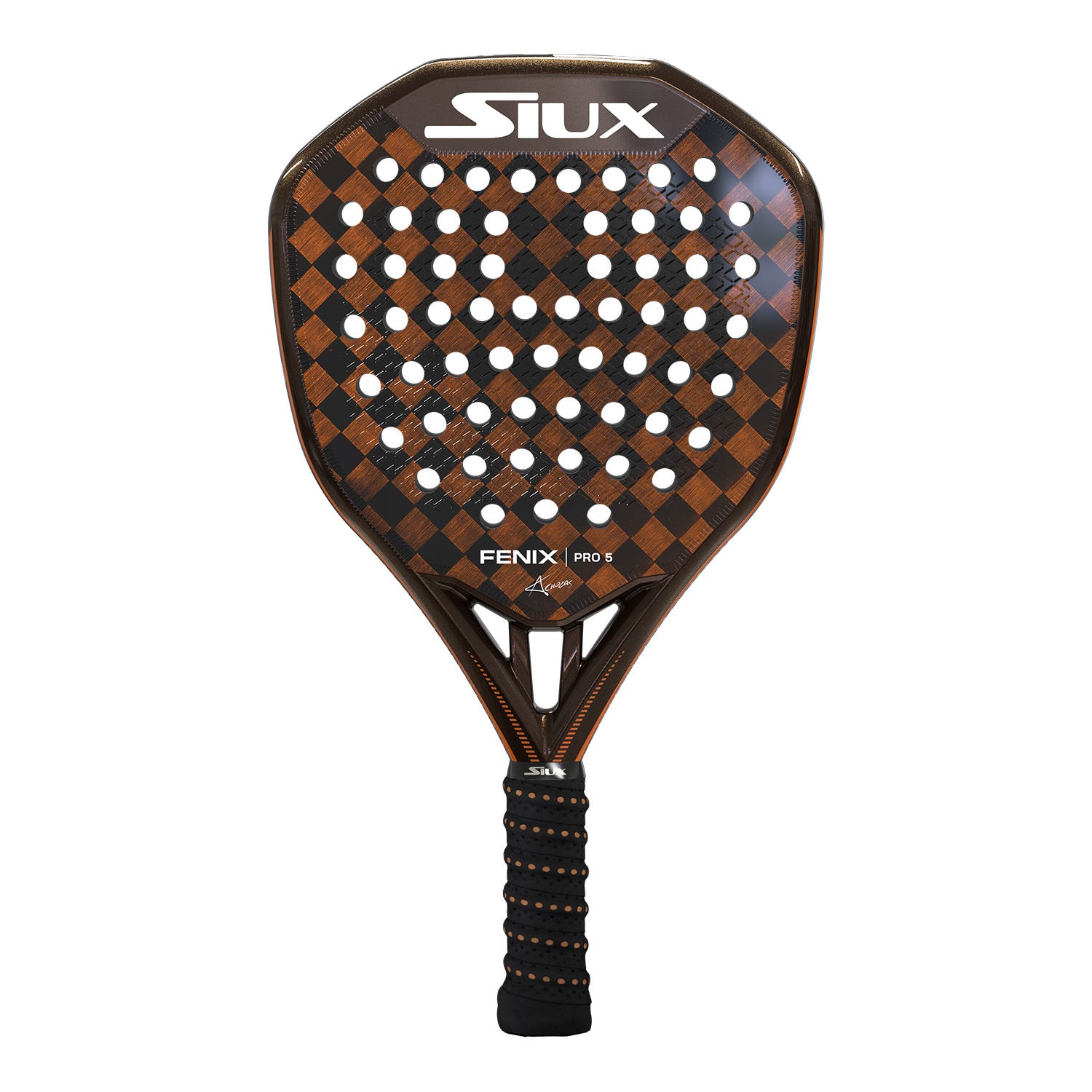
Siux Fenix Pro 5 2025: same mould, 24K face. The Pro has more pop on the flat and kick smash and grips the ball slightly better. The Elite 5 is more controlled, a little easier on the arm and cheaper. Pick the Pro if you finish points with pure power, the Elite if you want most of that at a calmer pace.
Head Coello Motion 2025: Probando Palas compares the two for feel. Both are forgiving attacking diamonds, and Fabio Ferro points out that the Elite 5 often sells for around half the Motion's price.
Research & References
Our mission is to help you choose the right padel racket with clear, in-depth reviews that make it easy to level up your game. We start with official specs, then break down each racket’s key properties. Finally, we bring together trusted video and written reviews—summarised into one consistent, easy-to-read overview.
Drafted by Padelguru from expert video reviews with Christoph Herrmann's playing profile as an editorial lens, then reviewed and edited by Christoph Herrmann.
We review the rackets as they land. Get the new ones, the lessons we publish and what the creators are making, every other week.
Recommended for
Strong intermediate and advanced players with an attacking game, on either side, who want a head-heavy diamond that forgives more than a pro model.
Skill level
Court position
Both sides, Net
Play style
Offensive, Power, All-court
Best at: Offense (8.8/10)
Average: 8.1/10
Probando Palas: Siux FENIX ELITE 5, ¡potencia fácil en una pala muy polivalente!
Padel Test by Roberto Cardi: SIUX Fenix Elite 5, leggera e potente
Fabio Ferro: Siux FENIX ELITE 5, conviene rispetto alla Pro?
Core
Eva Hard
Surface
12K Carbon
Texture
3D Pattern
Year
2025
8 rackets with characteristics, performance and appeal close to the Siux Fenix Elite 5 2025.
7.5Siux · 2026
Explosive smash and vibora power
Demanding maneuverability in defense and fast net exchanges
 8.4
Siux · 2025
Enormous smash power
Slow to manoeuvre on defence
 7.9
Siux · 2026
Explosive flat and kick smashes
Slow to recover in defense and fast volley exchanges
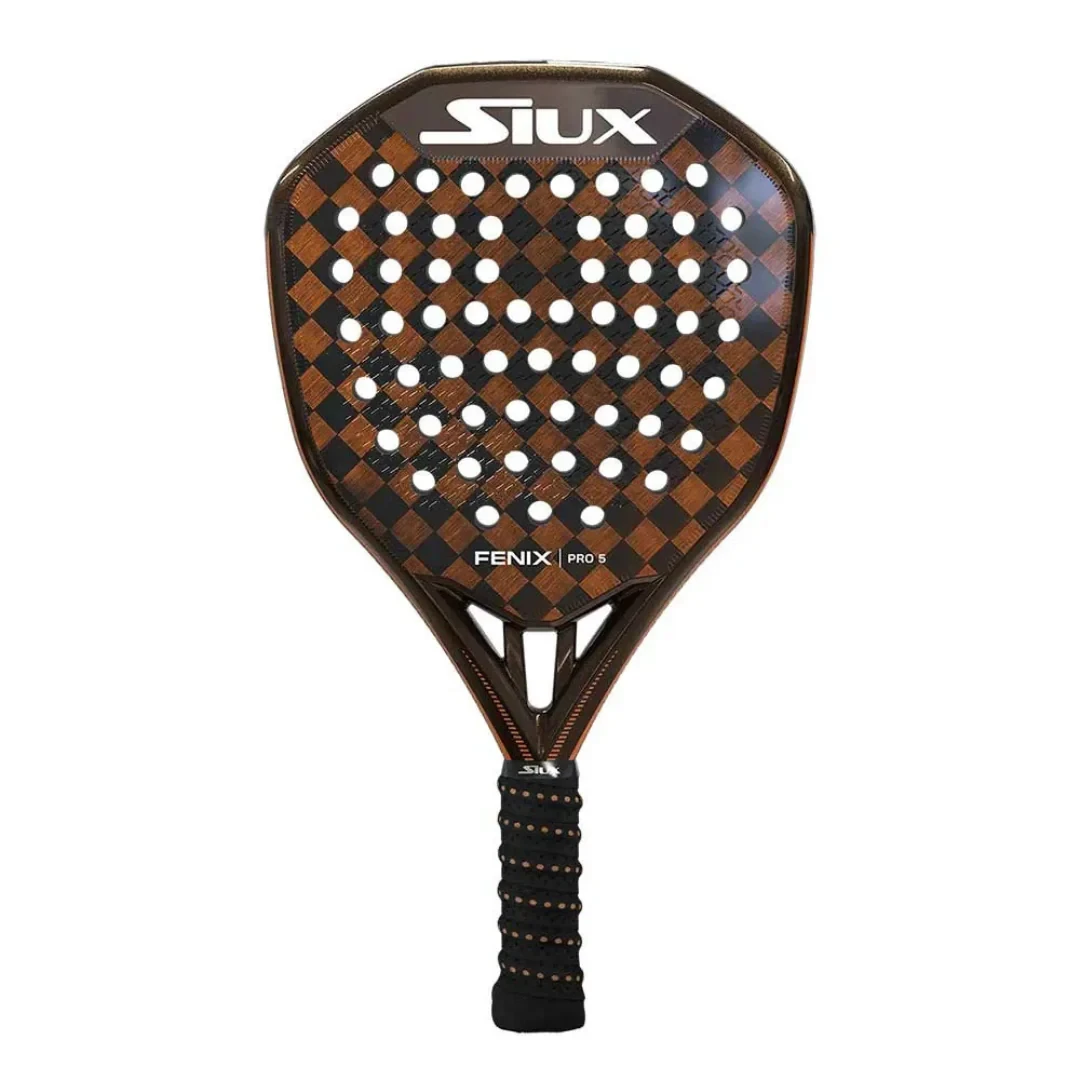 8.2
Siux · 2025
Exceptional power generation with the 24K carbon face
Less forgiving on off-center hits due to smaller sweet spot
 8.7
Siux · 2025
Exceptional power generation for decisive offensive shots
Not forgiving on off-center hits
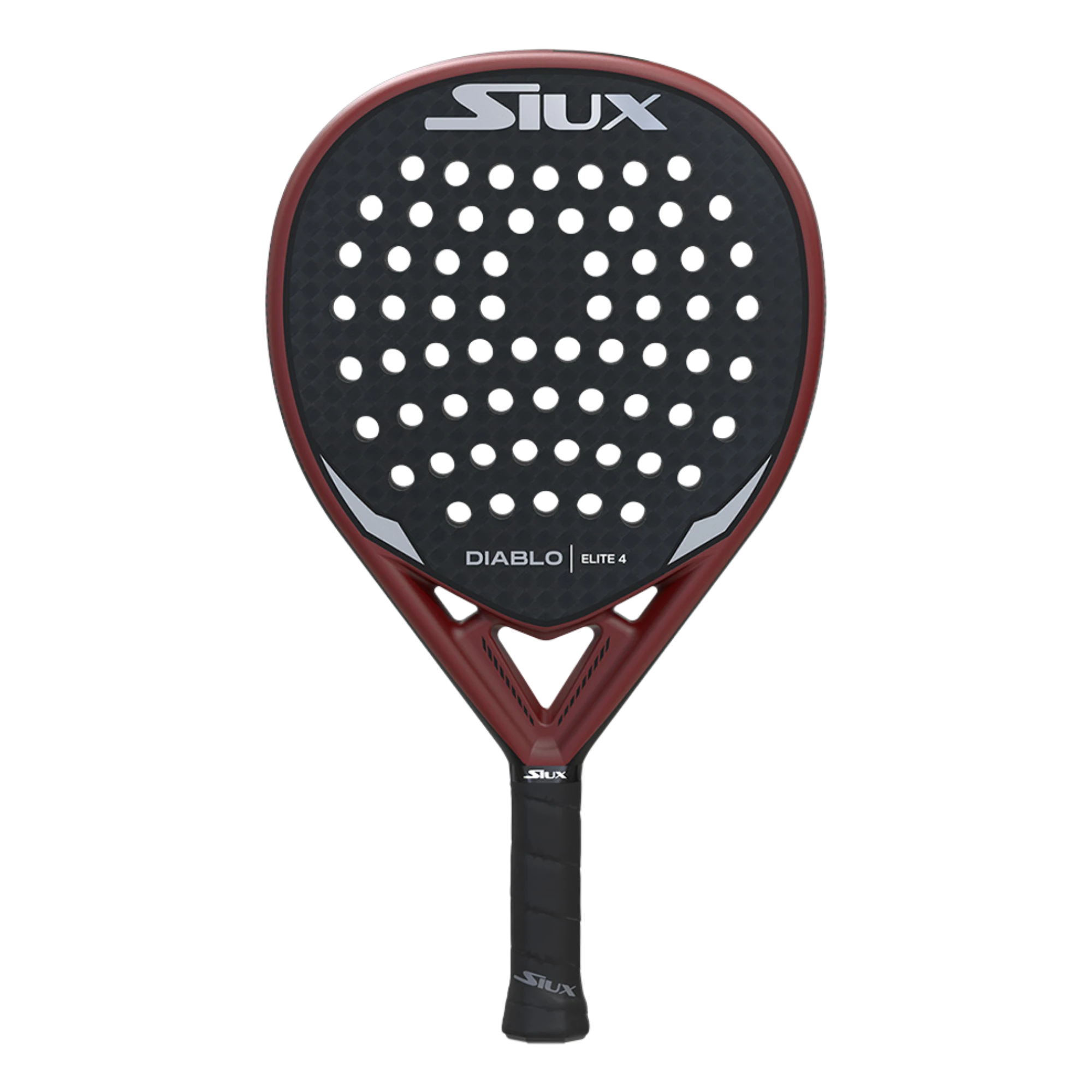 7.6
Siux · 2025
Excellent defence off the back glass
Absorbs hard hitting instead of returning it
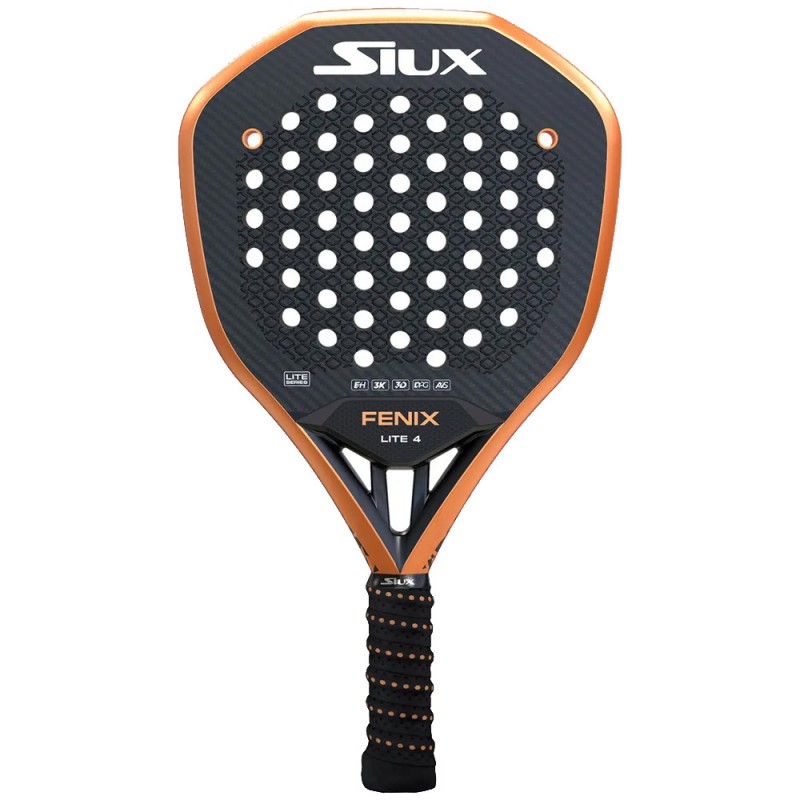 8.2
Siux · 2024
Strong power on smashes and viboras
Firm feel can punish developing technique
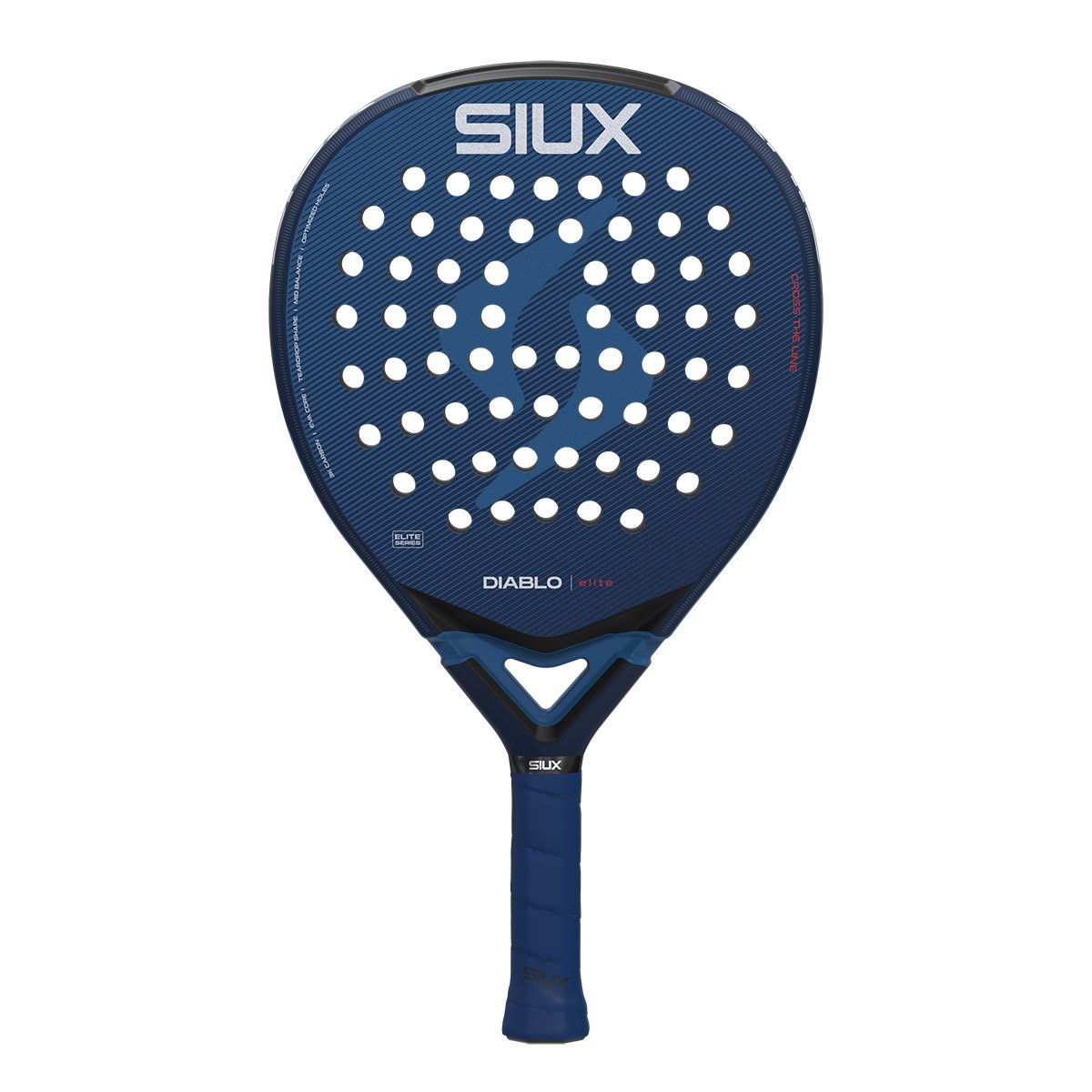 8
Siux · 2026
Depth from a short swing
Low ceiling on overhead finishing
Want to explore more options?
Browse all rackets