
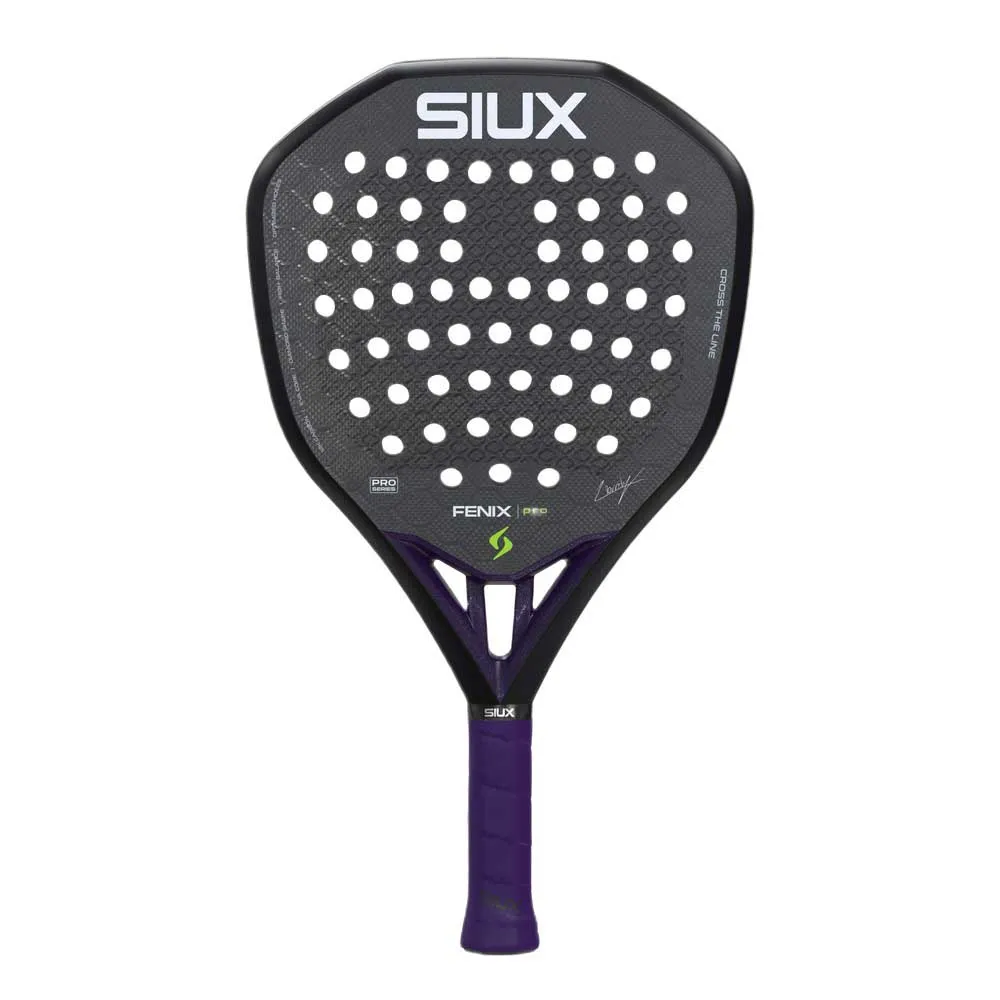
 8
Siux Fenix Pro 2026 Glow Purple
Siux · 2026
Exceptional smash and overhead power
Compact sweet spot punishes off-centre hits
PremiumAdvanced
 7.9
A left-side attacker with a fast arm gets a racket that turns prepared smashes and víboras into points with little extra effort. Right-side point builders and developing players should look elsewhere, because the high balance and small sweet spot give little help on late defensive balls and in quick exchanges.

Tactical right-side player who builds points and reads the game
Tactical right side player who is not afraid of using every trick in the book to "disturb the rhytm" of the opponent.
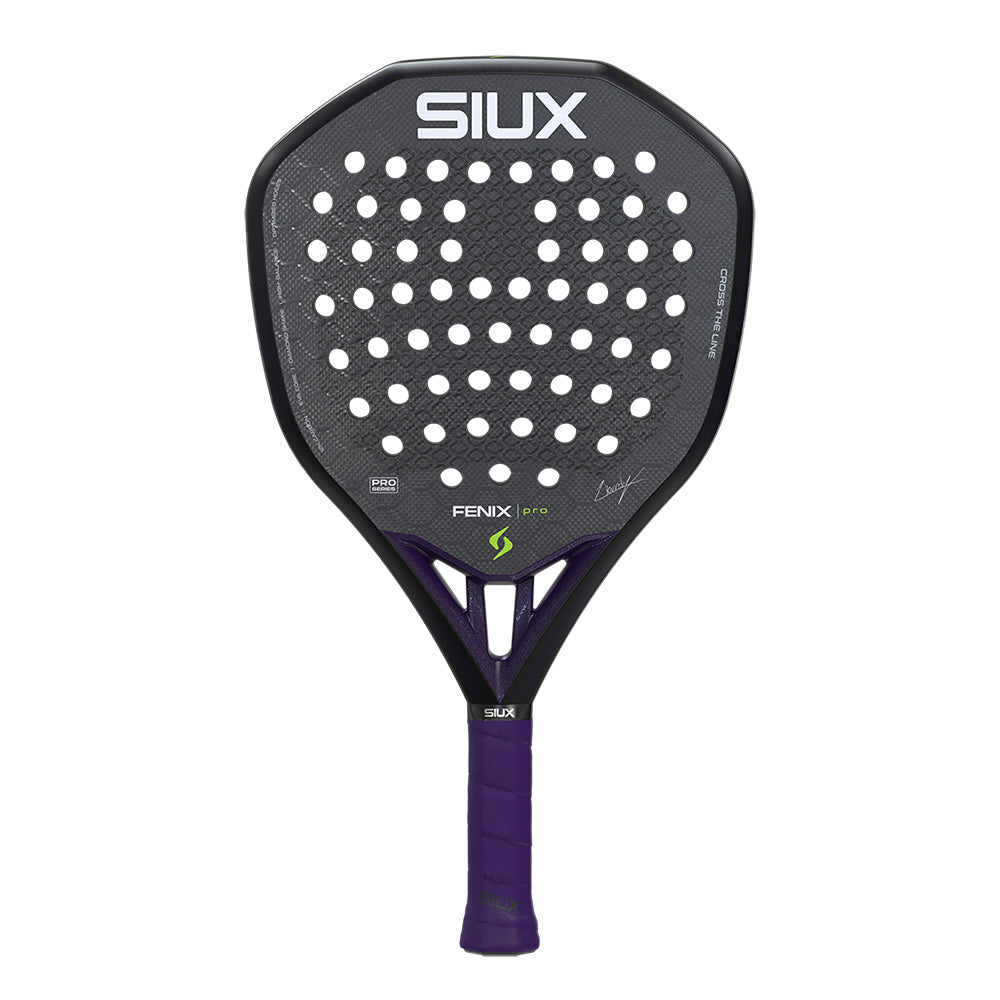
The Siux Fenix Pro 2026 Black is Leo Augsburger's racket and the most attacking model in the Siux 2026 range. It is a head-heavy diamond with Siux's hardest EVA core and a deep 3D texture moulded into the faces. List price is €350, but it is widely discounted to around €180–255.
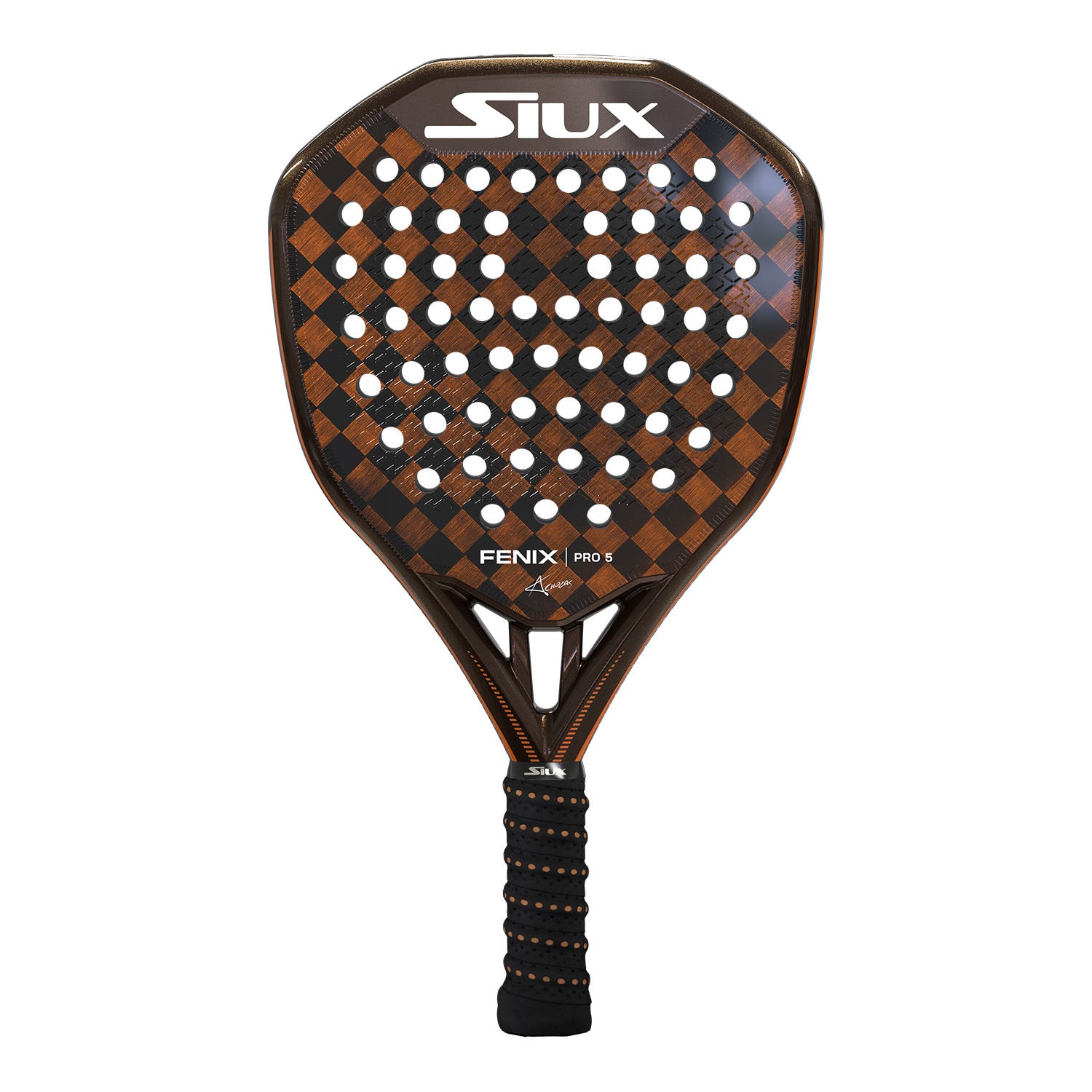
Compared with last year's Fenix Pro 5 Black, the change is in the face: Siux moved to 12K carbon with a new weave and kept the reinforced heart and the replaceable strap. Reviewers disagree on what that did to the feel. On the character they agree: the racket is built to finish points overhead and asks for good preparation on every other shot.
What the Reviewers Say
Every reviewer starts with the overhead. Dani 13 does not see himself as a strong smasher, yet he came away sold: "If you want a powerful racket, this is one of the best we've tested this year, if not the best." Flat smashes and kick smashes came off with plenty of height without him forcing the swing, and he named the smash and the víbora its two best zones.
Probando Palas reached the same verdict from the net: "At the back of the court it takes work to move, but at the net it's a real cannon." His scores were a 10 for the víbora and a 7 or 8 for the bandeja, because the head weight makes slower overheads harder work. He also put the 3D texture among the best he has tried this year for slice volleys that stay low.
PADELREVIEW ENG weighed his unit at 358g with a 27.5 cm balance. At the net he called it "a razor blade", and from the back he felt almost no trampoline effect. He would not recommend it to a right-side player.
Zona de Pádel tested it with the rest of the Siux 2026 range and saw one trend across the line: firmer faces and less bounce than in 2025. On the Fenix, they felt Siux had "reduced its reactivity, making it a more competitive racket at a high level." Defending was harder with the diamond shape, though less punishing than with some rival power rackets.
The written review on padel.how scores it 71/100 and calls it a racket "for a player who already creates speed." Power gets its top mark, while sweet spot, defense and comfort get the lowest.
Two points split the reviewers. Probando Palas thinks the sweet spot grew compared with 2025 and felt more give from the core at medium pace. Dani 13 found it slightly smaller than last year's and tested two units that differed clearly in stiffness. If feel matters to you, try the racket before you buy.
How it plays..
Everything about the Fenix Pro 2026 points at the last shot of the rally. The high balance and a sweet spot that punishes late or low contact make the shots before it harder, and defensive lobs and quick exchanges get little help from the racket. Right-side players who build points with patience will find it hard work. It makes most sense for a left-side player who gets a lot of overheads and has the arm speed to use them.
Defense
Defense is its weakest zone. The high balance makes the racket slow to bring round under pressure, and reviewers left lobs short or lifted balls higher than they wanted when they arrived late. When you are set and can play a firm ball from the back, control is good and the dry feel gives clear feedback.
Attack
This is where it earns its price. Flat smashes, kick smashes and víboras come off fast and deep, and the head weight does part of the work once you generate swing speed. Softer overheads such as a slow bandeja need more arm than on a friendlier racket, and the ball can land short if you do not follow through.
Netplay
At the net it hits heavy and stays precise. The deep 3D texture keeps slice volleys low and sends flat volleys deep with little effort. Hand speed is the catch: in fast volley exchanges and sudden changes of direction the head can trail, so short, early swings work best.
Our Advice for New Players
Not a good choice. The hard feel, small sweet spot and high balance punish off-centre hits and a technique that is still developing. The weight in the head also tires the arm and shoulder.
Our Advice for Intermediate Players
Only for strong, attacking intermediates who already hit clean overheads. Most players at this level will get more from the Siux Electra Pro 2026 or a softer racket with a more even balance.
Competitive level
The target player. Advanced and competitive left-side players with a fast arm get one of the most powerful overheads among the 2026 rackets, plus strong volleys when they prepare early.
How It Compares
Against the Siux Electra Stupa Pro 2026, the Fenix gives more power overhead and more weight in the volley. The Electra is quicker in the hand and easier to defend with, so choose it if you play on the right or spend long spells at the back of the court.
Dani 13 places the Fenix between the Head Coello Pro and the Adidas Metalbone HRD, with a drier feel than both, and says it asks for less technique than Babolat's Viper models. If you want a little more help and bounce, look at the Coello Pro. For a firm, direct response that stays controlled at high pace, the Fenix is the better pick.
Research & References
Our mission is to help you choose the right padel racket with clear, in-depth reviews that make it easy to level up your game. We start with official specs, then break down each racket’s key properties. Finally, we bring together trusted video and written reviews—summarised into one consistent, easy-to-read overview.
Written by Padelguru from the expert reviews listed above, with Lars Kloezeman's playing profile as an editorial lens. Not play-tested.
We review the rackets as they land. Get the new ones, the lessons we publish and what the creators are making, every other week.
Recommended for
Advanced and competitive left-side players who attack from the net and finish with the smash and víbora. Not for beginners or for right-side players who defend first.
Skill level
Court position
Left, Net
Play style
Power, Offensive
Best at: Offense (9.3/10)
Average: 7.8/10
SIUX FENIX PRO 2026: Review and Impressions, Dani13
The most powerful racket from SIUX? SIUX FENIX PRO 2026
Siux Fenix Pro 2026: Review In English, A racket for Leo Augsburger-Style Players
Siux 2026 Collection Review: Electra Pro, Fenix Pro, Diablo Pro
Core
Eva Pro (Hard Eva)
Surface
12K Carbon
Texture
3D Pattern
Year
2026
8 rackets with characteristics, performance and appeal close to the Siux Fenix Pro 2026 Black.
8Siux · 2026
Exceptional smash and overhead power
Compact sweet spot punishes off-centre hits
 8.4
Siux · 2025
Enormous smash power
Slow to manoeuvre on defence
 8.7
Siux · 2025
Exceptional power generation for decisive offensive shots
Not forgiving on off-center hits
 7.5
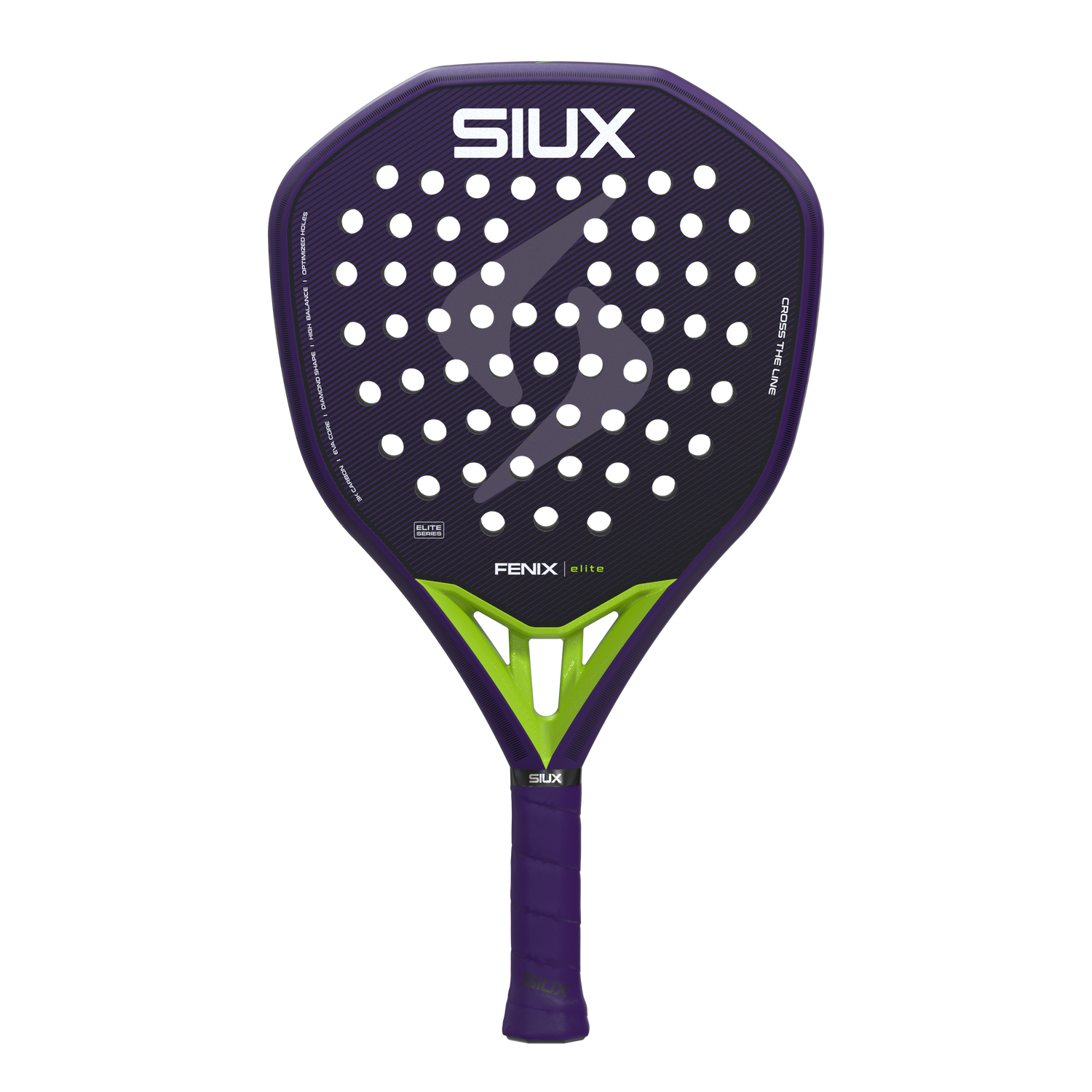
Siux · 2026
Explosive smash and vibora power
Demanding maneuverability in defense and fast net exchanges
 8.2
Siux · 2025
Exceptional power generation with the 24K carbon face
Less forgiving on off-center hits due to smaller sweet spot
 8.5
Siux · 2024
Exceptional power generation with diamond shape
Requires significant physical strength to handle
 8.3
Siux · 2025
Easy pace on víbora and kick smash
Less flat-smash punch than the Fenix Pro 5
 8.2
Siux · 2024
Strong power on smashes and viboras
Firm feel can punish developing technique
Want to explore more options?
Browse all rackets