
 7.8
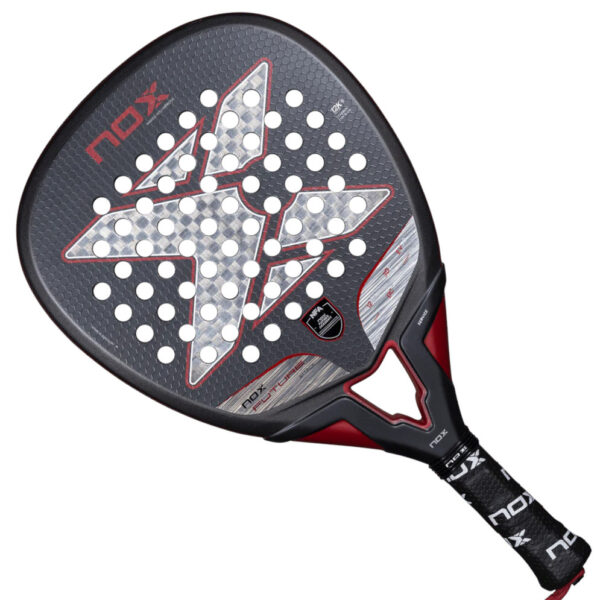
7.8Nox Future Attack 12K Alum Nfa Series 2025
Nox · 2025
High ball speed on bandeja and smash
Sweet spot smaller than AT Attack 12K — off-center hits penalized more
Mid RangeAdvanced
 7.8
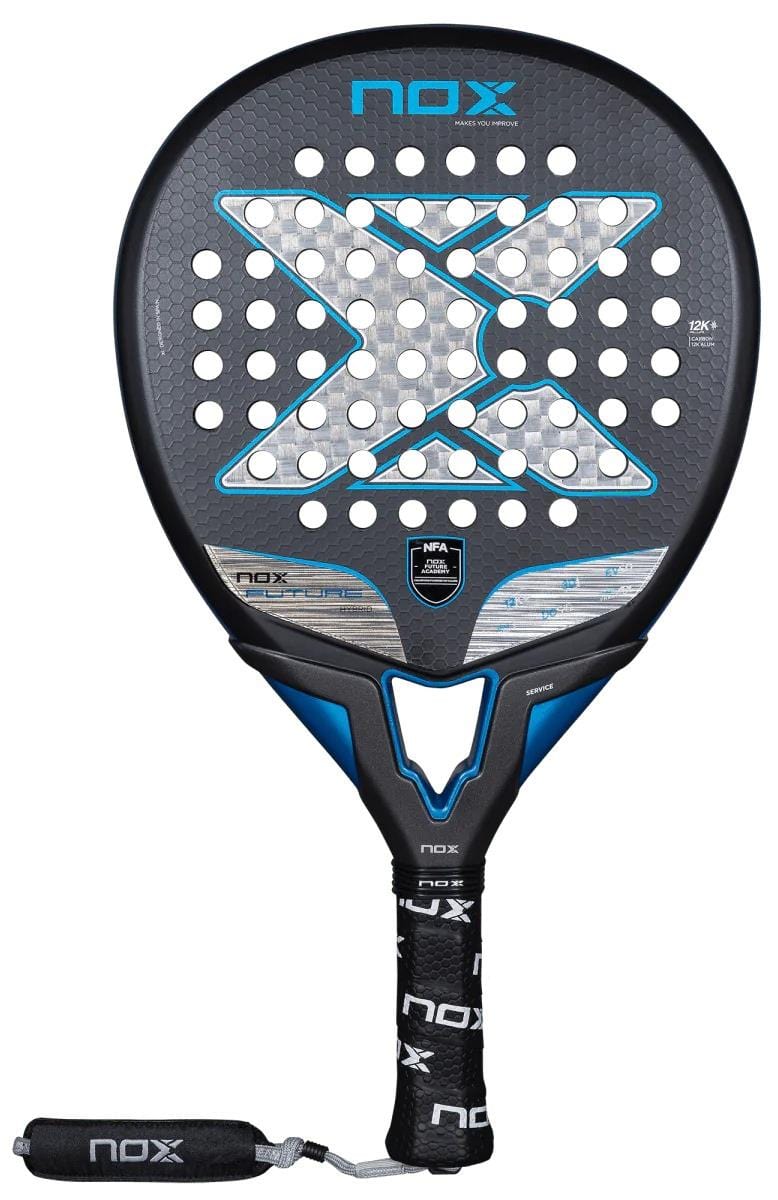
7.8The Nox Future Hybrid 12K Alum 2025 suits intermediate-advanced players who want a versatile teardrop frame with real punch on finishing shots. The EV50 core and Carbon Alum 12K face deliver a firm, direct response that rewards clean striking. Players who rely on soft ball feedback for precision may find the contact feel too blunt, but for those who can commit to technique, the wide sweet spot and manageable balance make it a capable all-court tool.

All-court player who prizes control, feel and spin
Bowe is convinced that the racket, shoes, court are the problem, never his own abilities.
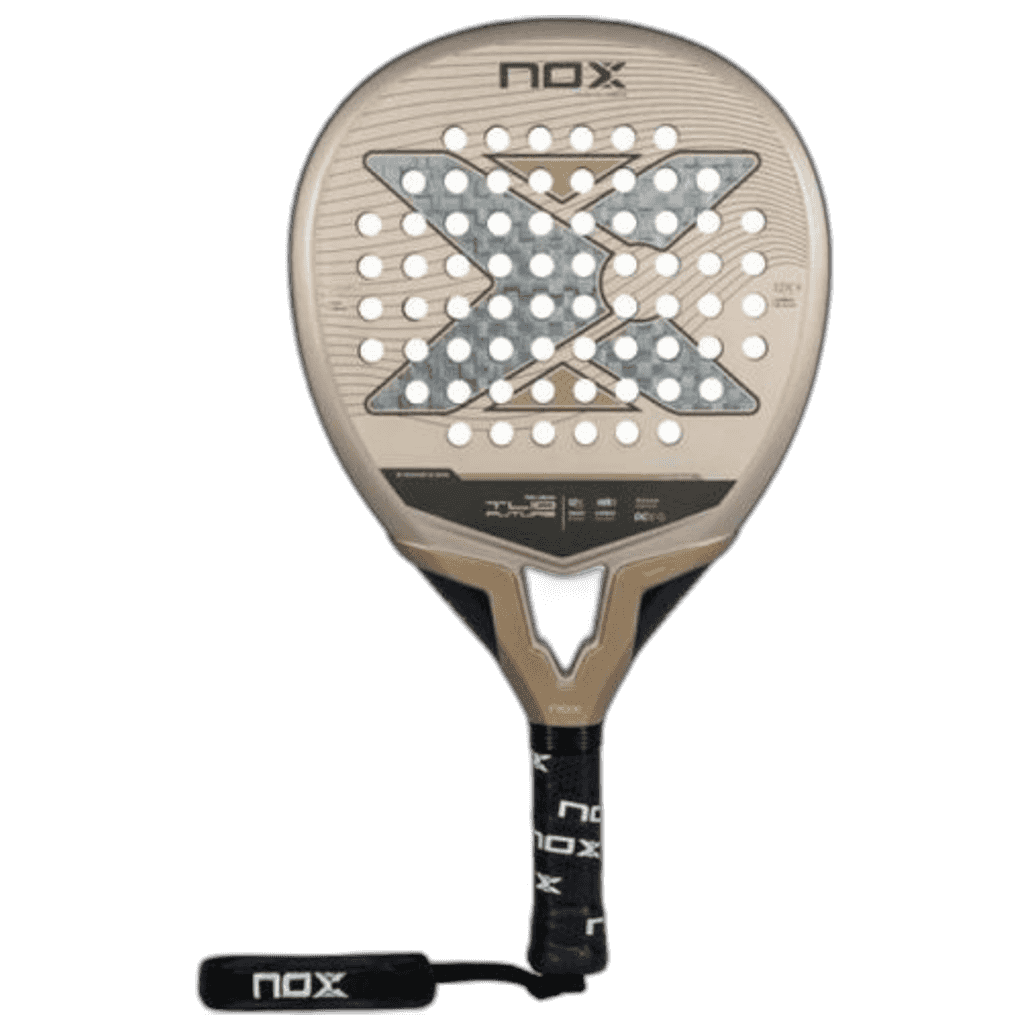
The Nox Future Hybrid 12K Alum 2025 is the teardrop option in Nox's NFA line, a range built for and tested by the youth and development players in the brand's academy program. It sits in the middle of the NFA collection, between the round control variant and the diamond attack variant. All three share the same Carbon Alum 12K face, EV50 core, and Spin 3D surface texture. RRP is €269.99.
The 2025 update adds the Dynamic Composite Structure (DCS), which densifies material at the frame-to-face junction to reduce the hardness step there and protect against cracking on off-center hits. The Custom Grip system and SmartStrap wrist cord also arrive this year. Within the trio, the teardrop shape positions the sweet spot slightly above center, wider than the diamond variant and with more punch than the round. Frame stiffness is 83ra; face stiffness 64ra. Weight sits between 360 and 375g with a 38mm profile.
What the Reviewers Say
Racketlife (Danish review channel) describes the Future Hybrid as placing its sweet spot slightly above center in a teardrop shape, noting that "the hard foam inside gives a really solid, direct hit, while the 12K aluminized carbon on top softens things slightly and expands the sweet spot a little." They rate it as offering strong value for money, sitting between the control and power variants in the NFA line.
Padel Chiquito tested the full NFA Future range on court and was direct: "The feel is quite dry, with a slight reactivity, which means defense is not its strong point, and on fast offensive balls that reactivity will also work against you." They noted the racket suits players who swing at moderate pace, where the EV50's firmness helps add power, but that advanced players accustomed to soft ball feedback will find the contact feel unsatisfying. Their overall verdict: manoeuvrable, with a decent sweet spot, but the reduced feel at higher ball speeds is a genuine limitation.
PadelScout's written analysis rates it 8.3 out of 10 overall (power 9, maneuverability 8.4, sweet spot 8.4, control 7.9, rebound 7.6) and describes on-court behaviour as "crisp and stable: shots feel punchy rather than cushioned, which helps when attacking with pace." They highlight that the rough surface adds usable spin and that the racket rewards practiced timing, but flag that the firm medium-hard feel demands conditioning for longer sessions.
The consensus across sources points in the same direction: strong for attack-shaped play and wide-angle point finishing, less convincing as a touch or feedback tool. Reviewers agree the sweet spot is the standout feature, and none dispute that ball feel is compromised at faster speeds.
How it plays..
For intermediate-advanced players who need a racket that covers both ends of the court, this one holds up. The teardrop shape and medium-high balance give it enough punch for smashes and net finishes without sacrificing too much width on the sweet spot. The broad contact zone is forgiving on timing.
The honest trade-off is feel. The firm EV50 core and stiff Carbon Alum 12K face reduce ball feedback, and Padel Chiquito's on-court test flagged this directly: on fast balls, you don't feel the contact much. If you rely on a softer, more informative hit to place the ball with precision, that's worth knowing before you buy. The 3D rough finish adds spin potential, but the overall sensation is punchy and direct, not connected. Control-minded players looking for a grippy, low-vibration frame will want to test this one before committing.
Defense
From the backcourt, the firm core and medium-high balance make it workable for steady groundstrokes but less comfortable on reactive defensive shots. The racket does not absorb pace well, so balls coming back fast from the glass require deliberate preparation. Padel Chiquito's test confirmed this: defense is not where this frame earns its keep. Players who frequently reset from deep will feel the limitation.
Attack
This is where the Future Hybrid makes its case. The medium-high balance shifts mass toward the head, and combined with the EV50 core's reactivity, it generates real pace on smashes and driving shots. The 38mm profile keeps the swing weight manageable. Shots struck cleanly in the upper half of the face carry well. Padel Chiquito noted that if you do not swing too fast, the EV50 firmness actually helps add pace, which suits players at the intermediate-advanced transition point.
Netplay
At the net, the wide sweet spot and maneuverability work in its favour. Volleys are firm and direct. The racket does not require much preparation to put the ball away, and the DCS construction adds some protection when contact drifts off-center. The 3D rough surface grips the ball on angled volleys and gives the bandeja some bite. Racketlife noted specifically that this racket delivers "super value" for players who want control and punch in net exchanges from one frame.
Our Advice for New Players
Not the right choice for beginners. The medium-hard feel and medium-high balance punish inconsistent contact, and the reduced ball feedback makes it harder to learn placement by feel. A softer, lower-balance teardrop or round frame will serve a new player better.
Our Advice for Intermediate Players
Intermediate players with solid groundstrokes and an appetite for more punch will get a lot out of this frame. The large sweet spot keeps off-center shots from going badly wrong. Padel Chiquito's feedback suggests this level is actually where the EV50 firmness helps rather than hinders: you do not need to swing hard for the racket to generate pace. The price point at around €130-150 on discount makes it accessible.
Competitive level
Advanced players with refined technique can make use of the power and spin potential, but the reduced ball feedback at speed is a genuine limitation at this level. Padel Chiquito was explicit: they would not recommend the NFA Future range to advanced players, precisely because the contact feel is reduced when balls come fast. Players who have moved past this level and rely on feedback for court-level control should look further up the Nox range.
How It Compares
The natural comparison within Nox is the Nox AT10 12K, Nox's workhorse teardrop that sits higher in the range and carries a softer rubber with better ball feedback. The AT10 12K suits advanced players who want similar versatility but more feel; the Future Hybrid suits those at the intermediate-advanced transition who want pace without the AT10's price.
Outside the brand, the Head Speed Team 2025 is a similar-profile teardrop at a comparable price point, with a slightly softer touch. Players who prioritize feel over raw punch may prefer the Head. Those who want a wider sweet spot and more output from the swing should stick with the Nox.
Research & References
Our mission is to help you choose the right padel racket with clear, in-depth reviews that make it easy to level up your game. We start with official specs, then break down each racket’s key properties. Finally, we bring together trusted video and written reviews—summarised into one consistent, easy-to-read overview.
Drafted by Padelguru from expert video reviews with Bowe Frankema's playing profile as an editorial lens, then reviewed and edited by Bowe.
Put the rackets you are considering side by side and keep the ones you play with in your collection.
Get the Padelguru app
Recommended for
Advanced or high-intermediate all-court players who want a firm, punchy teardrop with a large sweet spot and good maneuverability, and who are comfortable with less ball feedback on faster exchanges.
Skill level
Intermediate, High Intermediate
Court position
Left
Play style
Power, Balanced, Offensive, All-court
Best at: Power (8.5/10)
Average: 7.8/10
Nox Future Hybrid 12K Alum 2025 Padellife Review
We tested the NOX Future and NextGen 2025 - are they worth it?
Shape
Teardrop
Weight
Medium (356–370g)
Balance
Balanced (Even)
Touch
Medium Hard
Core
Ev50
Surface
Carbon Alum 12K
Texture
3D Pattern
Year
2025
8 rackets with characteristics, performance and appeal close to the Nox Future Hybrid 12K Alum 2025.
7.8Nox · 2025
High ball speed on bandeja and smash
Sweet spot smaller than AT Attack 12K — off-center hits penalized more
 7.7
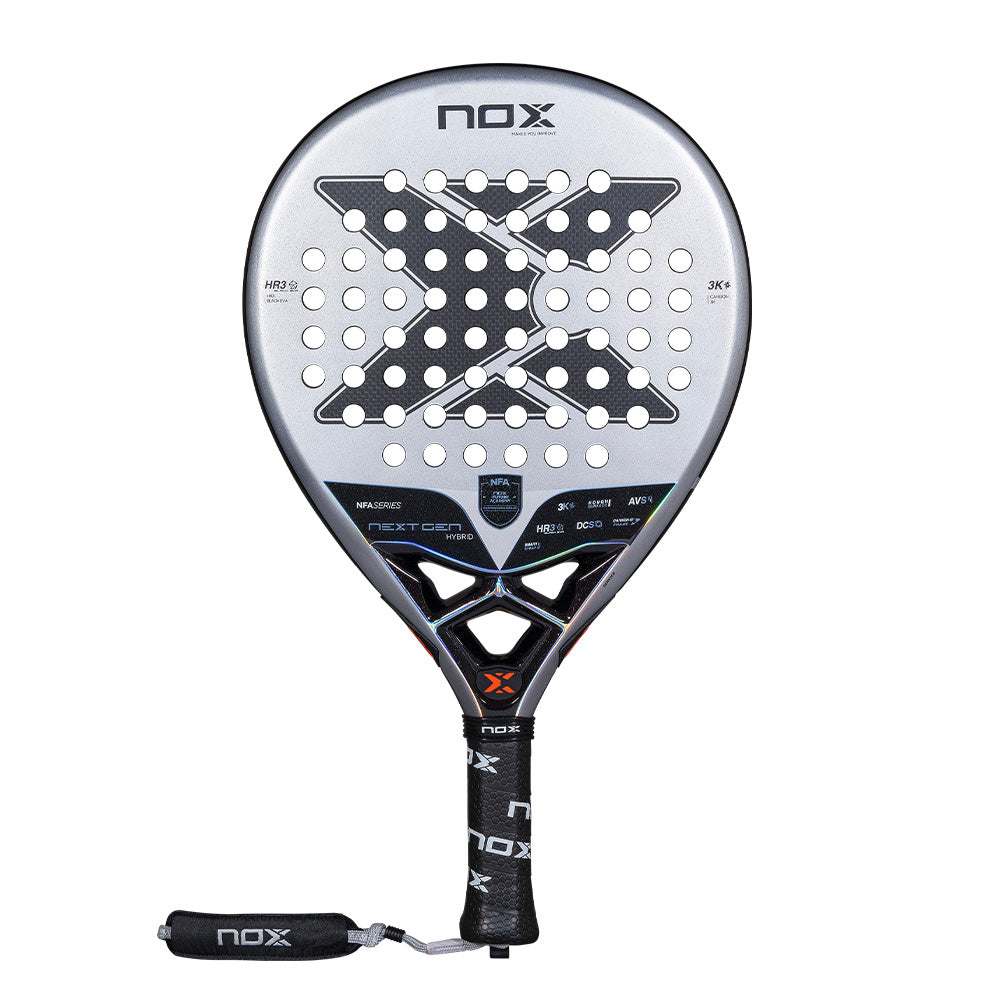
7.7Nox · 2025
Genuinely versatile between defense and attack
Muted feedback at contact
 7.9
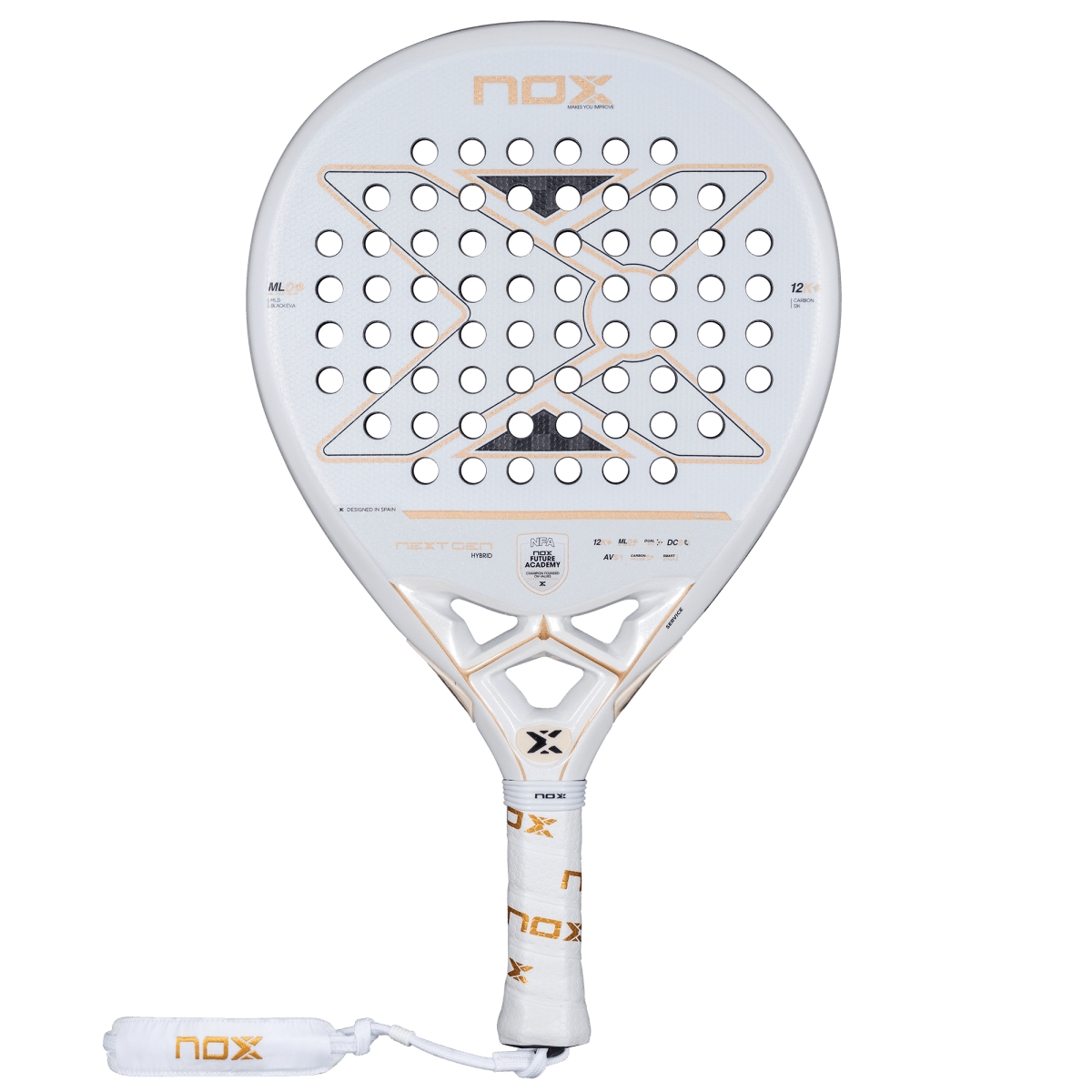
7.9Nox · 2026
Fast, flat ball off a clean strike
Power has to come from your swing
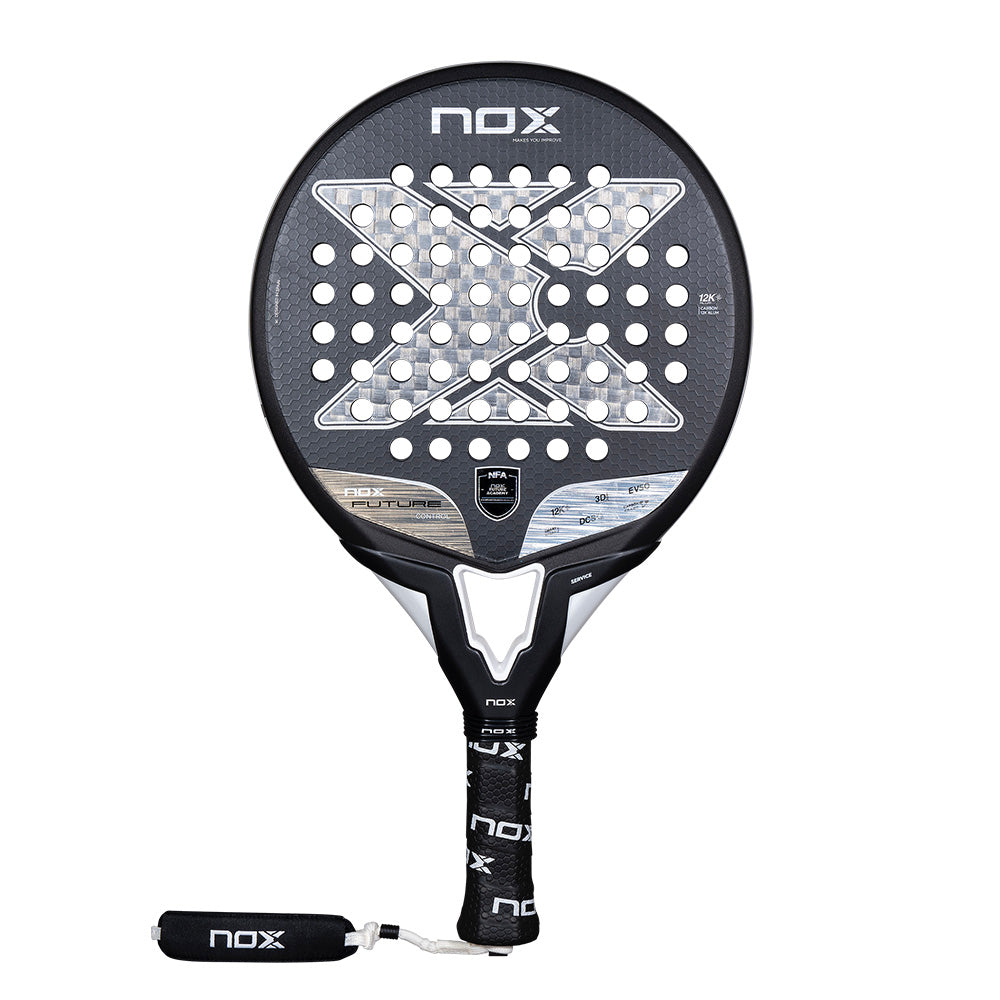 7.5
7.5Nox · 2025
Exceptional control and precision
Reduced ball feel at pace, limited feedback
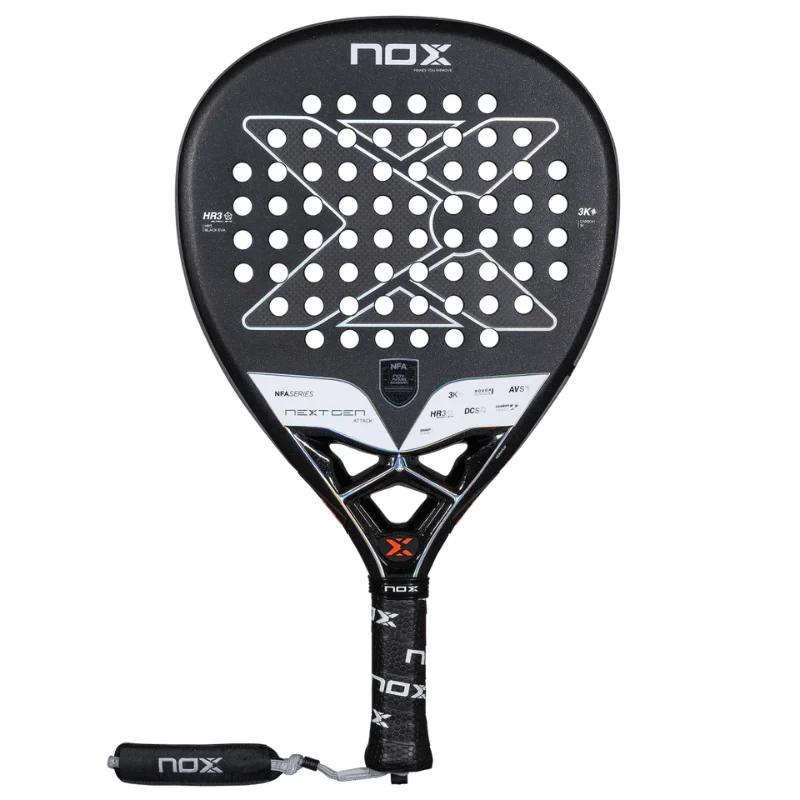 9
9Nox · 2025
Excellent power for offensive play and smashes
May be too powerful for beginners to handle effectively
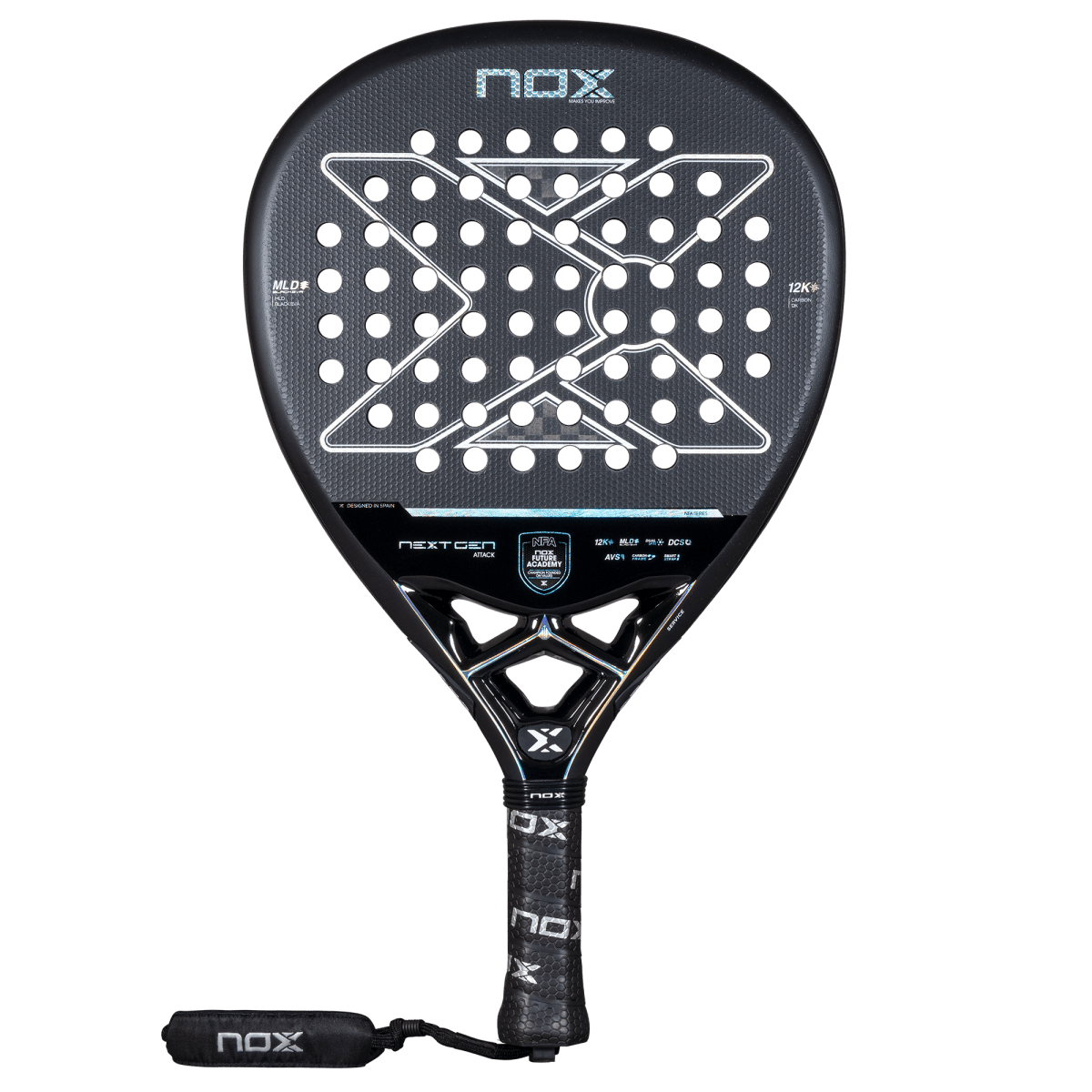 7.9
7.9Nox · 2026
Explosive pace on smashes
Small, high sweet spot punishes off centre hits
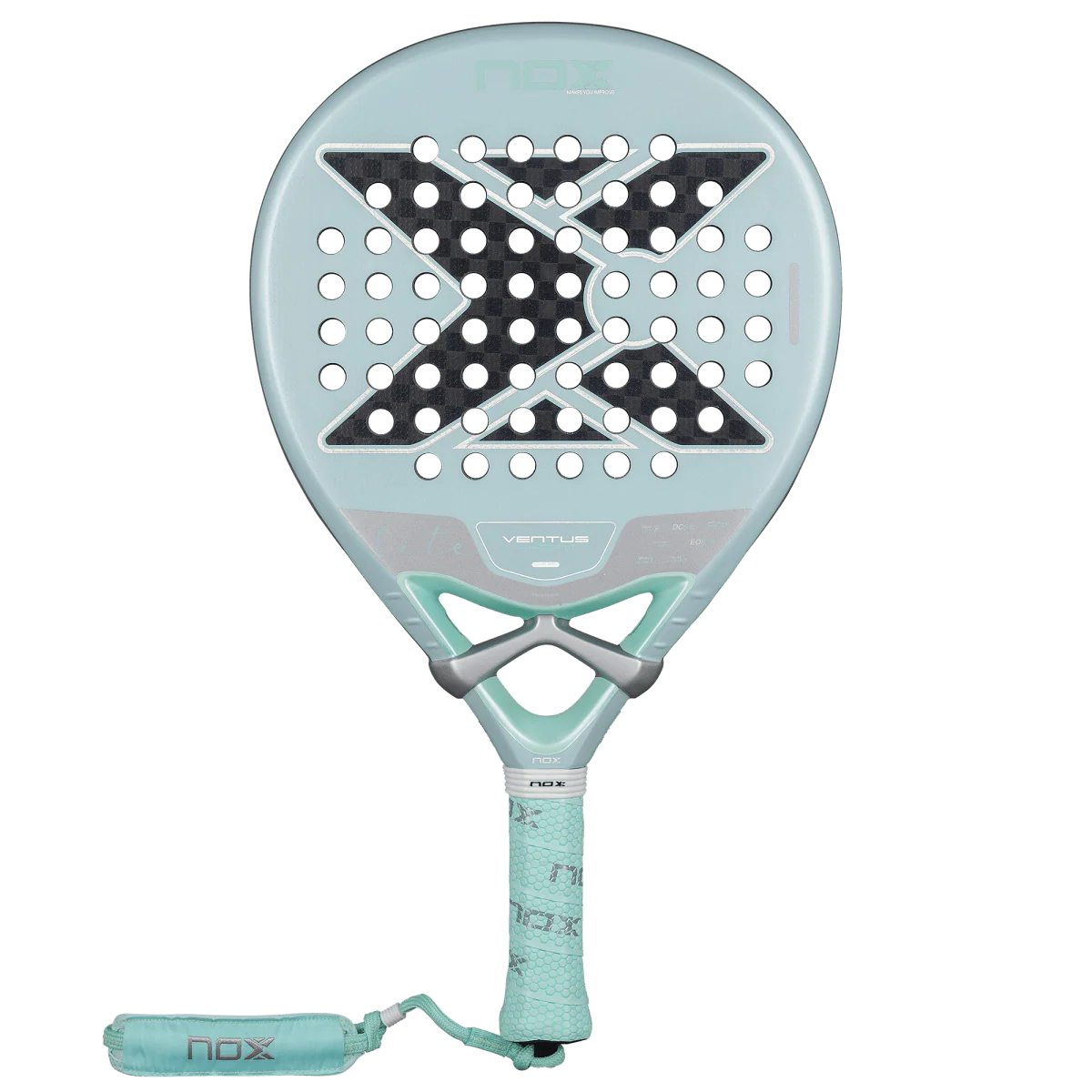 8.3
8.3Nox · 2026
Outstanding maneuverability for net transitions
Power ceiling lower than heavier Ventus Hybrid siblings
 8.3
8.3Nox · 2024
High-quality 12K aluminized carbon fiber construction for enhanced durability
Price point may be high for casual players
Want to explore more options?
Browse all rackets