
 9
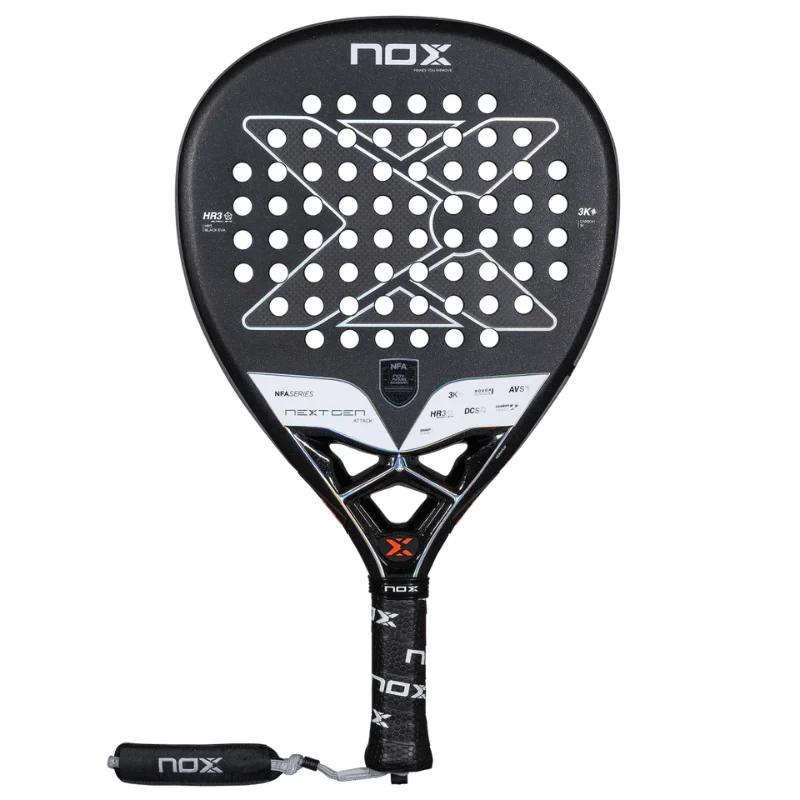
9Nox NextGen Pro Attack 3K NFA Series 2025
Nox · 2025
Excellent power for offensive play and smashes
May be too powerful for beginners to handle effectively
Mid RangeHigh Intermediate
 7.9
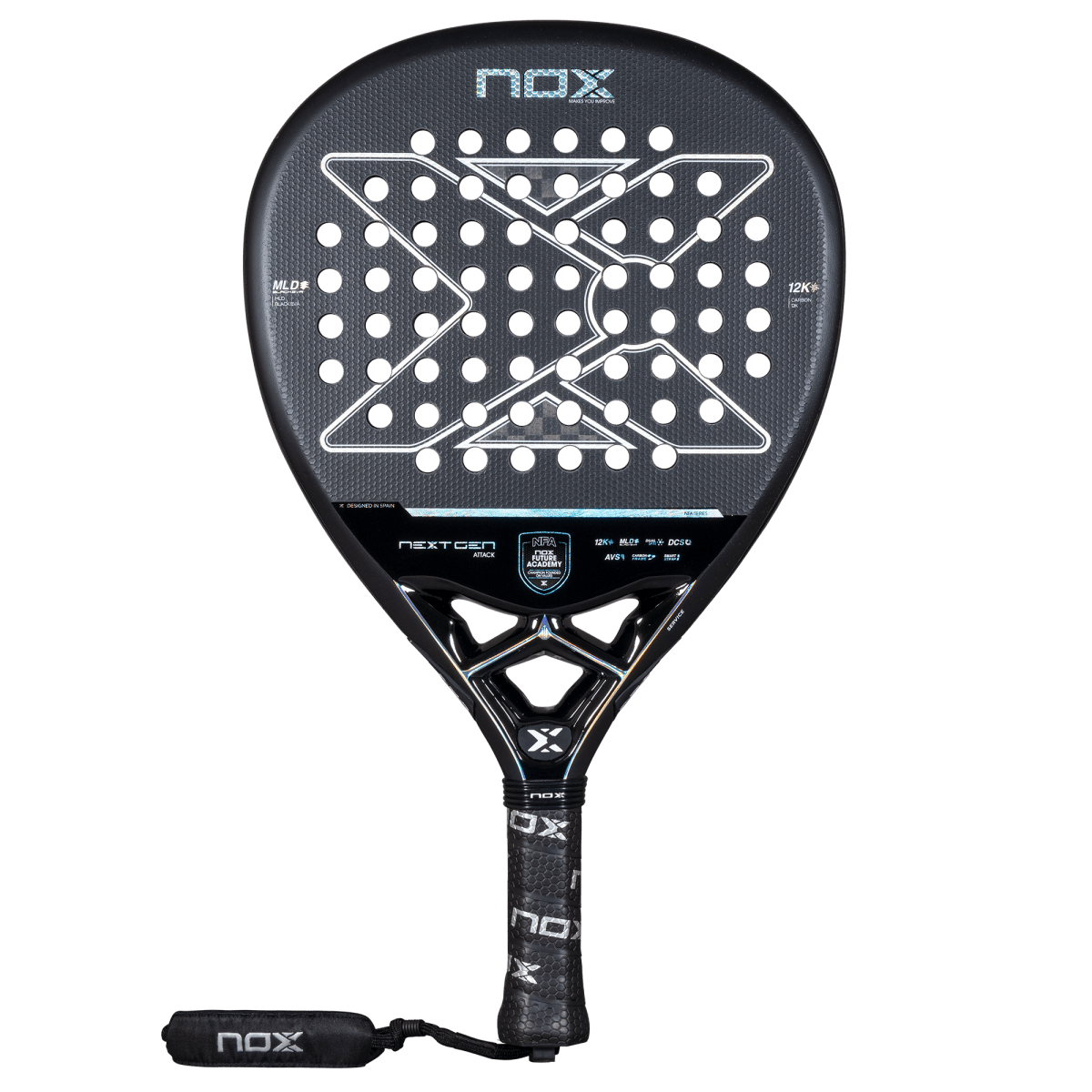
7.9Big pace on high balls from a stiff 12K face and a head heavy diamond, with a sweet spot that punishes anything off centre. Right for advanced and strong intermediate finishers who bring their own arm speed. Wrong for defenders and anyone still building technique, and the firm feel asks something of the elbow.

All-court player who prizes control, feel and spin
Bowe is convinced that the racket, shoes, court are the problem, never his own abilities.
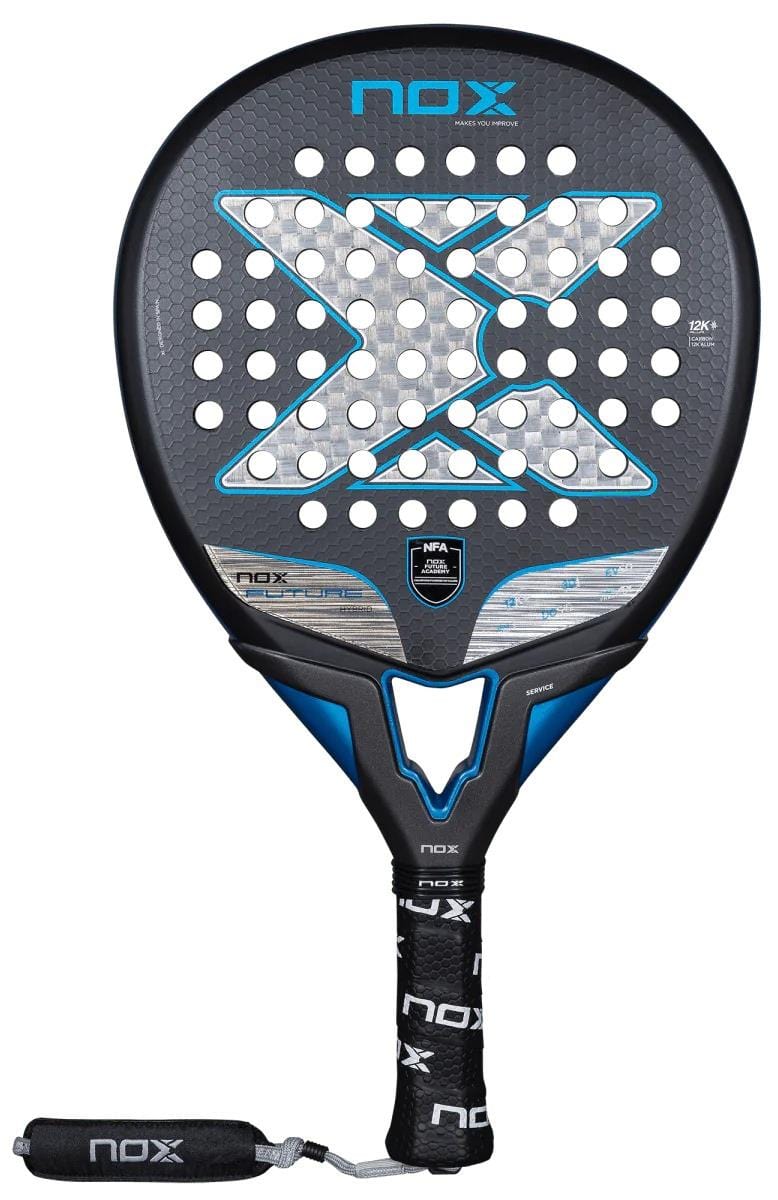
Nox builds the NFA Series around its Future Academy players, the young talents coming up through the brand, and the NextGen Pro Attack 12K sits at the sharp end of that line. The change for 2026 is the face. Last season's Attack used a 3K carbon weave; this one moves to 12K, a denser and stiffer cloth that sends the ball out faster and hits flatter. Shape and intent are unchanged: a diamond at roughly 365g with the mass sitting high in the head, built to be swung.
Price is the other half of the story. Nox lists it at 199.99 euro, but German price trackers have already logged it at 134.95 euro since launch. That puts a genuine 12K carbon face and a full carbon frame in front of club players who would normally shop two tiers lower. What you give up for it is forgiveness. The sweet spot is small and sits high, the frame is stiff, and the racket tells you plainly when you miss.
What the Reviewers Say
The published verdicts line up closely. Everyone agrees this racket hits hard, and everyone attaches a condition to it.
Padel-Kompass score it 8.0 out of 10, with power at 8 and control at 6. Their reading of the shape is blunt: "the diamond puts the mass high up and leaves a small, high sweet spot, so you get maximum power and every unclean hit is punished." The number to sit with is their error tolerance score, 3.5 out of 10 against a catalogue average of 5.6.
Extreme Tennis measure rather than opine. Their machines put the balance point at 27 cm, above the 26.5 cm they treat as neutral, with frame stiffness at 85 RA and a swingweight of 171. The advice that follows is practical: "its rigid profile and diamond shape mean the racket needs excellent arm speed to be fully exploited," and they suggest pairing it with a thick, absorbent overgrip.
Padelreference rate power at 9 and control at 7, and they are direct about who should walk away. The diamond shape and head heavy balance, they write, "make it a formidable tool for powerful strikes and smashes, but they require solid technical mastery." Players still building their game are pointed at the Hybrid instead.
Padel Market explain this year's change in plain terms: "this weave is denser than 3K formats, which translates into a more demanding racket but with greater potential power." They describe the MLD Black EVA core as one that puts energy transfer ahead of comfort.
Fun Padel Shop are the first channel to put the Attack and the Hybrid on court side by side, and what they see in the Attack matches the written verdicts: "it requires cleaner footwork and precise timing, but it punches through the ball with incredible direction." They also point at the anti-vibration rubber inside the frame as the reason off centre contact lands softer than the stiffness suggests.
The one disagreement is over how punishing it really is. Tennis Warehouse Europe, who sell it, take the gentler view: "it is not an overly demanding racket," and it helps you build points patiently before accelerating when the chance arrives. Set against a 3.5 out of 10 for tolerance, read that as the optimistic end of the range. Friendlier than a pro diamond, not friendly.
How it plays..
The Dual Spin face is the best thing here. A 3D texture over a sandblasted finish grips the ball properly, so a víbora or a bandeja takes spin without a bigger swing, and the 12K carbon reports back clearly at contact. The cost is placement. With the balance at 27 cm and a small sweet spot sitting high, the head arrives late and off centre contact loses pace and direction at the same time, which players who work the ball around the court rather than through it will notice first. It earns its money on high balls and asks for it back when you are stretched.
Defense
Defence is the weak part, and none of the sources pretend otherwise. The head heavy balance has to be got round early on low balls off the back glass, and a defensive lob needs cleaner timing than a round or teardrop frame asks for. The multi density core does help at low speed, which is exactly what it was built for, so blocks leave the face with a bit more depth than the stiffness suggests. Chasing a ball that is already past you is still hard work.
Attack
This is the whole point of the racket. Mass high in the head plus a stiff 12K face turns a committed overhead into real pace, and the smash is where the design pays. The 38 mm profile and the rough surface let you load a kick smash or a heavy víbora instead of flattening everything out. The power is not automatic, though. Padel-Kompass and Extreme Tennis land in the same place: the racket gives back what your arm puts in, and a lazy swing gets a dead ball.
Netplay
At the net the frame holds up better than the sweet spot score suggests. Punch volleys keep their line, and the measured twistweight of 19.9, together with the reinforced transition between frame and face, keeps the head from turning much on off centre contact. Touch is the trade off. A drop volley or a soft block needs a deliberately slow hand, because this racket's default setting is to send the ball back fast.
Our Advice for New Players
Not this one. The error tolerance testers measure here sits well below average, the sweet spot is high on the face, and a beginner spends a lot of time hitting the lower third. You would be paying for power you cannot reach. Start with a round frame and come back to a diamond when your smash is a shot rather than a hope.
Our Advice for Intermediate Players
Worth it only if your attacking technique is already reliable. If you hit a bandeja under pressure and finish points overhead, this racket raises your ceiling, and at street prices it is a cheap way to find out. If your game runs on defence, lobs and keeping the ball in play, the NextGen Pro Hybrid 12K puts the same face and the same core in a far more usable shape.
Competitive level
This is the target buyer, with one thing to be clear about. The power and the spin are there immediately, and between 135 and 200 euro the value is hard to argue with. What is not there is the refinement of a 300 euro pro frame. The feel is firmer and less nuanced than a Vertex 05, and the stiffness asks something of the arm across a long match. Anyone with elbow history should hit with one before buying.
How It Compares
Against its own sibling, the Nox NextGen Pro Hybrid 12K NFA Series 2026, the decision is only about shape. Same 12K face, same MLD Black EVA core, same price bracket. The Hybrid is a teardrop with an even balance and a medium sweet spot, and it defends. Take the Attack if you genuinely finish points, and the Hybrid if most of the rally happens at the back.
Against the Bullpadel Vertex 05 2026, the gap is money and polish. The Vertex is a Premium Pro diamond at 300 to 340 euro with a drier, more controllable touch and better placement for the same attacking job. The Nox hits at least as hard for under half the price, and pays for it in feel and comfort.
Research & References
Our mission is to help you choose the right padel racket with clear, in-depth reviews that make it easy to level up your game. We start with official specs, then break down each racket’s key properties. Finally, we bring together trusted video and written reviews—summarised into one consistent, easy-to-read overview.
Drafted by Padelguru from published expert reviews, measured test data, the manufacturer's own specification and the one on-court video comparison published so far, with Bowe Frankema's playing profile as an editorial lens, then reviewed and edited by Bowe Frankema. Nobody at Padelguru has played this racket.
Put the rackets you are considering side by side and keep the ones you play with in your collection.
Get the Padelguru app
Recommended for
Advanced and high intermediate attacking players, usually on the left, who finish points overhead and already have a reliable smash and bandeja.
Skill level
High Intermediate, Advanced, High Advanced
Court position
Left, Net
Play style
Power, Offensive
Best at: Offense (9.3/10)
Average: 7.7/10
Nox NextGen Pro NFA Series: Attack VS Hybrid
Shape
Diamond
Weight
Medium (356–370g)
Balance
Power-Oriented (Head-Heavy)
Touch
Medium Hard
Core
Mld Black Eva (Multilayer)
Surface
12K Carbon, Dual Spin
Texture
3D Pattern
Year
2026
8 rackets with characteristics, performance and appeal close to the Nox NextGen Pro Attack 12K NFA Series 2026.
9Nox · 2025
Excellent power for offensive play and smashes
May be too powerful for beginners to handle effectively
 7.8
7.8Nox · 2025
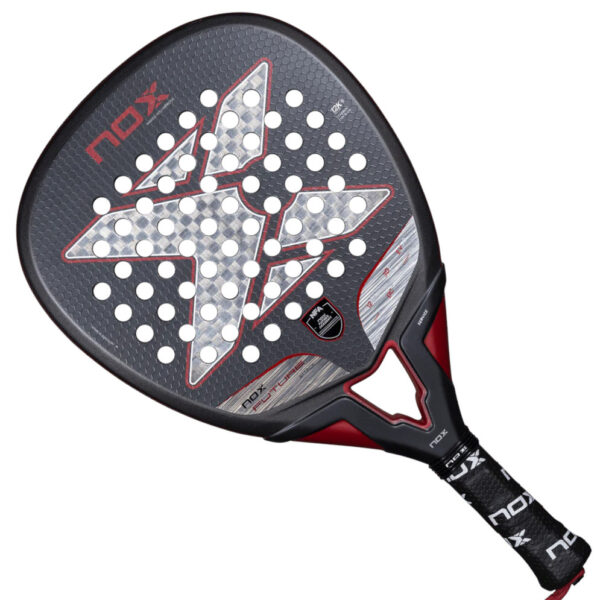
High ball speed on bandeja and smash
Sweet spot smaller than AT Attack 12K — off-center hits penalized more
 7.9
7.9Nox · 2026
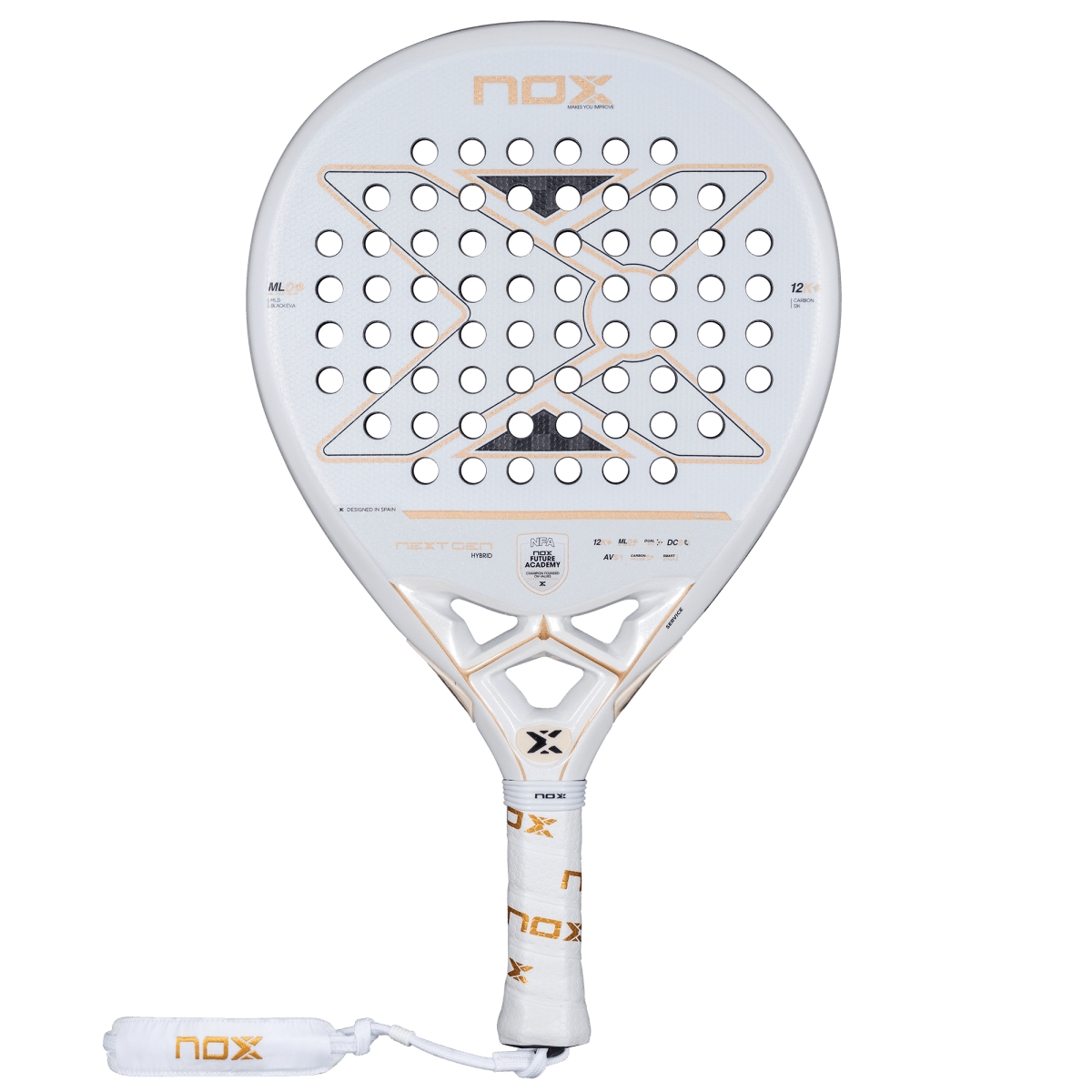
Fast, flat ball off a clean strike
Power has to come from your swing
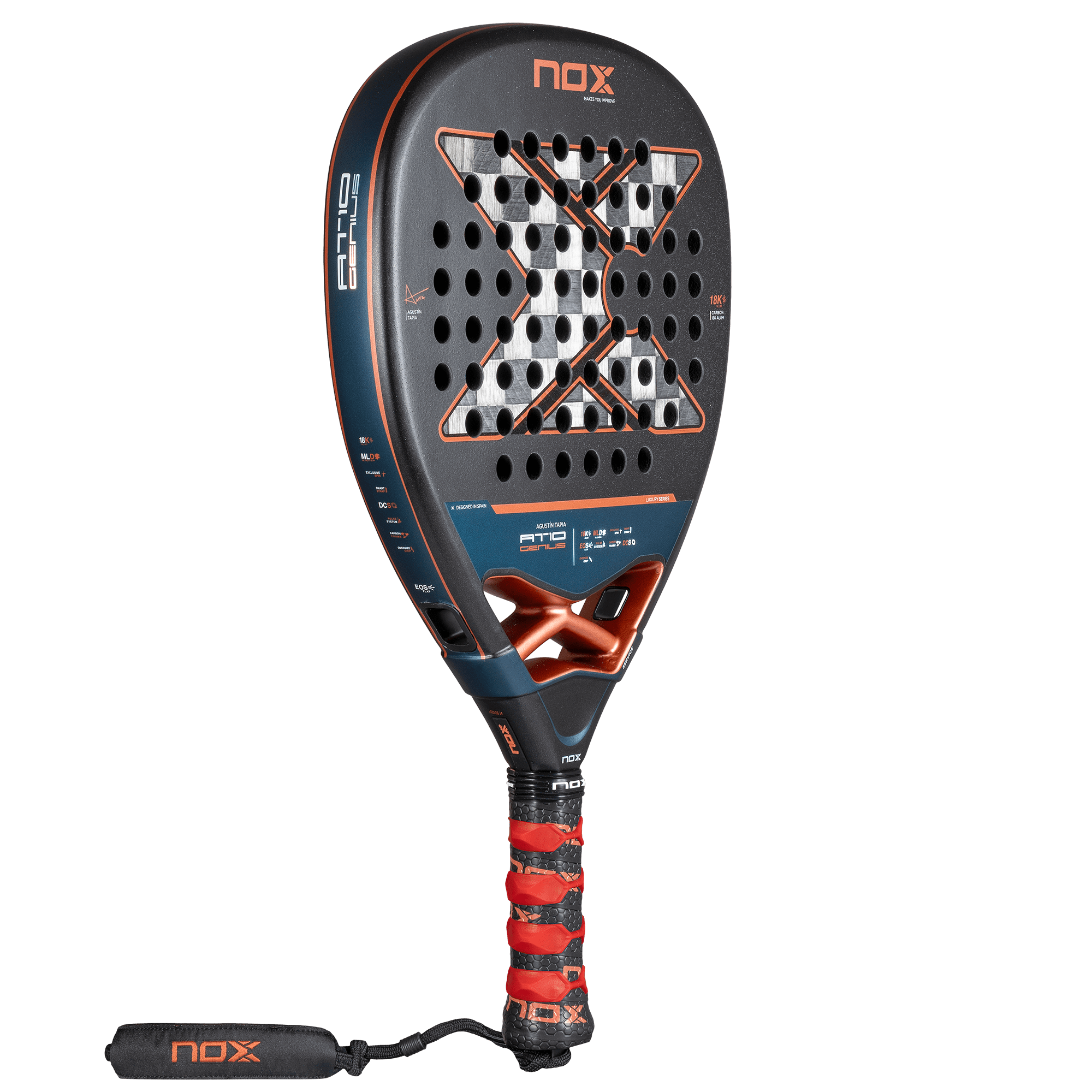 8.3
8.3Nox · 2025
Heavy, direct smash on a full swing
Small sweet spot sitting high on the face
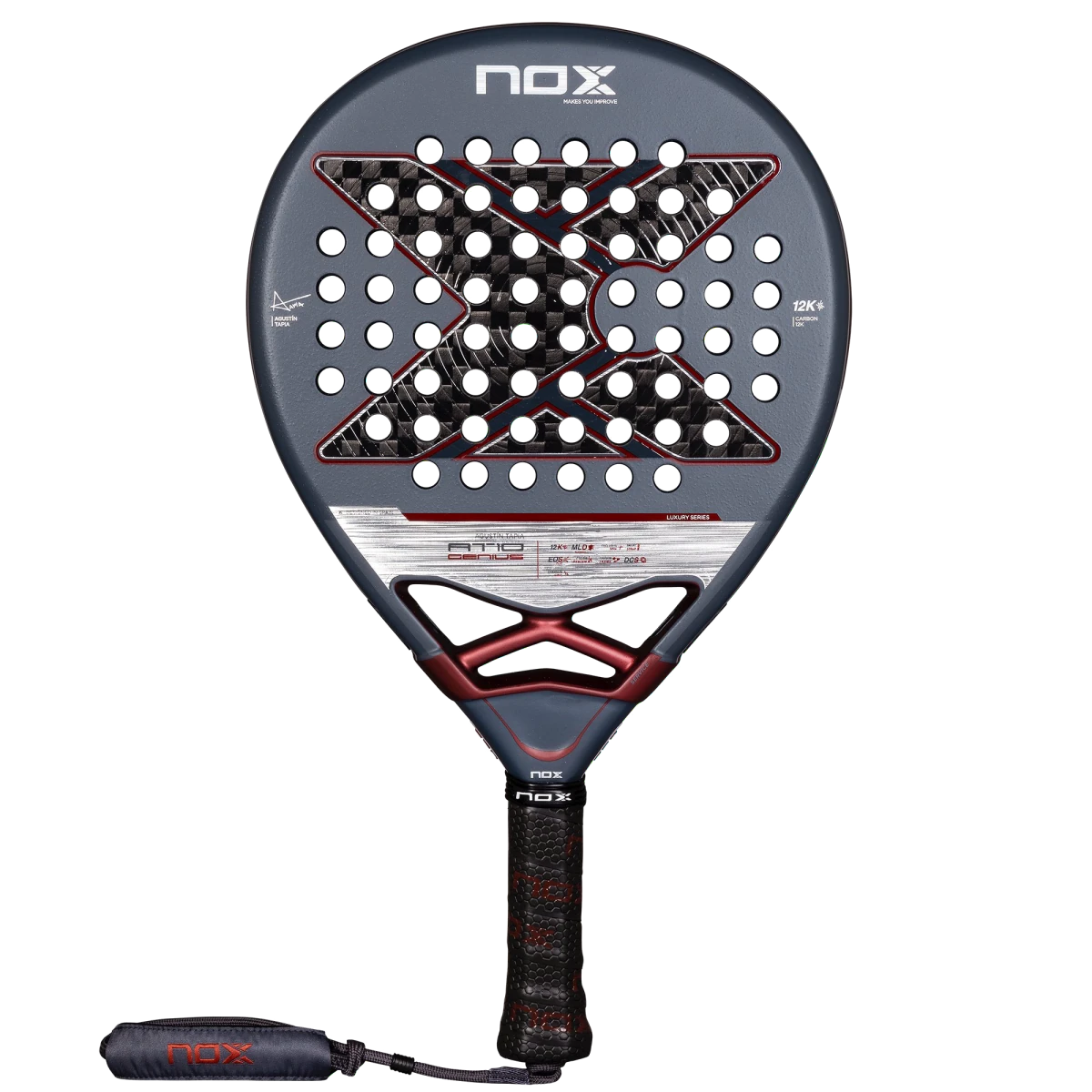 8
8Nox · 2025
Explosive power on smashes and víboras
Small, high sweet spot punishes off-center hits
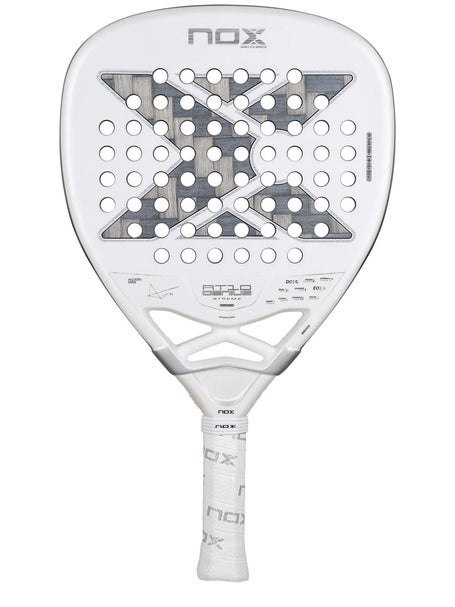 8.3
8.3Nox · 2026
Explosive overhead power with clean energy transfer
Small sweet spot exposes mistimed contact
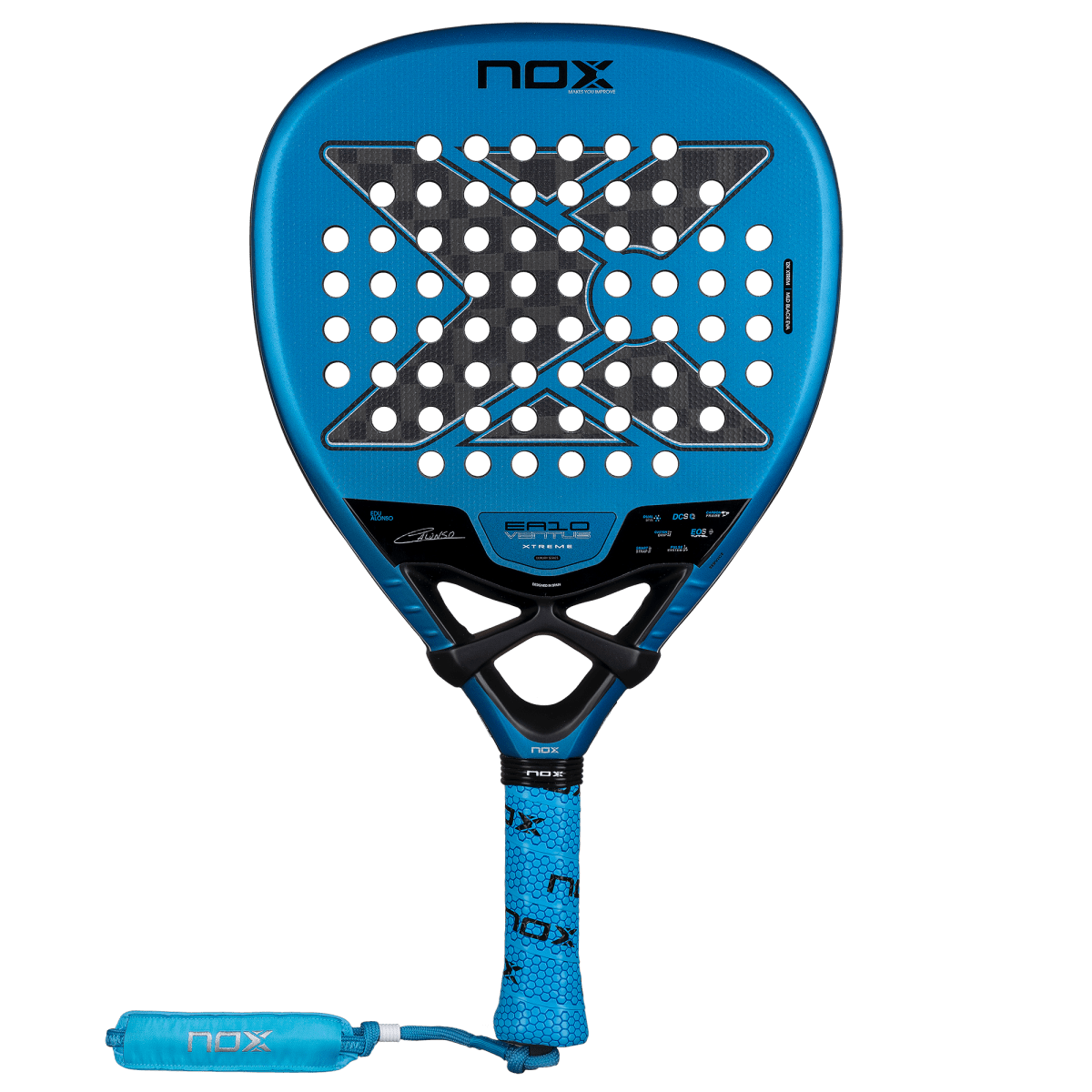 8
8Nox · 2026
Excellent feel and control at high swing speeds
Modest ball exit at medium-low pace, demands more from the player
 7.8
7.8Nox · 2025
Wide, forgiving sweet spot
Reduced ball feedback on fast balls
Want to explore more options?
Browse all rackets