
 8.4
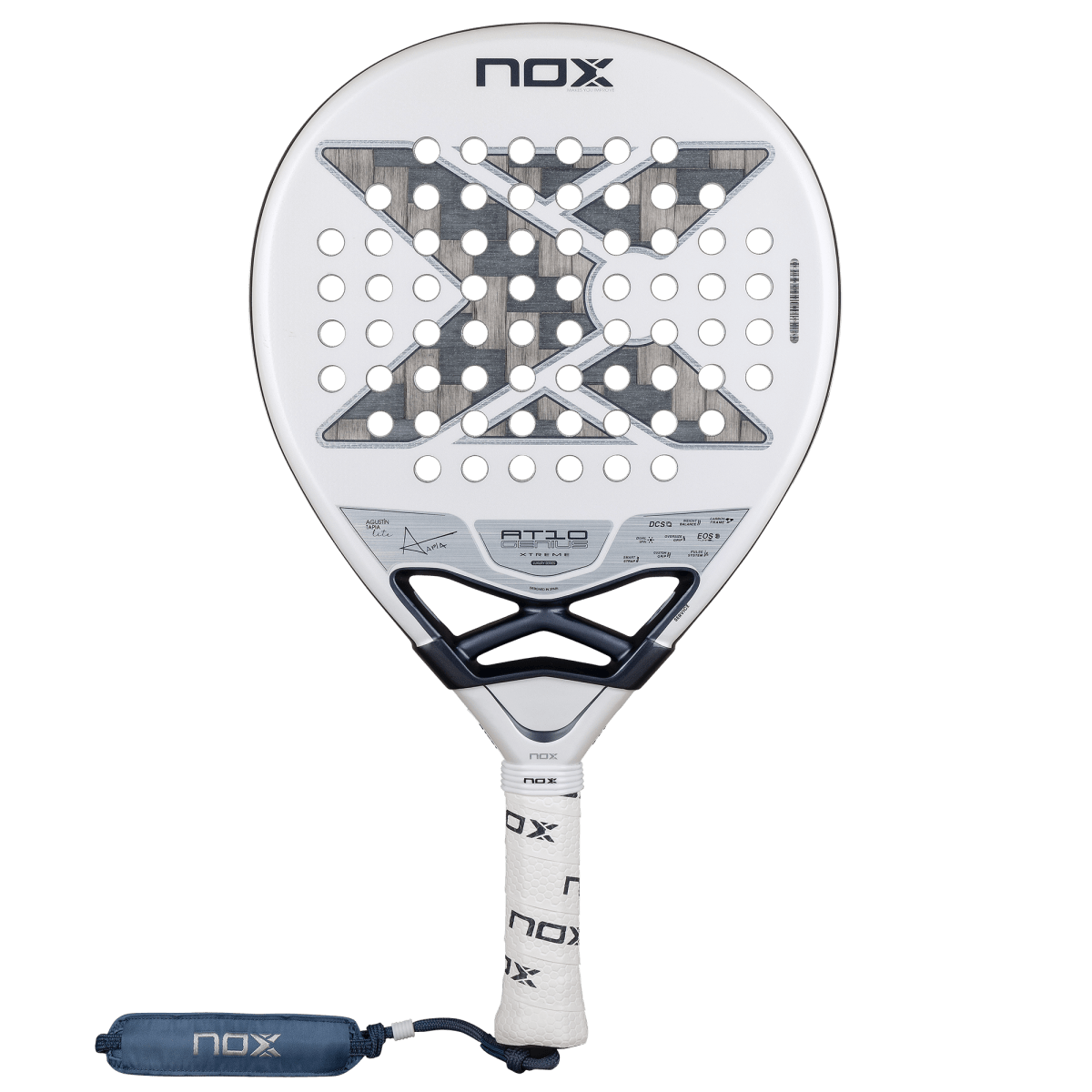
8.4Nox AT10 Luxury Genius 18K Alum 2026 by Agustín Tapia
Nox · 2026
Wide sweet spot for a pro frame
Flat smash output behind the 12K siblings
Premium ProAdvanced
 8
8The AT10 Genius 12K Alum Xtrem Lite 2026 is a maneuverable, arm-friendly racket that rewards consistent, controlled play. At low to medium pace it feels exceptional: lobs are precise, volleys arrive with depth, and the soft HR3 White EVA core keeps it comfortable across long sessions. The trade-off is clear: when pace picks up, the softer rubber absorbs more and control becomes harder to hold, so aggressive right-side closers will want the stiffer standard 12K instead.

Developing all-court player focused on consistency and comfort
Always gets an "A" for effort from the coach. That tells you enough about his technique.
The Nox AT10 Genius 12K Alum Xtrem Lite 2026 is the lightest entry in Agustin Tapia's 2026 AT10 line, built for players who want the iconic mould without the weight or stiffness demands of his match-used version. Where the standard AT10 12K runs on HR3 Black EVA and sits closer to 370-375g, the Lite swaps in HR3 White EVA and trims the weight to 355-365g, with a balance point just below medium at around 25.9 cm. The result is noticeably softer and faster through the air than any previous AT10. Three things changed for 2026 across the whole AT10 range: faces moved from 18K to 12K Alum Xtrem carbon (stiffer, with better temperature stability), the Weight Balance system arrived (optional 2g/4g counterweights in the head), and the Dual Spin surface debuted, combining a 3D texture with a sand-grit finish for extra spin. The Lite inherits all three but keeps the softer White EVA core and the lighter build.
What the Reviewers Say
Reviewer consensus across Spanish, Italian, and English channels is unusually consistent: the Lite is exceptional at low to medium pace, and needs more attention at high pace.
Dani 13 (@Dani_13) put it plainly after a dedicated on-court session: "It's a racket that plays very fast, you feel like you're carrying almost nothing, and the maneuverability advantage over other options is real." He found defense the strongest zone, with a sweet spot slightly larger than standard, and noted the ball tends to float if you don't complete the follow-through on víboras and bandejas.
Emiliano at PADELREVIEW ENG was more effusive: "Rarely have I dominated low and medium pace rallies this much with a racket. The combination of maneuverability, comfort, and unexpected power makes this pala incredibly effective for intermediate and advanced players." He rated maneuverability 8.5/10 and was surprised by the trampoline effect on kick smashes (per tres), which he described as natural and easy to generate despite the light weight.
Zona de Padel compared the Lite directly against the standard AT10 12K on court: "With a slow ball it's like a glove. You put it exactly where you want." Their verdict: the Lite has a larger sweet spot, more absorption, and is easier to manage, but less reactive when fast balls arrive. Beginners and intermediates who like the AT10 feel are better served by the Lite; advanced players handling high-pace exchanges may find the standard 12K holds up better under pressure.
Padel Review (Italian, @PadelReview) called it "devastating at low and medium rhythms," and noted it held solid on blocks despite the lighter construction. The one caveat all reviewers share: push hard and force the point, and the soft rubber can send the ball wider than intended.
How it plays..
For players still developing consistency, this racket is genuinely forgiving. The combination of light swing weight, soft core, and a centred sweet spot that's slightly larger than most AT10 models means off-centre hits don't punish you as harshly. What the evidence consistently flags, though, is that the forgiveness runs in one direction: at high pace, the rubber's softness becomes a liability, and you need clean technique to keep the ball in. Players who are working on their víbora and bandeja technique should take note that the sweet spot is centred, not high, so adjusting contact point from a diamond-shaped racket takes a few sessions.
Defense
Defense is where reviewers unanimously placed this racket first. Dani 13 ranked it the best zone for the Lite: fast to move, easy to reach wide balls, and a soft core that takes the sting out of hard-driven shots. Lobs from the baseline are, by multiple accounts, unusually precise, the kind of control that lets you slow the rally and reset when you need to. Zona de Padel noted that at slower pace, even defensive resets feel composed and measured. The one caveat: if a ball arrives with real pace and you need to defend from a tight position, the softer rubber absorbs more than it returns, so timing the block matters more than with a stiffer racket.
Attack
Overheads were the positive surprise for most reviewers. PADELREVIEW ENG called the kick on smashes per tres "excellent and very easy to generate" despite the light weight, and Padel Review agreed it outperformed expectations on flat smashes. The trampoline effect from the 12K Alum Xtrem face helps here, generating speed without needing a full body movement. The limit is flat, hard-driven overheads: Dani 13 found those absorbed more than comparable options in the same stiffness range, and the ball lacked the same conviction as from a stiffer AT10 variant. So the Lite rewards spin and technique on overheads more than raw power.
Netplay
At the net, maneuverability is the headline. The racket moves fast and reacts quickly, making volley exchanges and direction changes comfortable. PADELREVIEW ENG noted that "stability on blocks is solid" despite the light construction, which holds up under most net conditions. The caution, shared by both Dani 13 and Padel Review, is the same as on offense: when you try to accelerate hard through the ball at the net, the soft rubber can let it escape. Víboras and bandejas reward clean technique and a deliberate downward finish; without it, the ball tends to stay flat and fly toward the glass. At controlled pace the net game is excellent, generating depth with minimal effort.
Our Advice for New Players
Beginners will find the weight and balance accessible, but the premium price and centred sweet spot mean there are better-value options. The Nox ML10 Pro Cup or a mid-range round-shape racket will be more forgiving and significantly cheaper. The AT10 Lite is not a starter racket.
Our Advice for Intermediate Players
Intermediate players are the primary audience. Zona de Padel's comparison was explicit: players at this level who like the AT10 feel should choose the Lite over the standard 12K. The lower weight reduces fatigue, the softer core is arm-friendly, and the slightly larger sweet spot is more forgiving than the standard model. It suits both sides of the court and works for players who build points through rallies and placement rather than pace.
Competitive level
Advanced players get a capable racket as long as they stay within its best speed range. Those who play an aggressive, pace-heavy game on the right side will find the soft rubber limits their ceiling in fast exchanges, and the standard AT10 12K or the 18K variant will hold up better. Advanced players on the left side who value maneuverability and precision over power, or who have had arm trouble, will find the Lite a genuine option. The Weight Balance system also allows adding 4-8g to the head, which sharpens the víbora and bandeja slightly for those who find the stock balance too neutral.
How It Compares
vs. Nox AT10 Genius 12K Alum Xtrem 2026 (standard): Same mould, same face material, same Dual Spin surface, but the standard runs HR3 Black EVA (harder, more reactive) and weighs around 365-375g with a slightly higher balance. The standard rewards players who handle pace; the Lite rewards players who manage pace. If you're at the boundary between intermediate and advanced, the Lite is the safer choice. If you're a confident advanced player with reliable technique, the standard 12K gives you more back at pace.
vs. Adidas Metalbone CTRL 2026: The Metalbone CTRL is a control diamond with a softer touch designed for left-side all-court play. It's firmer than the AT10 Lite, more offensive in orientation, and rewards a slightly different technique. Dani 13 noted the Metalbone CTRL delivers more power in the same softness range. Players who want outright control and placement precision, especially on the left, may prefer it. Players who value the AT10's maneuverability and arm comfort will stay with the Lite.
Research & References
Our mission is to help you choose the right padel racket with clear, in-depth reviews that make it easy to level up your game. We start with official specs, then break down each racket’s key properties. Finally, we bring together trusted video and written reviews—summarised into one consistent, easy-to-read overview.
Drafted by Padelguru from expert video reviews with Kaj Kloezeman's playing profile as an editorial lens, then reviewed and edited by Kaj.
Put the rackets you are considering side by side and keep the ones you play with in your collection.
Get the Padelguru app
Recommended for
Intermediate to advanced all-court players who prioritise maneuverability and arm comfort over outright power, and both left- and right-side players who build points through consistency rather than pace.
Skill level
Intermediate, High Intermediate
Court position
Both sides
Play style
Control, Balanced, Defensive, Counter-attacking, Tactical, All-court
Best at: Maneuverability (9.0/10)
Average: 8.0/10
NOX AT10 12K XTREM LITE // Review and impressions - Dani13
Nox AT10 12K Lite by Tapia: Review in English | A racket that honestly surprised me!
NOX AT10 12K 2026 vs AT10 Lite 2026 Review: Which One Is Better for You?
Nox AT10 Luxury Genius 12K Alum Xtreme Lite by Tapia | Devastating at low and medium speeds!
Shape
Teardrop
Weight
Medium (356–370g)
Balance
Balanced (Even)
Touch
Medium Soft
Core
Hr3 White Eva
Surface
Dual Spin (3D Texture + Sand Finish)
Texture
Rough
Year
2026
8 rackets with characteristics, performance and appeal close to the Nox At10 Genius 12K Alum Xtrem Lite 2026.
8.4Nox · 2026
Wide sweet spot for a pro frame
Flat smash output behind the 12K siblings
 8.2
8.2Nox · 2026
Wide, centered sweet spot
Flat smash output a step below the 12K Xtrem sibling
 8.5
8.5Nox · 2025
Big, forgiving sweet spot
Short ball exit on slow balls
 8.5
8.5Nox · 2026
Blocks and resets land where you aim
Smash power has to be earned
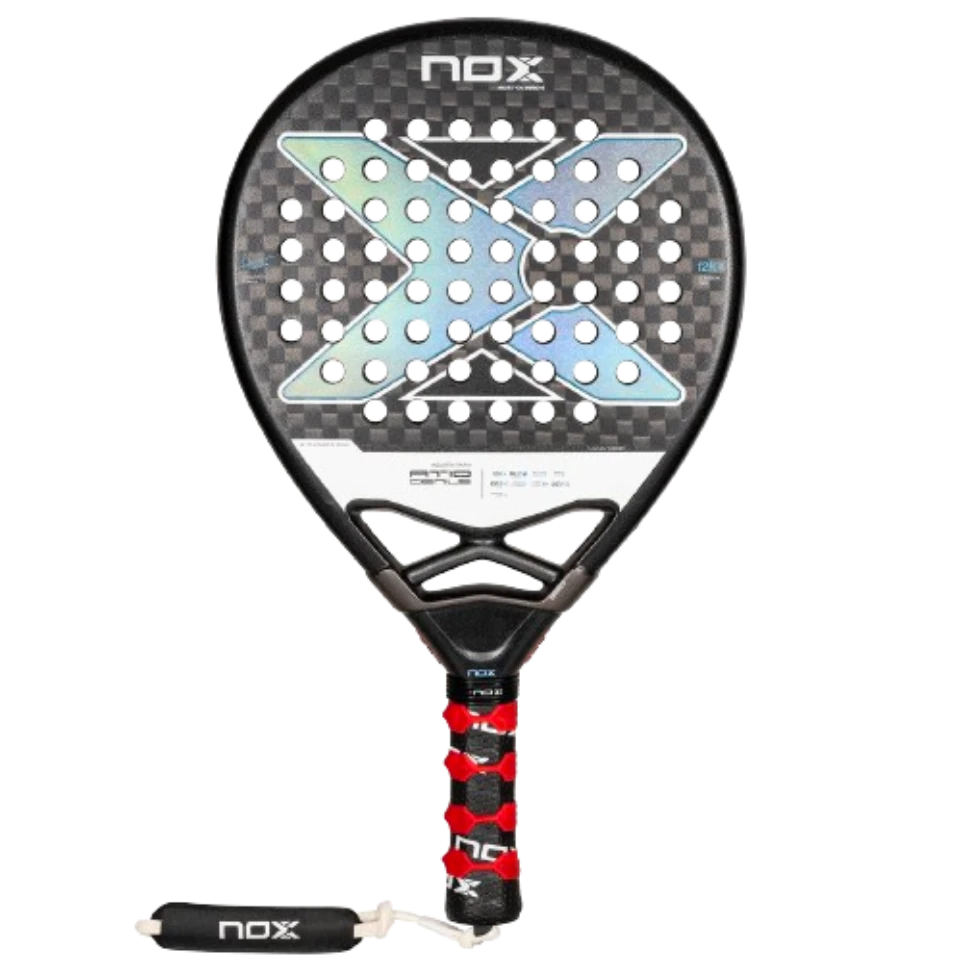 8.5
8.5Nox · 2024
Exceptional maneuverability for a 368g frame
Flat smashes lack real explosiveness
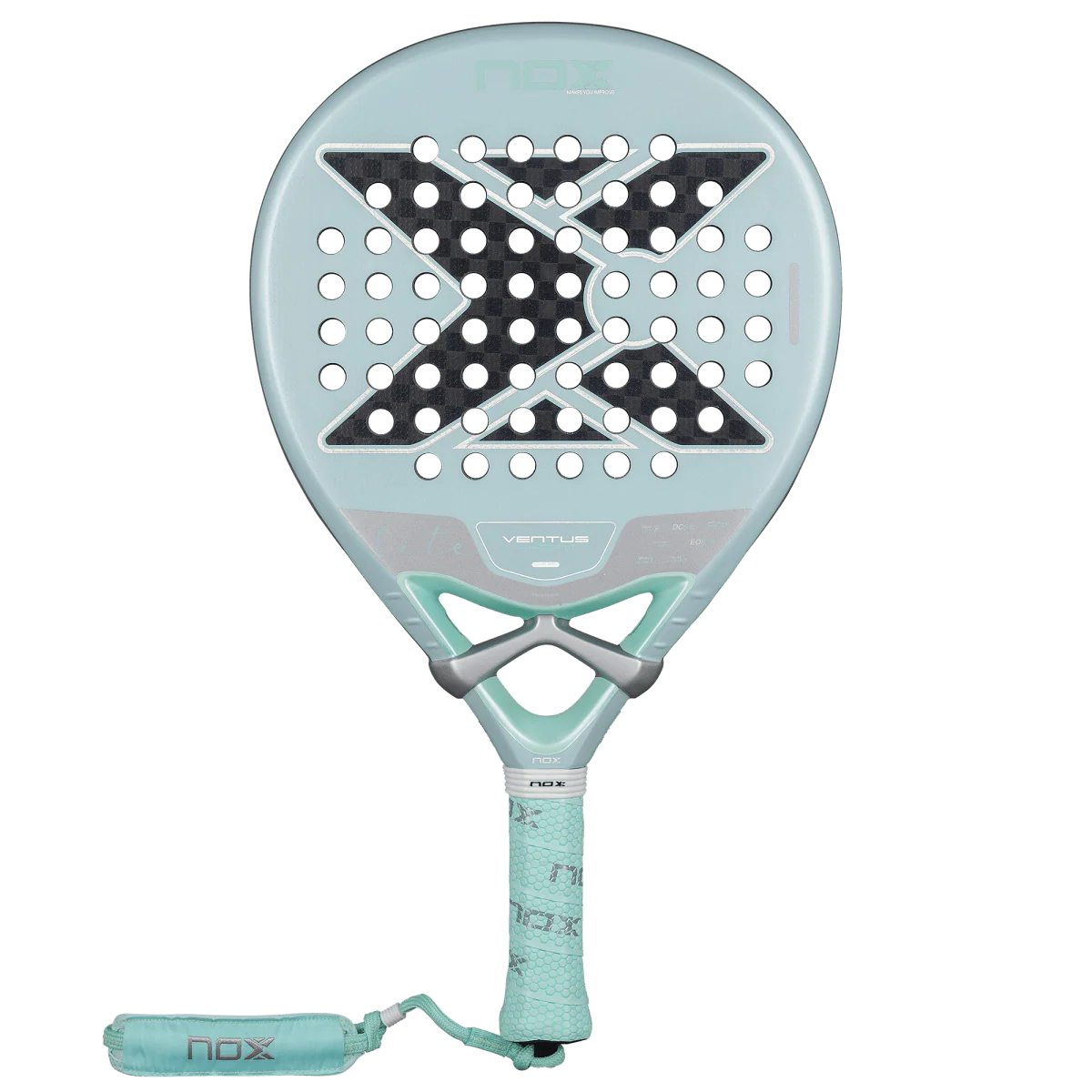 8.3
8.3Nox · 2026
Outstanding maneuverability for net transitions
Power ceiling lower than heavier Ventus Hybrid siblings
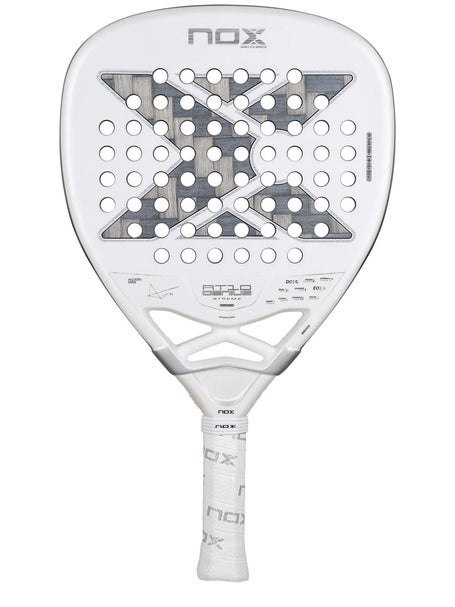 8.3
8.3Nox · 2026
Explosive overhead power with clean energy transfer
Small sweet spot exposes mistimed contact
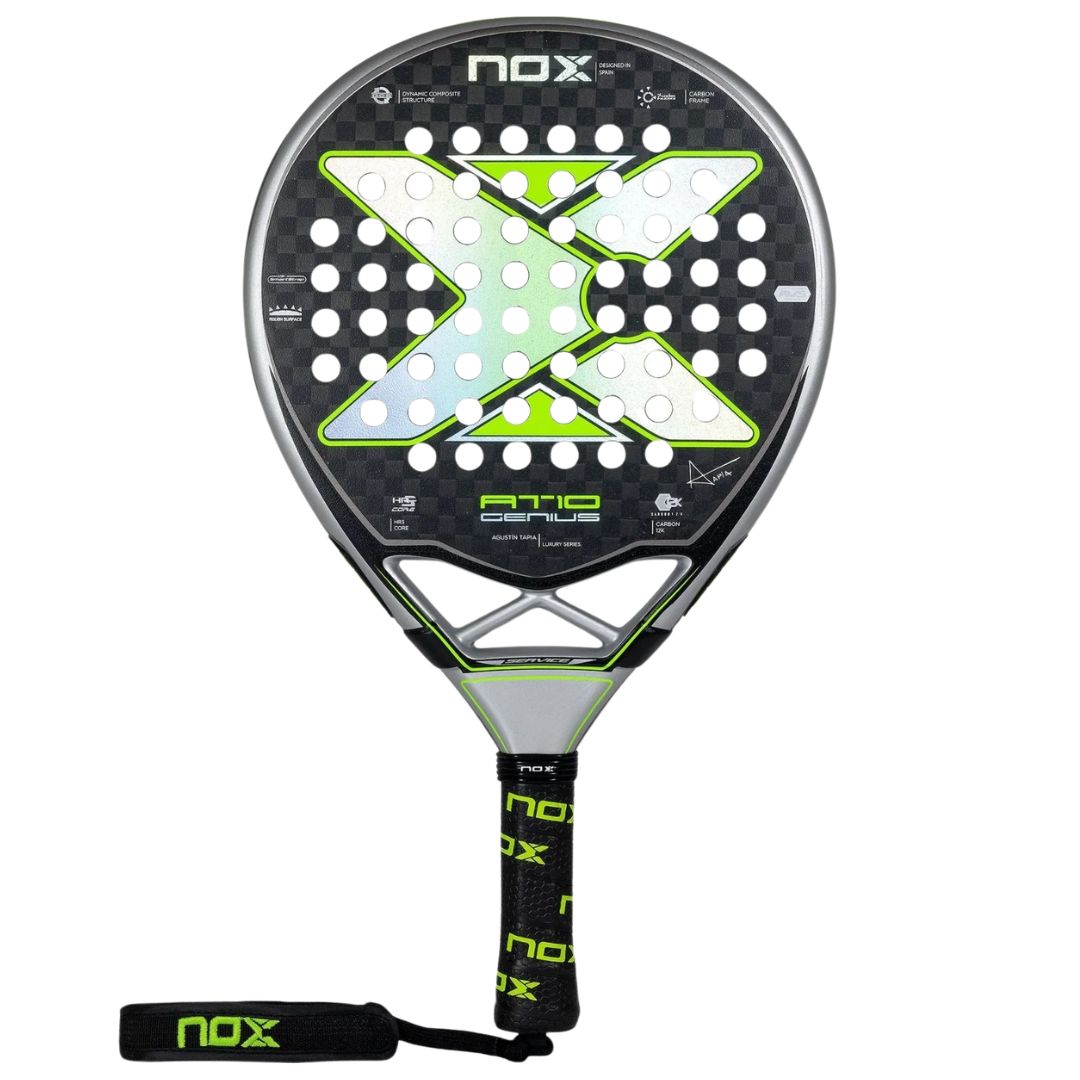 8.3
8.3Nox · 2023
Wide, easy sweet spot
Short on raw finishing power
Want to explore more options?
Browse all rackets