
 7.5
7.5Wilson Defy Ls V1 Special Edition 20261
Wilson · 2026
Exceptional kick smash with minimal arm effort
Less ball feedback than carbon-face Defy siblings
PremiumHigh Intermediate
 7.6
7.6Wilson took the Defy mould and made it swingable: at 355g with a measured mid balance, the head arrives early on volleys and smashes without the arm cost of the carbon versions. It fits attacking intermediates who finish at the net, not players who reset from the back glass. The Comfort Flex face buys that comfort by giving up feel.

Left-handed right-side player with an attacking, finishing game
Always overperforms in the warm-up, always underperforms in the match. Such is life.
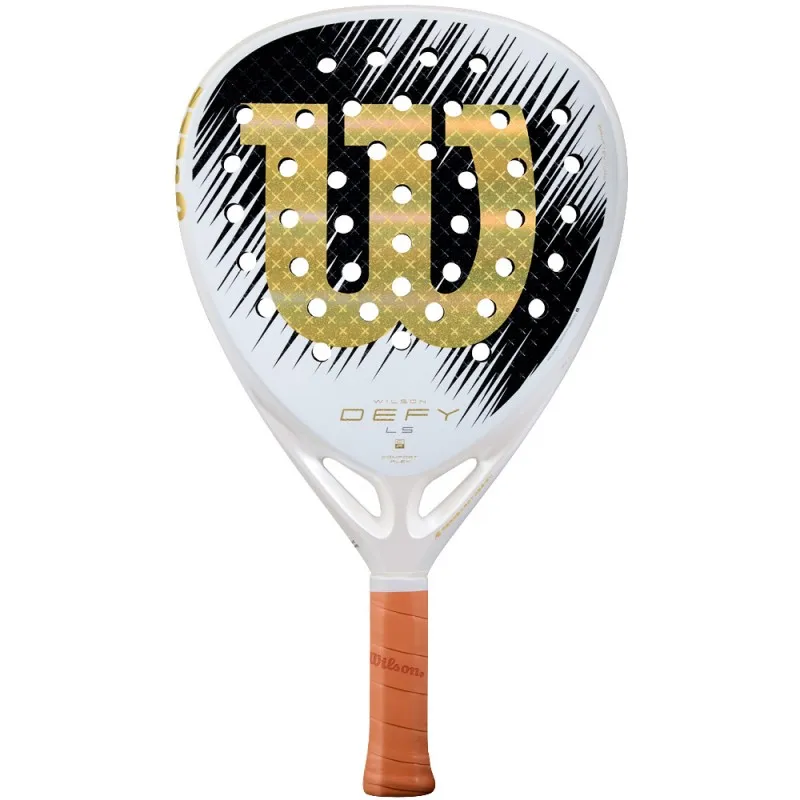
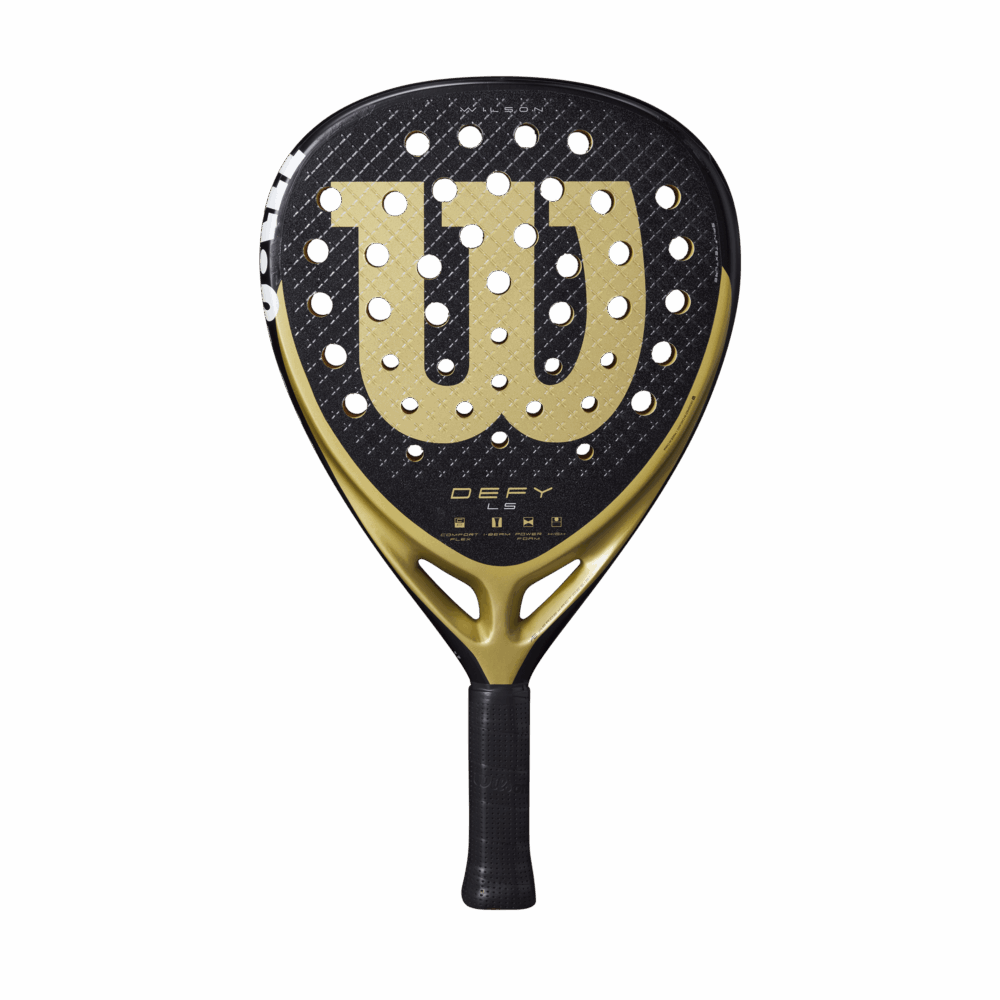
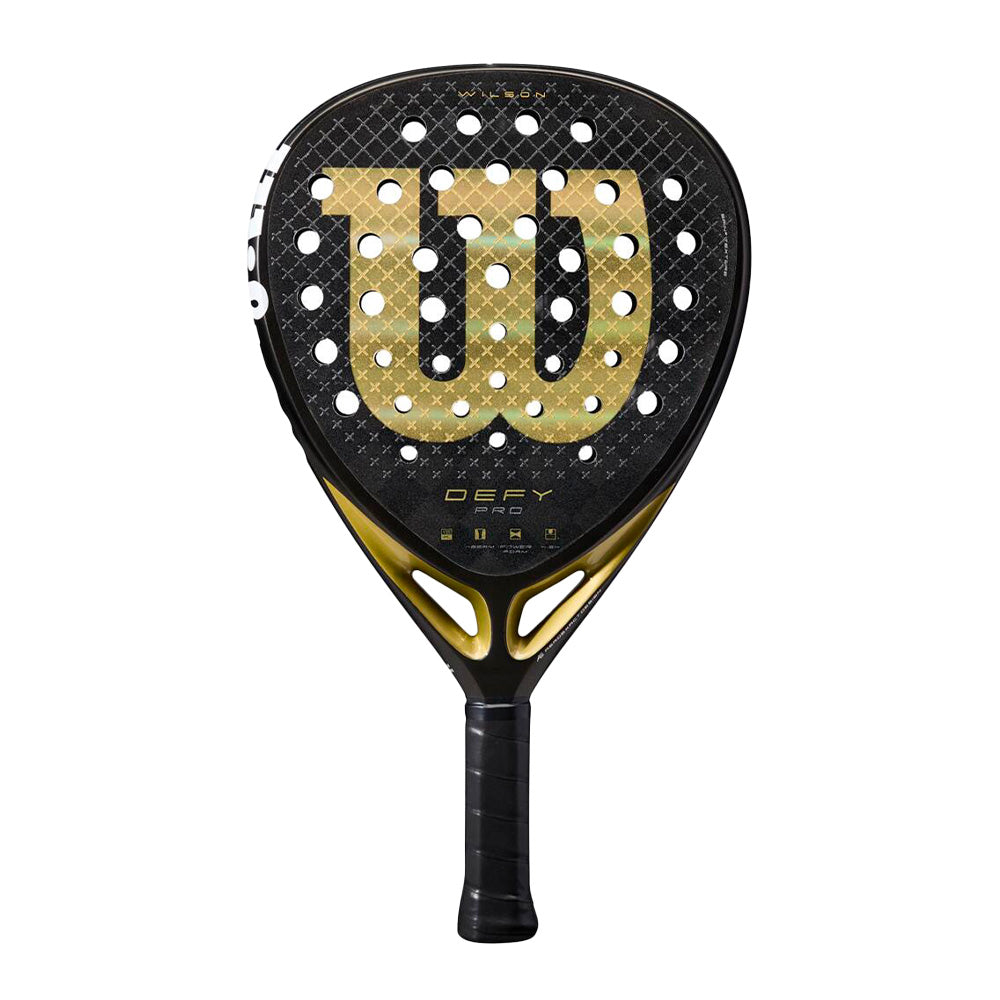
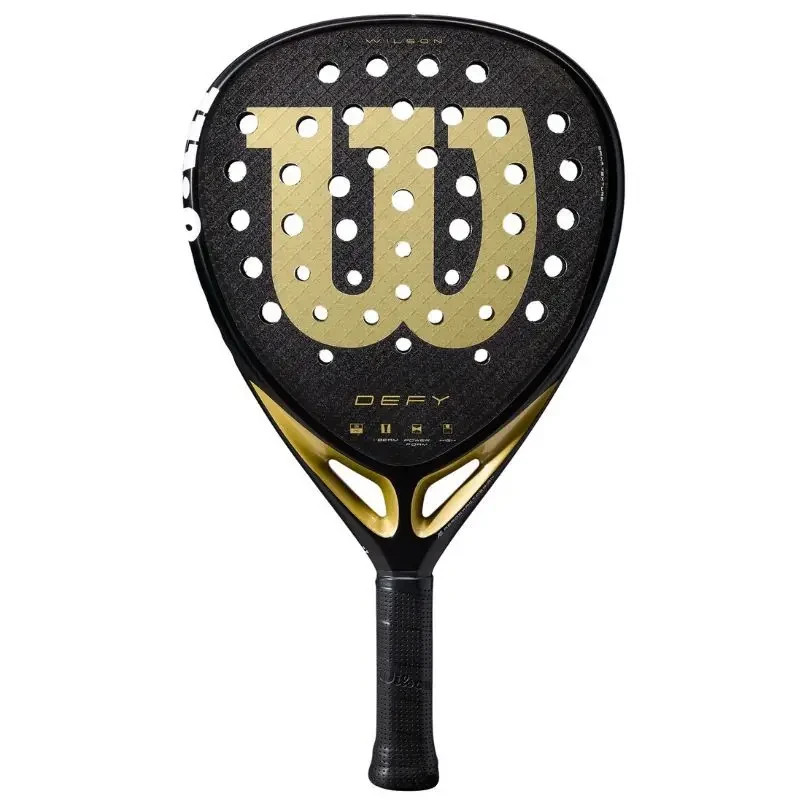
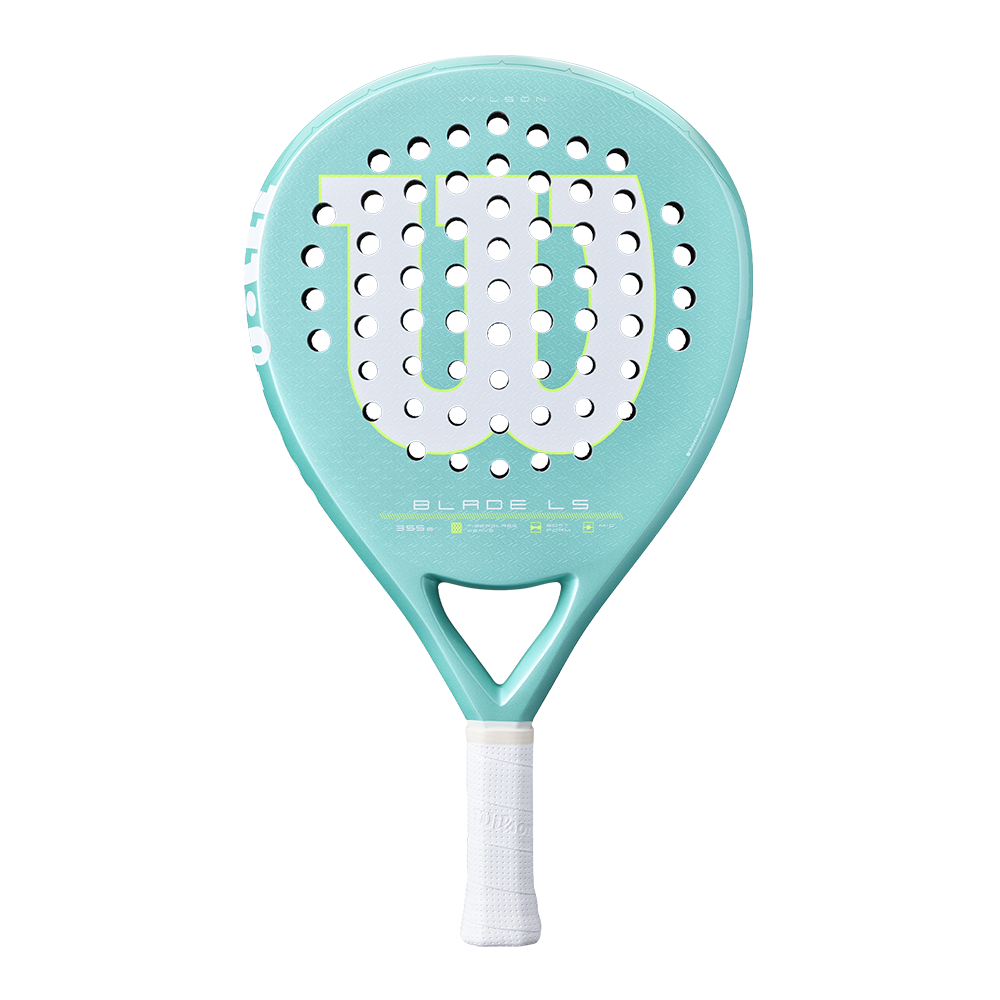
The Wilson Defy LS V1 2025 is the entry point into the Defy line, the attacking family Wilson built around Javi Garrido in 2025. It uses the same mould as the Defy V1 and the Defy Pro V1: the same diamond head, the same aerodynamic bridge, the same hole pattern and the same double texture. What changes is the face and the weight. The Pro runs a 15K carbon face, the standard V1 a 3K, and the LS gets Comfort Flex, a fibreglass and carbon mix, at around 355g instead of 365g or 370g. That single swap changes the racket more than the spec sheet suggests. Contact is softer, the ball sinks into the face a little, and the dry snap the carbon Defys are known for is mostly gone.
The balance is where the marketing and the measurements part company, and it is worth knowing before you buy. Most shops list it as head heavy. Racketguide put a unit through its own measuring rig and came back with 356g and a balance point at 26.1cm, which it classes as medium, and PadelVerdict reads the 265mm figure as neutral for a diamond. So you get a power head shape sitting on a weight distribution that is close to the middle. That is why it moves through the air far faster than the shape leads you to expect.
It launched at around 230 euro. Most shops now list it between 130 and 190 euro, which is the other half of the argument for it.
What the Reviewers Say
Eight sources in English, Spanish, French and Italian, and the headline is consistent: this is the easy one in a hard line. Mejora Tu Padel tested all three Defys back to back with a second player and came away calling the LS "super easy to drive, even if you are not a high level player", pointing at the fibre face that lets the ball sink in instead of bouncing off. Padel Magazine, which tested the whole Wilson range side by side, found the same thing at the net: "in fast exchanges it is easy to position, and you can string volleys together without feeling like you are fighting the racket head". Their one line verdict was that the LS is for the attacker who puts arm speed ahead of mass.
They start to diverge on how much racket is left once you take the weight out. SimplePadel called it "a refreshingly easy power diamond", then drew the line clearly: "like any diamond, it rewards clean contact, and it is not built for defence". PadelVerdict scored control at 6.8 out of 10, the lowest number on its card, and concluded that the racket "belongs at the net or in mid court, not at the back glass". Padel Addict, writing at launch, was more generous, noting that the mould and the balance carry over unchanged from the Pro and that "despite being an attacking racket, it moves very well both at the back of the court and at the net".
The two long form video tests, both Italian, land in the same place. Fabio Ferro went in expecting to prefer the carbon Defys and came away calling the LS "the one I liked most of the whole Defy line", crediting the Power Foam core for carrying what the softer face gives away, while still sending anyone who wants feedback to the Defy or the Defy Pro. Simone Mazzola scored it 9 for power and 8 for control on an 8.3 average, and gave the same warning the written sources do: "the harder you push a shot, the more it can run away from you".
The owners are the most split of all. Across 45 verified reviews on Racketguide the racket averages 3.5 out of 5, and the two camps say almost opposite things. One player: "a good light racket that does not tire my arm, good in defence, pushes a bit less in attack". Another: "very powerful, ideal for finishing, but technically difficult, small sweet spot, heavy in defence". Read them together and a pattern shows up. At medium pace it feels forgiving. Push it hard and the low mass and the high sweet spot start to show.
How it plays..
The evidence lines up on one thing: this is a diamond you swing, not a diamond you lean on. The head arrives early on the volley and the smash, and the double texture bites enough to make a cut vibora sit down properly. The cost of that is what the Comfort Flex face gives away, a softer and vaguer contact than the 3K carbon in the standard Defy, plus the mass that lets you drive through a ball that comes in heavy. Players who finish points with a committed, weighted swing will get more out of the Defy V1; players whose problem is arm speed and fatigue rather than power get the better end of this trade.
Defense
Defence is the honest weak spot. The frame is light and the sweet spot sits high, so a fast ball dropping low off the glass has to be met cleanly or it comes back short. The written sources agreed the racket does not do much to help you here, and PadelVerdict's defender profile sits nearly a full point below its attacker profile. The video testers were kinder, both finding the lob easy to lift. What works in its favour is head speed: you can still get the racket into position late, which is more than most diamonds offer. Owners who play at medium pace rate its defence well. Owners who play fast do not.
Attack
This is what it is for. The diamond head, the aerodynamic bridge and the light frame let you accelerate quickly, and the Duo Grid hole pattern combined with the Spin2 texture gives real grip on the ball for kick smashes and cut viboras. The ball leaves fast at the pace most club players generate. Above that it flattens out, and several owners put it the same way in different words: it performs best up to medium speed. This racket adds pace to your swing rather than adding weight to the ball.
Netplay
The net is where the LS makes its clearest case. It gets to reaction volleys that heavier diamonds miss, and the Comfort Flex face keeps blocked volleys from feeling harsh. Slice volleys and the bandeja come off well thanks to the texture on the face. Stability is the limit: against a hard flat drive the frame twists slightly where a 370g racket would hold its line. For a player who lives on the service line, that is a fair exchange.
Our Advice for New Players
Not a first racket. The diamond head puts the sweet spot high, and a beginner who mishits low on the face gets very little back. The comfort and the light weight make it tempting, but a round frame with an even balance will teach you cleaner contact faster and cost you less.
Our Advice for Intermediate Players
This is the target buyer. If you already move forward, finish at the net, and find heavy diamonds tiring by the third set, the LS gives you the shape without the physical cost. If you still build points from the back and rely on the racket to keep the ball in play, look at a round or teardrop frame instead. Control is the number this racket gives up.
Competitive level
Usable, with a clear caveat. An advanced attacker will enjoy the swing speed and the spin, and will also find the ceiling: less ball weight than the Defy V1, less feedback than a carbon face, less stability against pace. It earns its place as a second racket for long tournament days or when the arm is sore. It is less convincing as the only racket in the bag.
How It Compares
Want the same attack with more behind the ball? The Wilson Defy V1 2025 is the same mould with a 3K carbon face and roughly ten grams more. It hits heavier, holds up better against pace, and gives you the feedback the LS lacks. Choose it if your technique is solid and you want the ball to come off with weight.
Want the comfort without the diamond risk? The Wilson Bela LS V3 2025 is the same weight with a similar face, but in a teardrop with a bigger sweet spot and a much easier time at the back of the court. It is the better pick if you defend more often than you finish.
Research & References
Our mission is to help you choose the right padel racket with clear, in-depth reviews that make it easy to level up your game. We start with official specs, then break down each racket’s key properties. Finally, we bring together trusted video and written reviews—summarised into one consistent, easy-to-read overview.
Drafted by Padelguru from published expert reviews, independent lab measurements and verified owner feedback, with Christoph Herrmann's playing profile as an editorial lens, then reviewed and edited by Christoph Herrmann. Nobody on the team has played this racket, so nothing here is presented as first hand testing.
Put the rackets you are considering side by side and keep the ones you play with in your collection.
Get the Padelguru app
Recommended for
Attacking intermediate and advanced players who finish points at the net and want a diamond they can swing fast for three sets, rather than a heavy frame they have to lean on.
Skill level
Intermediate, High Intermediate, Advanced
Court position
Left, Net
Play style
Power, Offensive
Best at: Maneuverability (8.8/10)
Average: 7.7/10
Wilson DEFY LS V1, Facilmente aggressiva!
Wilson Defy LS: Potenza e controllo per tutti?
Shape
Diamond
Weight
Light (341–355g)
Balance
Balanced (Even)
Touch
Medium Soft
Core
Power Foam
Surface
Comfort Flex With Spin2 Texture
Texture
Rough
Year
2025
8 rackets with characteristics, performance and appeal close to the Wilson Defy LS V1 2025.
7.5Wilson · 2026
Exceptional kick smash with minimal arm effort
Less ball feedback than carbon-face Defy siblings
 7.5
7.5Wilson · 2025
Exceptional spin from double 3D and sandy texture
Unforgiving at pace — off-centre shots stay short
 8.5
8.5Wilson · 2025
Exceptional power generation from diamond shape and 3K carbon face
Demanding adaptation period due to hard touch and roughness
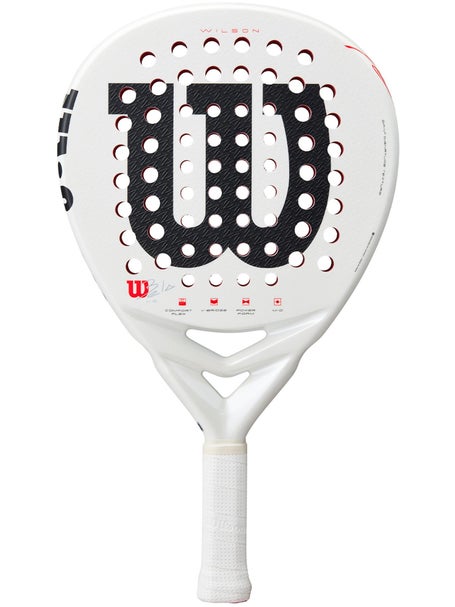 7.5
7.5Wilson · 2025
Very large, forgiving sweet spot
Less feel and feedback than a full-carbon face
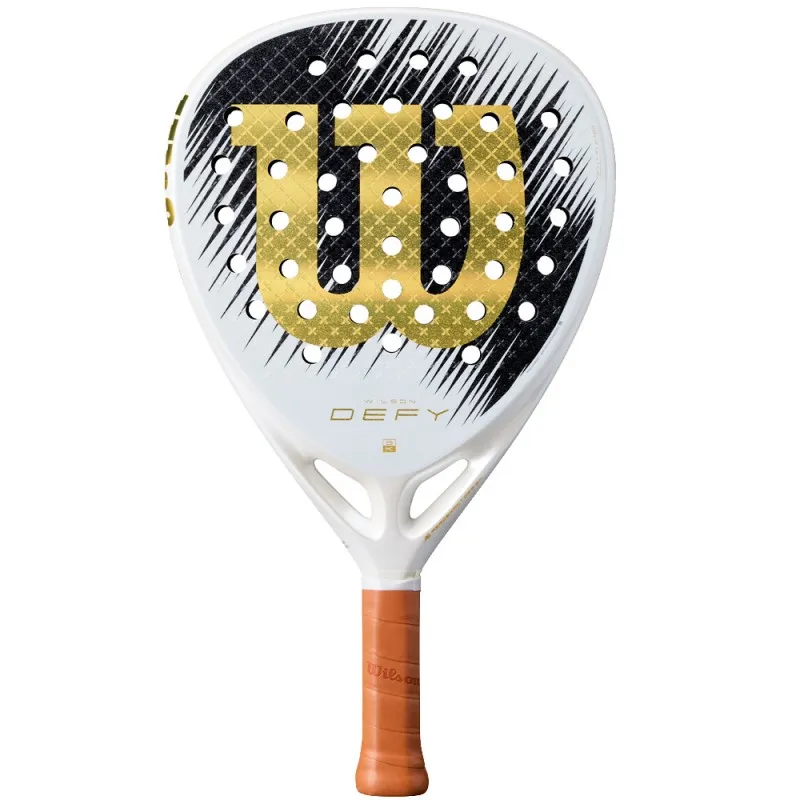 8.4
8.4Wilson · 2026
Exceptional grip on the ball
Flat smash lacks top-end punch
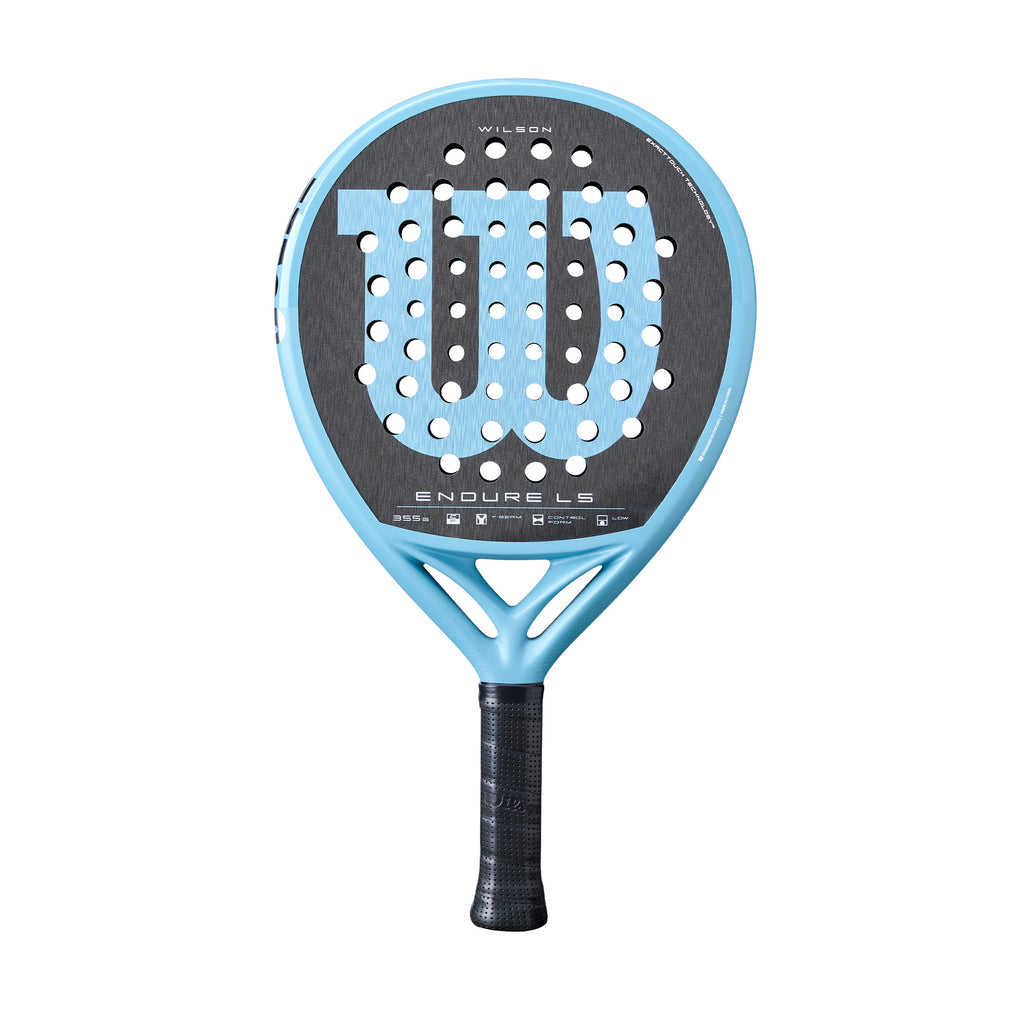 7.5
7.5Wilson · 2026
Exceptional maneuverability at 355g
Limited power output compared to sibling Endure V1
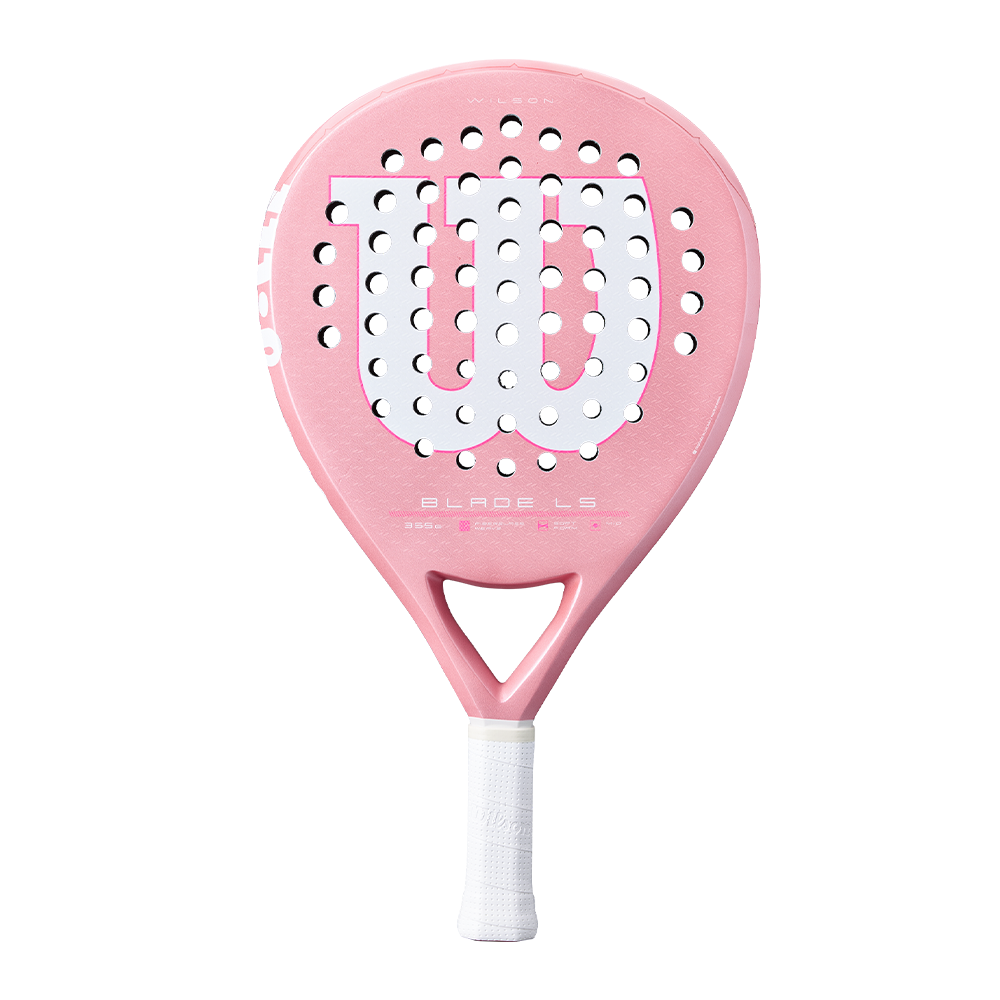 7.5
7.5Wilson · 2026
Very quick hands at the net
Runs out of power on flat smashes
 7.5
7.5Wilson · 2026
Wide, predictable sweet spot on off-centre hits
Almost no help on flat smashes
Want to explore more options?
Browse all rackets