
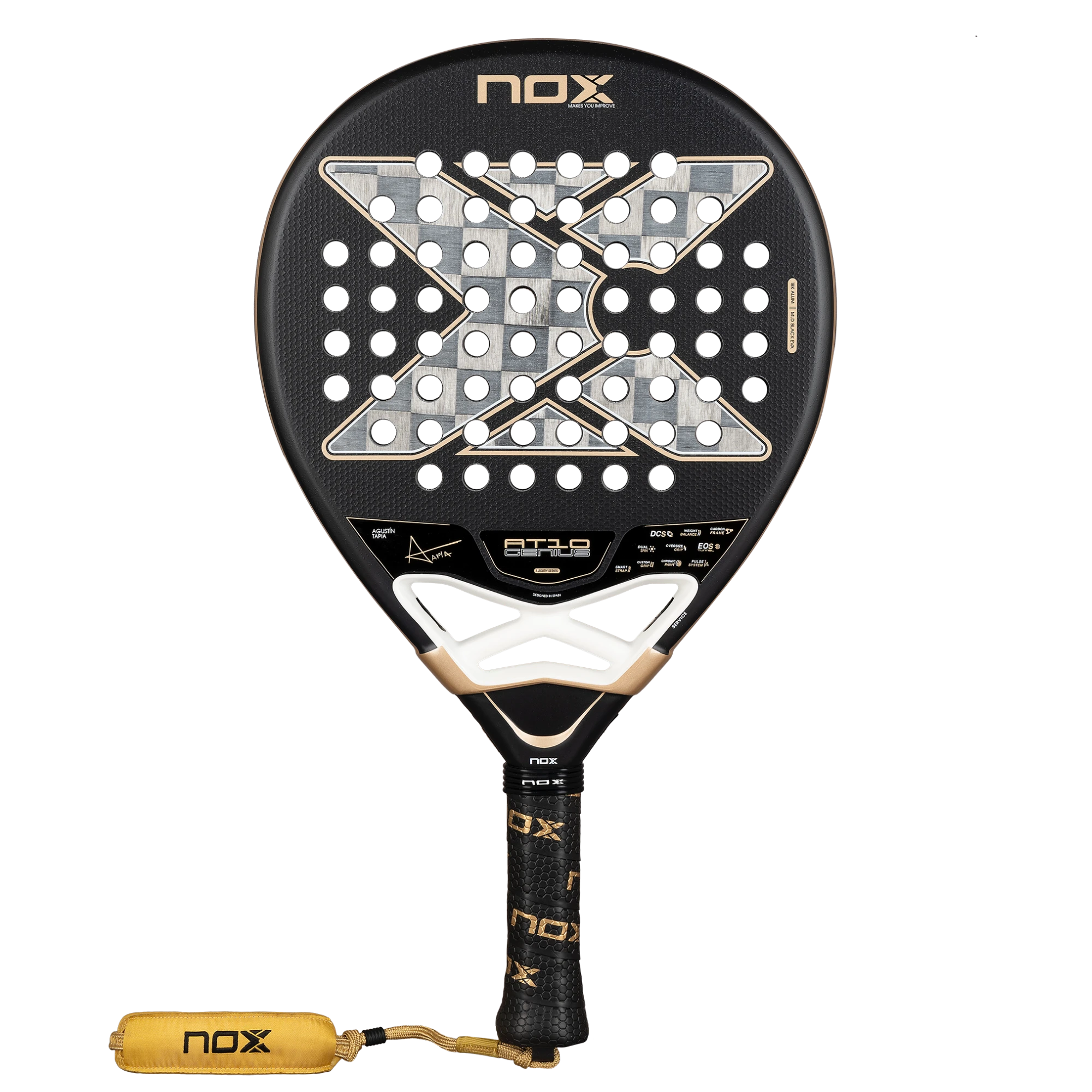
 8.2
8.2Nox At10 Genius 18K Alum 2026
Nox · 2026
Wide, centered sweet spot
Flat smash output a step below the 12K Xtrem sibling
Premium ProAdvanced
 8.4
8.4Fast through the air and steadier on off-centre contact than most pro frames, with real spin bite across the whole face. Best for advanced and strong intermediate all-court players who bring their own arm speed. If you want a flat smash to end the point for you, the 12K Xtrem siblings hit harder.

Developing all-court player focused on consistency and comfort
Always gets an "A" for effort from the coach. That tells you enough about his technique.
Nox rebuilt Agustín Tapia's signature racket for the 2026 season, and this is the version most club players should look at first. The AT10 Luxury Genius 18K Alum sits in the middle of the Tapia line: softer and more forgiving than the 12K Alum Xtrem, far less one sided than the Attack mould, and built for a player who wants to defend and attack with the same frame.
Two things actually changed this year. The new Weight Balance system seats 2g and 4g counterweights in rails on the head of the frame that you swap without tools, and it shifts the balance point enough to feel: leave them out for a fast, light head, load them for an attacker. And the Dual Spin surface now covers the entire face. On earlier AT10s the sand finish sat around the edges and the 3D relief in the middle, so the bite changed depending on where you caught the ball. Now it does not. The photochromic paint is cosmetic.
What has not changed is the character. Around 367g in the hand, an even balance, and a firm but not brutal 18K aluminized face. That aluminized weave is the quiet argument for this racket over cheaper carbon: it keeps the stiffness consistent from a cold morning warm up to a hot afternoon match. List price is €389.99, though street prices sit well below that.
What the Reviewers Say
The consensus across eight independent tests is unusually tight: this is a control racket that can attack, not an attacking racket that can defend. PadelRacketReviews scored it 93 out of 100, the highest they have given any Nox, and summed it up as "the rare frame that hits like an attacker's racket but doesn't fall apart when you defend."
The power question is where it gets interesting. PadelShop put it on their measuring rig and came back with a swingweight of 157 and a hardness of 64, then said plainly that "the lower swingweight makes the racket fast and manoeuvrable, at the cost of some punch on attacking shots." PadelZoom reached the same conclusion from the court rather than the machine, scoring it 9.5 for manoeuvrability while noting that "it is not the liveliest racket on the market, and what you get back for that is precision and stability."
Padelful was blunter about the price of that: "if you want to play passively and let the racket do the work, this is not it. You have to put your arm into it." Every source repeats that warning in some form.
On forgiveness they split. PadelZoom and PadelShop both call the sweet spot generous for a frame at this level. PadelRacketReviews rates tolerance at 68 out of 100 and warns that "lazy footwork gets punished at the edges of the sweet spot." Both readings hold up: it is forgiving next to a diamond, demanding next to a round club racket.
The video testers who lived with it for weeks land in the same place, and they are more specific about why. Dani 13 calls the new full face roughness the real upgrade of the 2026, then flags the cost of the light head: "the swing comes out very fast but too flat, and unless you pull the tip down the ball floats on you." Peter Consuegra sums up the whole frame the same way: "within the hybrids this one leans towards control, not power. Blocking and moving your opponent around is far easier than accelerating yourself." Probando Palas is the one who found the fix, playing it with the 4g inserts loaded into the head: "with the heavier weights the tip drops through the finish, and that gives it real bite at the net while it still gives you a good ball from the back."
The real disagreement is whether 2026 is an upgrade at all. Guido De Francesco at Zona de Padel tested it back to back with the 2025 and landed on comfort: the new one defends better and stays easier over a long match, but "we are not talking about a revolution, we are talking about an evolution." If you own the 2025 and like how sharp it feels, he does not think you need to move.
How it plays..
The honest read is that this is a forgiving racket by professional standards and a demanding one by club standards. Contact drifts off centre and the frame stays stable instead of twisting, which is more than most rackets at this price offer. But the ball does not leave on its own, so a short, arm only swing gets a flat, dead reply and the racket starts to feel like the problem. Worth the money for a player who already swings through the ball. Expensive for anyone hoping a racket will fix that.
Defense
Solid, and a clear step up on the 2025. The multilayer core stacks rubbers of different densities, so a slow defensive contact sinks into the softer layers and buys you a longer moment on the ball. Blocks come off clean, balls off the back glass stay where you put them, and a tense lob does not sail long if you follow through. Under real pressure the head holds its line rather than twisting.
Attack
This is the compromise. The power is there, but it comes out of the swing rather than out of the core. With the weight closer to your hand than in the head you get swing speed instead of natural punch, so a well prepared smash lands heavy and a late one does not get rescued. Flat put-aways are a clear step behind the 12K Alum Xtrem and the Attack mould. Loading the Weight Balance inserts into the head closes part of that gap.
Netplay
The best part of the racket. The low swingweight gets the head there early, volleys come off short and firm, and you are reset before the next ball arrives. The full face Dual Spin grips properly, so the bandeja goes deep with real shape on it and the víbora bites when you accelerate through the contact. It stays quiet on off centre volleys, which is what makes a fast exchange survivable.
Our Advice for New Players
Not a first racket. The price rules it out on its own, and the response is too honest: it returns what you put in, so an unfinished swing gets an unfinished ball. A player one season in, training two or three times a week with real ambition, could grow into it. Most beginners will learn faster on a round, softer frame costing a third as much.
Our Advice for Intermediate Players
This is where it starts to make sense, provided you already swing through the ball rather than at it. The wide sweet spot and the quick head cover a lot of mistakes at this level, and the Weight Balance inserts let you soften the demands while your technique catches up. If you still rely on the racket to give you depth, wait a season.
Competitive level
The natural home. An advanced all-court player on either side gets a frame with no weak zone and a balance point they can set themselves instead of inheriting. The one advanced player it does not serve is the pure closer whose game runs on the flat smash. That player belongs on the Attack mould.
How It Compares
Inside the Tapia line the choice is straightforward. The Nox AT10 Genius Attack 12K Alum Xtrem 2026 is the diamond version: much more put-away power at the net, a much smaller sweet spot, and it punishes anything mistimed. Take it only if you already spend most of the match finishing points overhead.
The Nox AT10 Genius 12K Alum Xtrem Lite 2026 goes the other way: lighter, easier on the arm, quicker still, at the cost of holding the ball when the pace climbs. It is the better buy if arm comfort or maneuverability comes first, or if you play several times a week and feel it the next day.
Research & References
Our mission is to help you choose the right padel racket with clear, in-depth reviews that make it easy to level up your game. We start with official specs, then break down each racket’s key properties. Finally, we bring together trusted video and written reviews—summarised into one consistent, easy-to-read overview.
Drafted by Padelguru from published expert reviews and measured bench tests, with Kaj Kloezeman's playing profile as an editorial lens, then reviewed and edited by Kaj Kloezeman. Nobody at Padelguru has played this racket. Every on-court claim above comes from the sources listed.
Put the rackets you are considering side by side and keep the ones you play with in your collection.
Get the Padelguru app
Recommended for
Advanced and high-intermediate all-court players on either side who build points and want one racket for defence and attack. It is not a shortcut to power.
Skill level
High Intermediate, Advanced, High Advanced
Court position
Both sides, Net, Backcourt
Play style
Control, Balanced, All-court, Counter-attacking, Tactical
Best at: Maneuverability (8.8/10)
Average: 8.2/10
NOX AT10 18K 2026: Review y sensaciones, Dani13
¿Merece la pena la nueva AT10 Genius 18K Aluminizada? Review HONESTA
Nox AT10 18K 2026: El equilibrio perfecto en salida de bola
Shape
Teardrop
Weight
Medium (356–370g)
Balance
Balanced (Even)
Touch
Medium
Core
Mld Black Eva (Multilayer, Variable Density)
Surface
18K Aluminized Carbon
Texture
3D Pattern
Year
2026
8 rackets with characteristics, performance and appeal close to the Nox AT10 Luxury Genius 18K Alum 2026 by Agustín Tapia.
8.2Nox · 2026
Wide, centered sweet spot
Flat smash output a step below the 12K Xtrem sibling
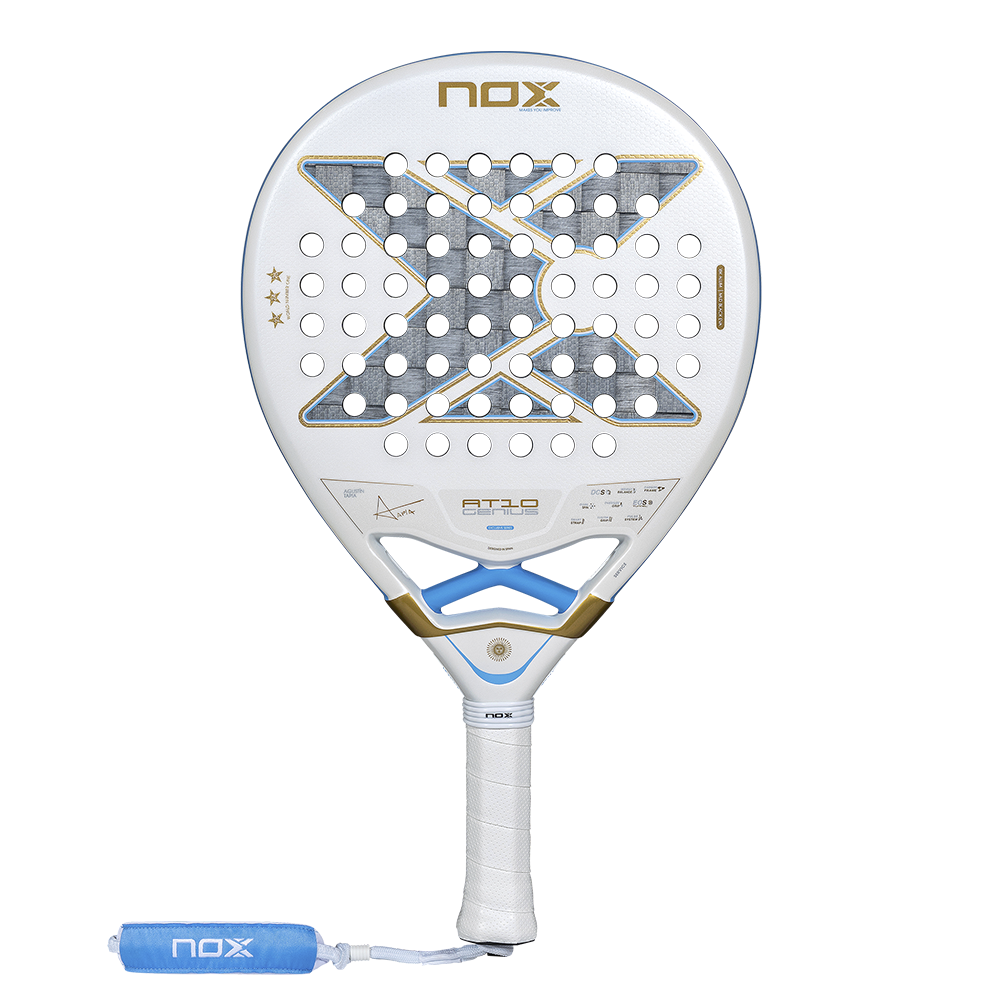 8.5
8.5Nox · 2026
Blocks and resets land where you aim
Smash power has to be earned
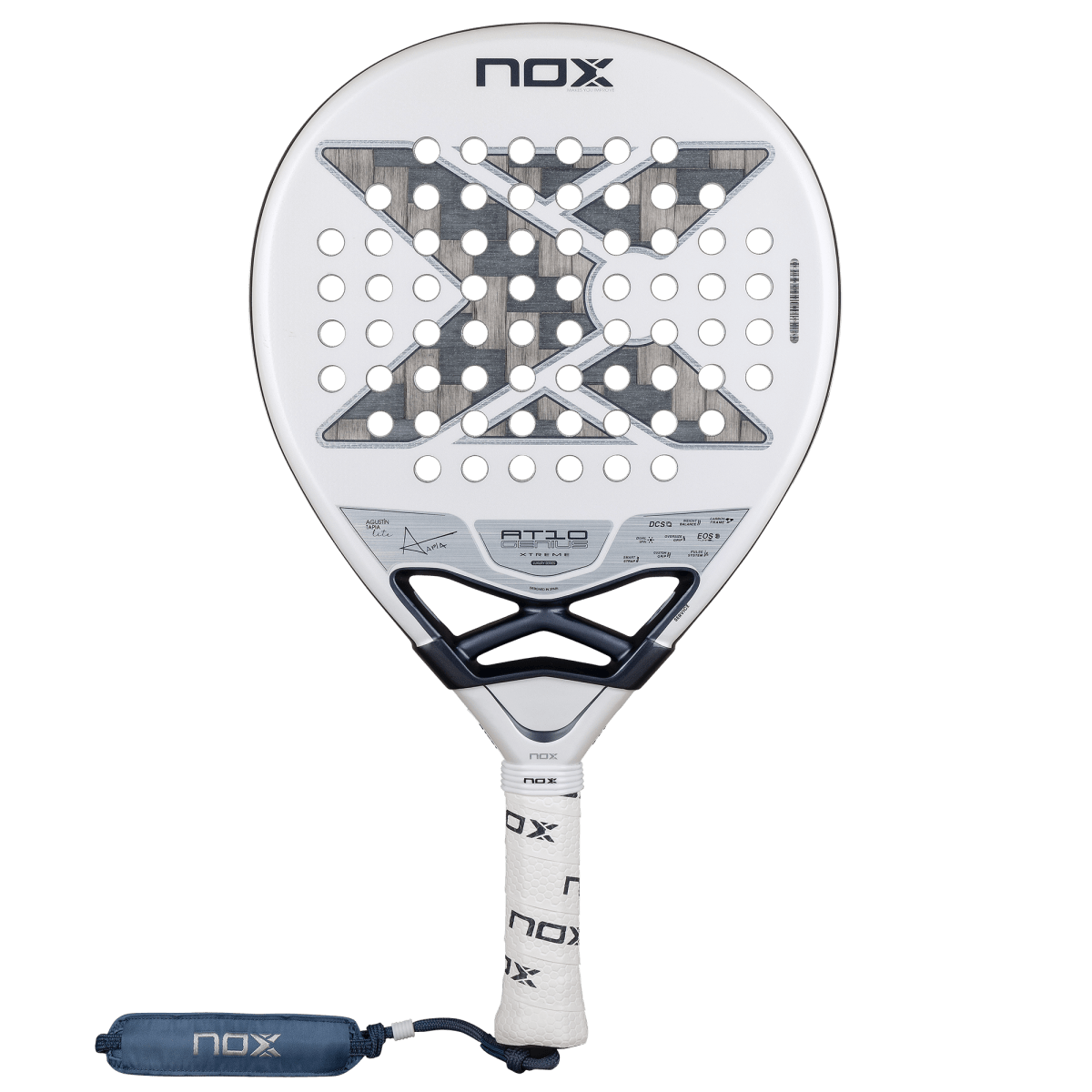 8
8Nox · 2026
Outstanding maneuverability
Ball can escape at high pace if follow-through is incomplete
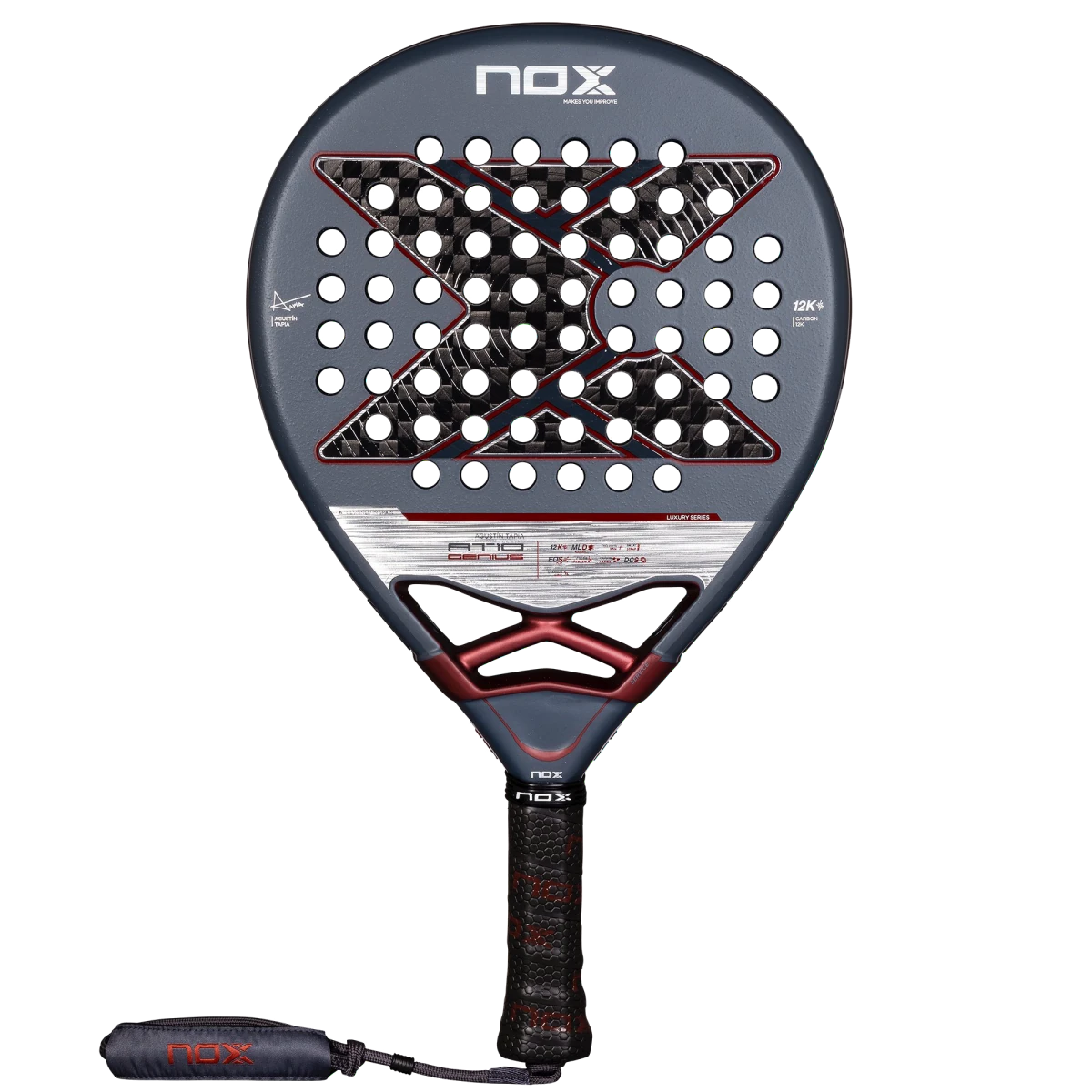 8.5
8.5Nox · 2025
Big, forgiving sweet spot
Short ball exit on slow balls
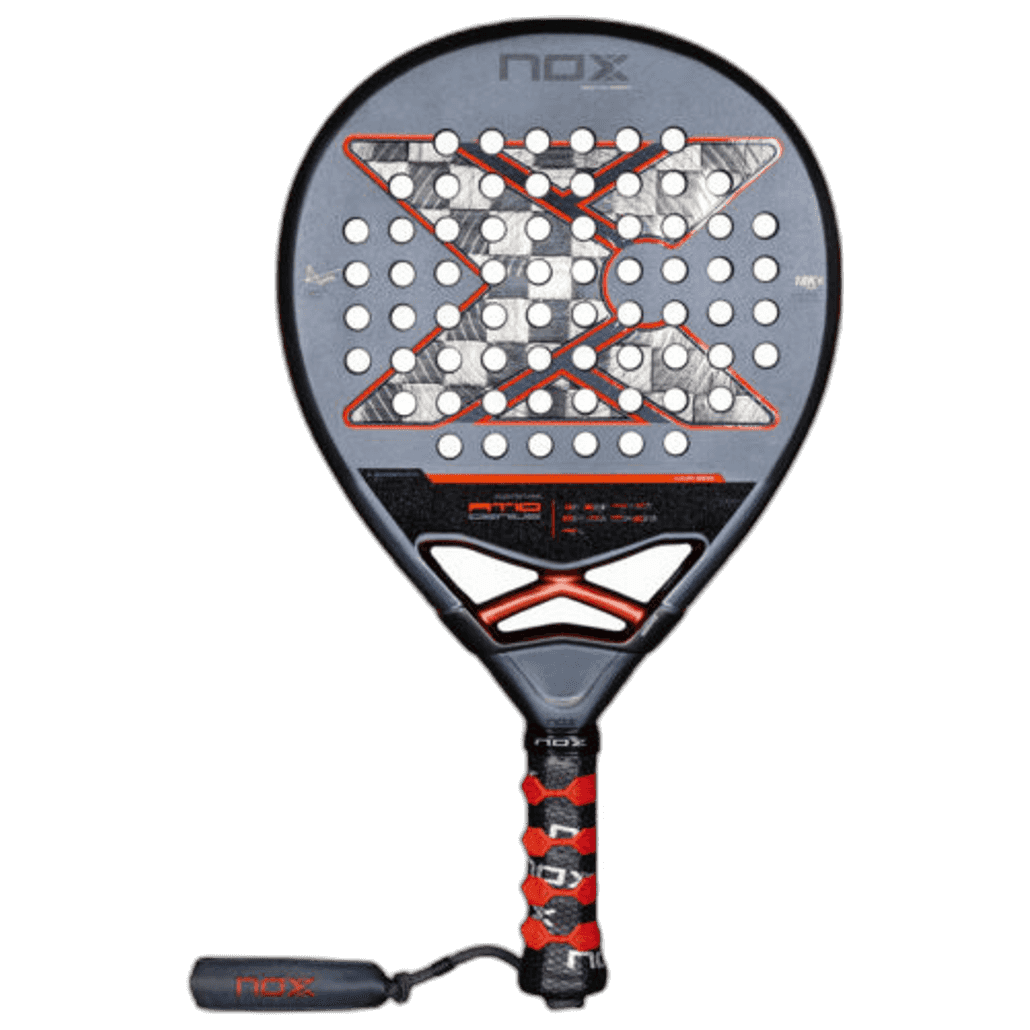 9.2
9.2Nox · 2025
Advanced 18K Aluminized Carbon technology for exceptional durability
Premium price point may be prohibitive
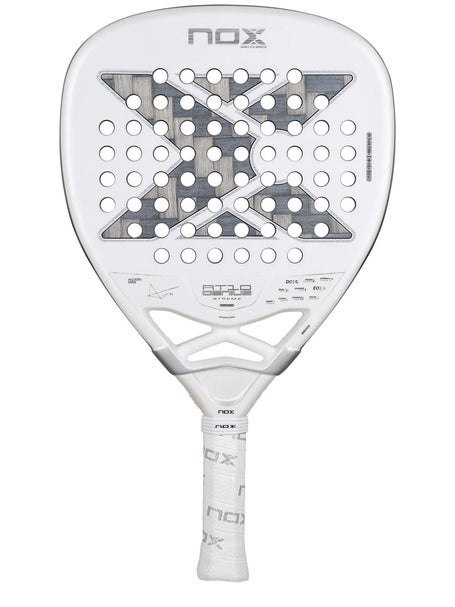 8.3
8.3Nox · 2026
Explosive overhead power with clean energy transfer
Small sweet spot exposes mistimed contact
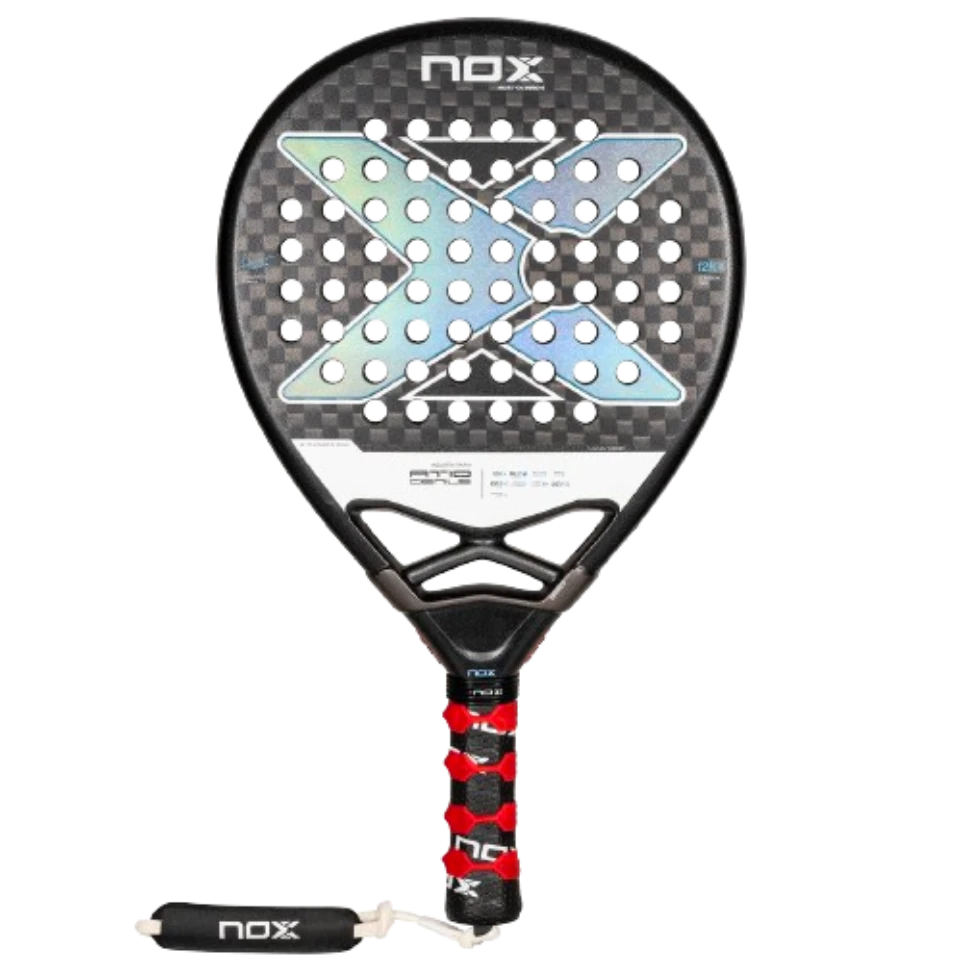 8.5
8.5Nox · 2024
Exceptional maneuverability for a 368g frame
Flat smashes lack real explosiveness
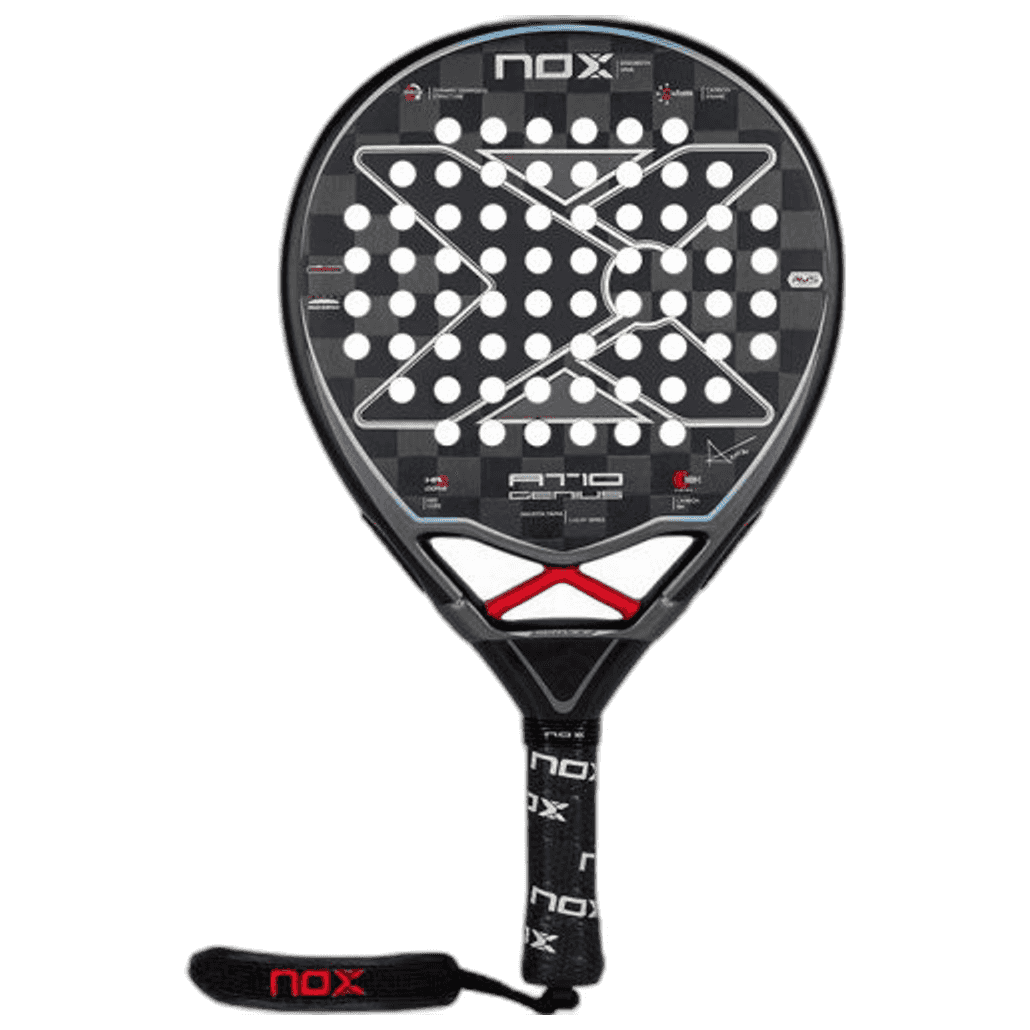 8.8
8.8Nox · 2023
Exceptional maneuverability and handling
Higher price point may not suit all budgets
Want to explore more options?
Browse all rackets