
 8.5
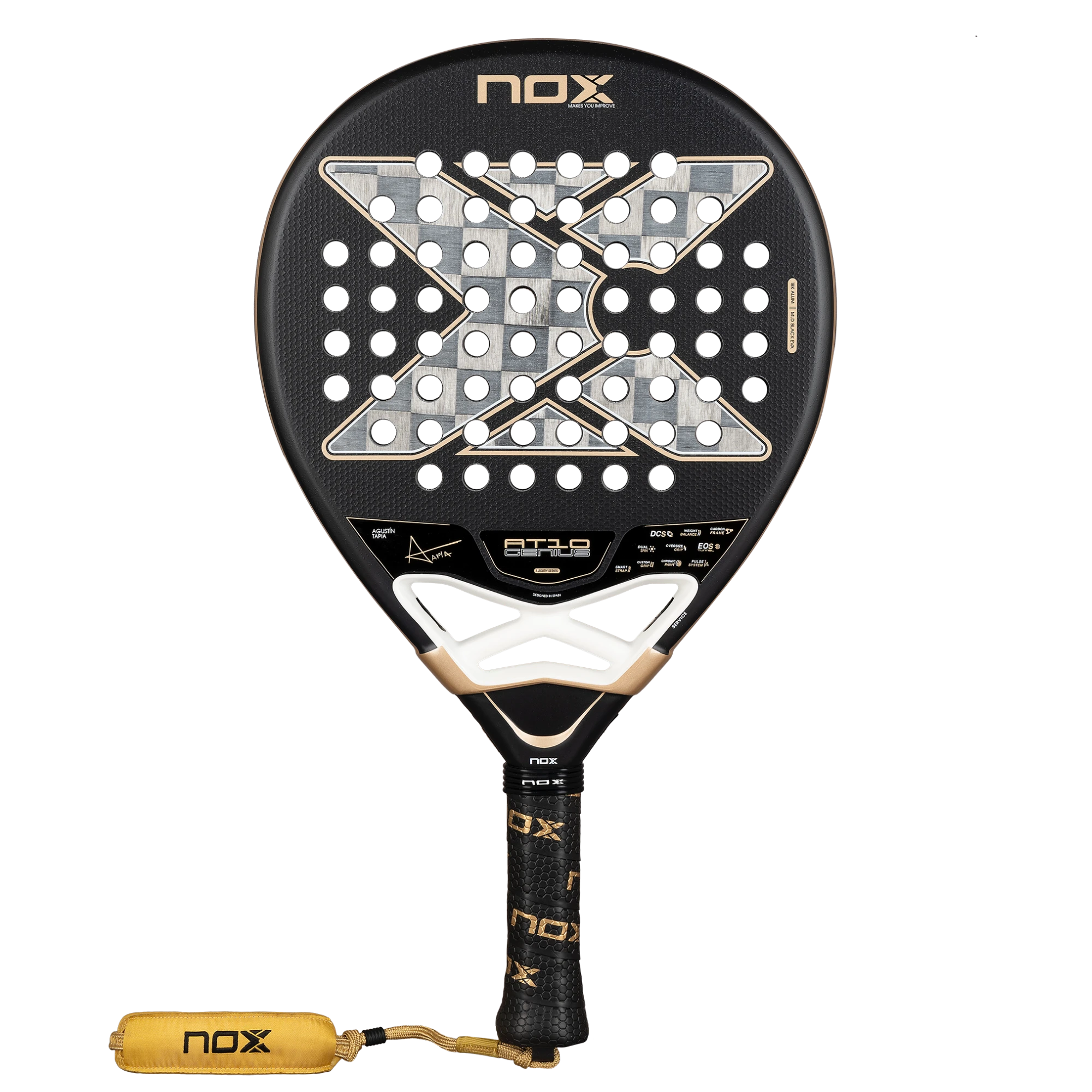
8.5Nox AT10 Genius Attack 18K Alum 2025
Nox · 2025
Exceptional power for aggressive shots
Higher price point
PremiumAdvanced
 8.3
8.3A committed attacker's frame. The diamond head and stiff 18K face turn a full swing into a genuinely heavy smash, with real spin from the dual texture surface. Best for advanced players who already live at the net, wrong for anyone who defends a lot, and the small high sweet spot punishes late preparation.

All-court player who prizes control, feel and spin
Bowe is convinced that the racket, shoes, court are the problem, never his own abilities.
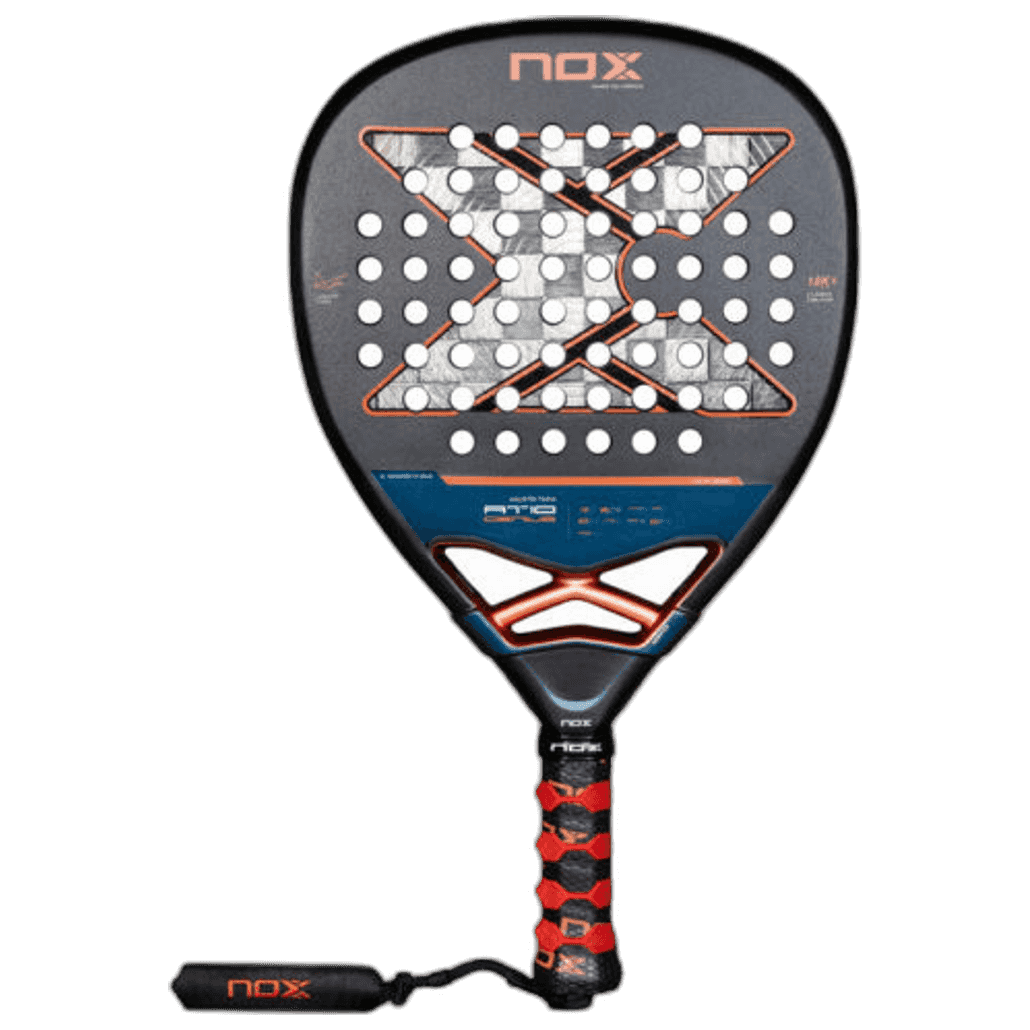
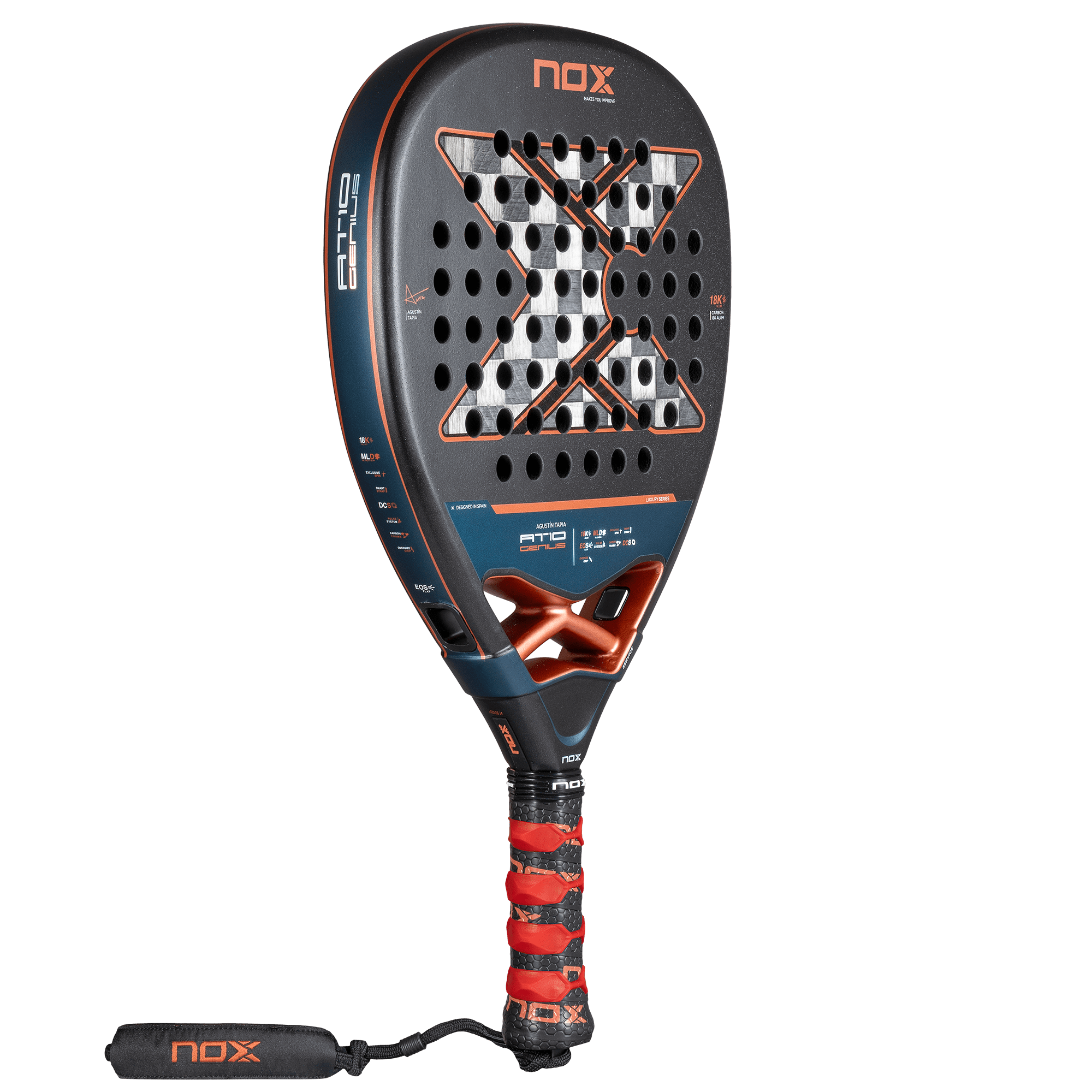
The AT10 Genius is Agustin Tapia's signature line at Nox, and the Attack is the variant inside it that stops pretending to be versatile. The standard Genius is a teardrop you can build a point with from the back of the court. The 2025 Attack takes the same 18K aluminised carbon face, the same multi density MLD Black EVA core and the same dual texture surface, then moves the mass up into a full diamond head and points everything at finishing.
Against the 2024 Attack the changes are small and sensible rather than dramatic: a refreshed layup, and a new octagonal butt cap that keeps your grip reference in the same place however you hold it. The extended handle carries over, which matters if you hit a two handed backhand. It launched around 340 euro. Remaining 2025 stock now sits closer to 180 to 200, and that is a large part of why it is still worth talking about.
What the Reviewers Say
The written tests and the on court video reviews agree on the character and split on the degree. This is a frame built to attack, and how demanding it feels depends on who is swinging it.
PadelTestLab scored it 81 out of 100 and put the overhead at the centre of the verdict, saying the smash comes out on a direct trajectory with minimal energy loss, and that the bandeja can be played flatter without the ball falling short.
Tennis Overload rated power 9.9 and spin 9.7 but did not hide the cost, noting that "defensive lobs and glass recoveries demand better technique than more balanced rackets".
PadelAnmelderen ran a full on court test, landed on 8.8 out of 10, and put the same warning more bluntly: this is not a racket that helps you when you hit the ball outside the sweet spot.
PadelRacketReviews is the harshest on comfort, scoring it 64 there and 63 on tolerance, and summing the frame up as a specialist finisher whose stiffness will eventually find your elbow.
BallIndor measured control at 71 percent and manoeuvrability at 66 percent, and their conclusion follows the numbers: it asks for real technical command, because the whole design points at attack.
PADELARTE took it on court and kept coming back to the ball exit, saying "the ball leaves the face without you having to force it", and that the jump in power over the 2024 18K is obvious from the first smash.
Peter Consuegra was surprised at the other end, calling it the AT10 Genius he could defend best with, and adding that the feel is medium rather than hard, so you sense the ball on the face instead of it simply firing away.
PADELREVIEW ENG scored spin 8.5 and the por tres smash 8.5, then put the reservation on the flat smash and the price: "offensive but not a cannon", and 340 euro is too much for what it is.
Two disagreements sit under all that. The first is the net. PadelReview found it agile and comfortable there, with volleys coming off with good direction, while PadelTestLab and PadelRacketReviews both say the head weight makes blocks close to the body harder work. In practice they are describing the same racket: it volleys well when you prepare early, and poorly when you do not. The second is forgiveness. PADELREVIEW ENG places the sweet spot high on the face and calls it "not huge", which matches the written tests, while PADELARTE and Peter Consuegra both found it generous once they were playing.
How it plays..
The 18K aluminised face is the best thing here. It is crisp, it reports exactly where the ball left the surface, and the dual texture gives real bite rather than the cosmetic roughness a lot of frames ship with. What you pay for that is a sweet spot pushed high and small, and a head that has to be moved early. Players who like to work the ball and stay precise all match will find it expensive in the second hour, while anyone whose game is built on getting overhead and finishing will read that trade as fair.
Defense
Defence is the honest weak spot. The head weight that makes the smash work becomes dead weight when you are stretched and late, and the small, high sweet spot means a ball taken off the bottom of the face comes back short. Off the back glass it is stable and predictable when you have time to set up, and the stiff face gives a clean read on the block. Defensive lobs suffer most: they need arm rather than help from the racket, and depth drops off quickly once you are rushed.
Attack
This is the whole point of the racket. The diamond head puts the mass where the smash happens, and the aluminised 18K face returns almost all of it instead of flexing, so a flat smash leaves on a low, direct line. The kick smash is where the surface earns its keep: the hexagonal centre pattern grabs the ball hard enough to lift it out of the court reliably. It wants a full, committed swing. Half a swing gets you a firm but ordinary ball, because this frame gives nothing back for free.
Netplay
Volleys come off firm and deep, and the face does not twist when someone drives at you. The catch is timing. Blocks close to the body take more effort than on a teardrop, so preparation has to start earlier than feels natural. The bandeja is excellent and can be played flatter than usual without dropping short, and the vibora benefits from the sand finish more than any other shot here: you get genuine rotation without swinging harder for it.
Our Advice for New Players
No. The sweet spot is small, it sits high, and the frame is stiff enough that mishits are felt in the arm. A beginner spends the whole match hunting the centre of the face and getting punished for missing it. Start on a round frame with a soft core instead.
Our Advice for Intermediate Players
Mostly no, with one exception. An intermediate who already plays most of their padel at the net, has a repeatable smash and reliably finds the middle of the face can use it, and the price of remaining 2025 stock makes that tempting. Everyone else at this level gives up more in defence and comfort than they gain in power. The standard AT10 Genius 18K is the better buy.
Competitive level
Yes, if your game already finishes points from above. Advanced attackers on either side get a frame that turns a committed swing into a genuinely heavy ball, with the spin to make it drop. Advanced all court players and anyone who builds points from the back should look elsewhere. Players with a history of elbow trouble should demo it first: comfort is consistently the lowest number on every reviewer's card.
How It Compares
Against the standard Nox AT10 Genius 18K Alum 2025, the Attack trades defence and forgiveness for smash pace. The teardrop sibling lets you construct a point from the back and still finish when you step forward. The Attack does one of those two things much better and the other noticeably worse. If you are unsure which player you are, you want the standard one.
Against the Nox AT Genius Attack 18K 2024, the 2025 is the same idea with a refreshed layup and the new octagonal cap for a consistent grip reference. The step up is real but small, so a discounted 2024 is still a sensible way into this frame.
Research & References
Our mission is to help you choose the right padel racket with clear, in-depth reviews that make it easy to level up your game. We start with official specs, then break down each racket’s key properties. Finally, we bring together trusted video and written reviews—summarised into one consistent, easy-to-read overview.
Drafted by Padelguru from published expert reviews and on court test reports, with Bowe Frankema's playing profile as an editorial lens, then reviewed and edited by Bowe Frankema. Padelguru did not play test this racket, and no first hand session is claimed here.
Put the rackets you are considering side by side and keep the ones you play with in your collection.
Get the Padelguru app
Recommended for
Advanced and competition players who spend most of the point at the net and finish overhead, on either side of the court, with the technique to find a small high sweet spot under pressure.
Skill level
Advanced, High Advanced, Professional
Court position
Both sides, Net, Service line
Play style
Power, Offensive
Best at: Offense (9.5/10)
Average: 8.0/10
PADELARTE: NOX AT10 Attack 18K Alum 2025 de Agustín Tapia, ¿la mejor pala de potencia?
Peter Consuegra: NOX AT10 Genius Attack 18K, ¿la nueva joya de NOX?
PADELREVIEW ENG: NOX 18K Attack review, is one of the rackets signed by Tapia really powerful?
Shape
Diamond
Weight
Heavy (371–385g)
Balance
Power-Oriented (Head-Heavy)
Touch
Medium Hard
Core
Mld Black Eva Multilayer
Surface
18K Carbon Alum
Texture
Rough
Year
2025
8 rackets with characteristics, performance and appeal close to the Nox At10 Genius Attack 18K Agustin Tapia 2025.
8.5Nox · 2025
Exceptional power for aggressive shots
Higher price point
 8
8Nox · 2025
Explosive power on smashes and víboras
Small, high sweet spot punishes off-center hits
 8.3
8.3Nox · 2026
Explosive overhead power with clean energy transfer
Small sweet spot exposes mistimed contact
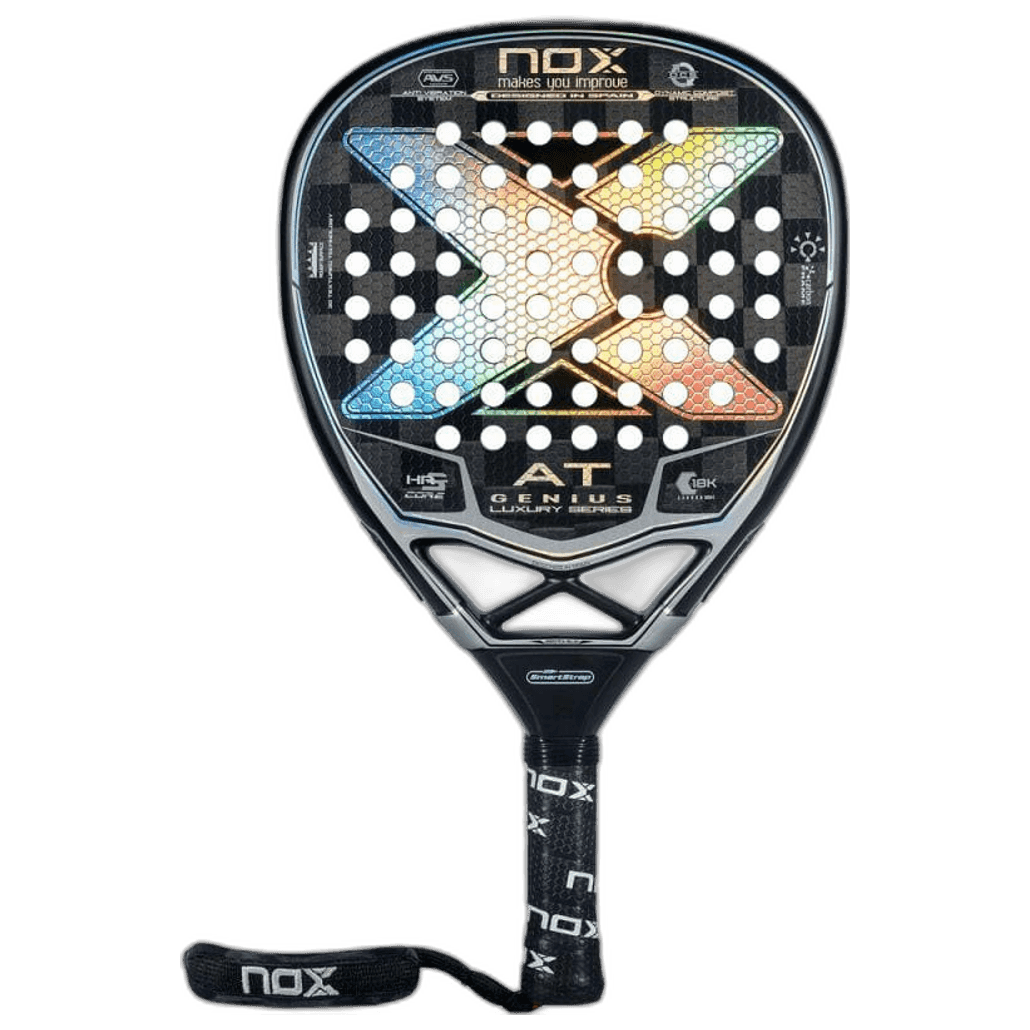 8.4
8.4Nox · 2022
Exceptional power generation with 18K carbon fiber construction
Higher price point
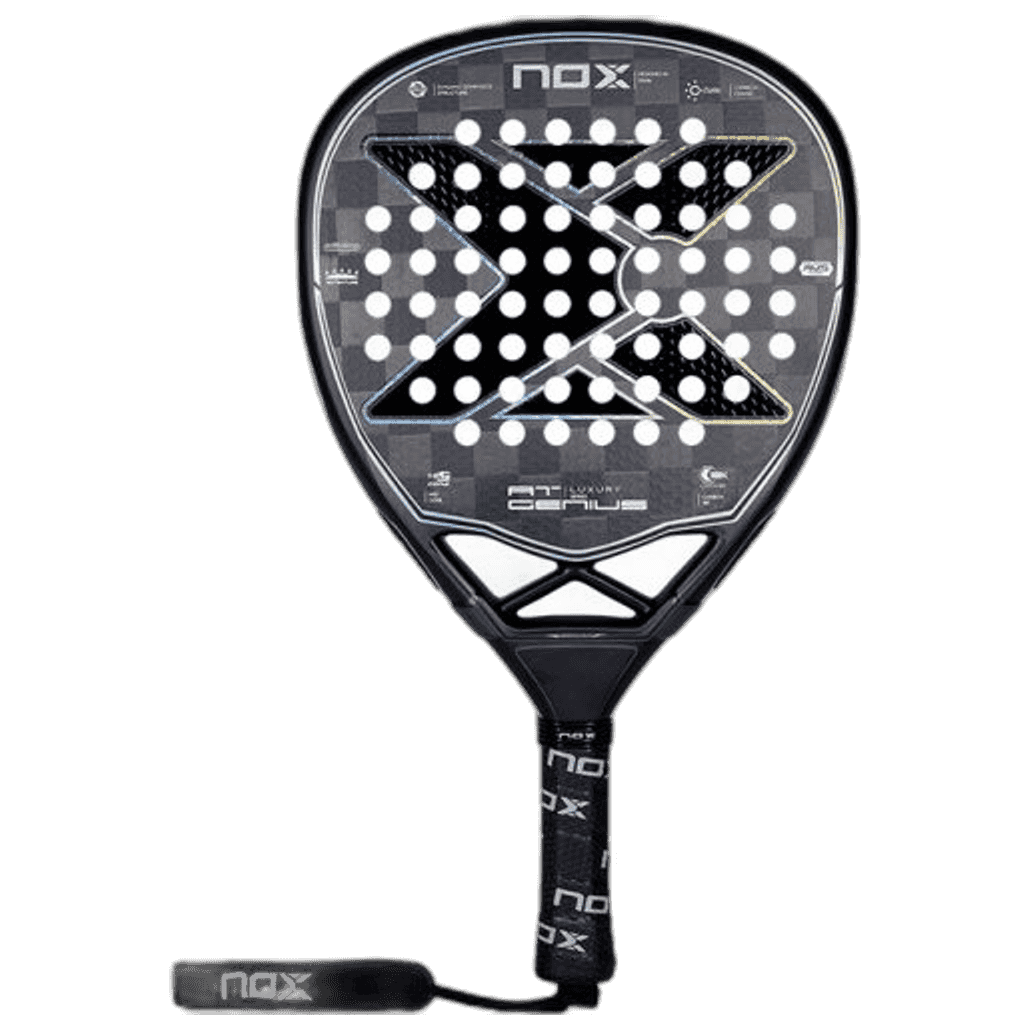 8.8
8.8Nox · 2023
Exceptional power generation with 18K carbon fiber face
Requires advanced technique to maximize potential
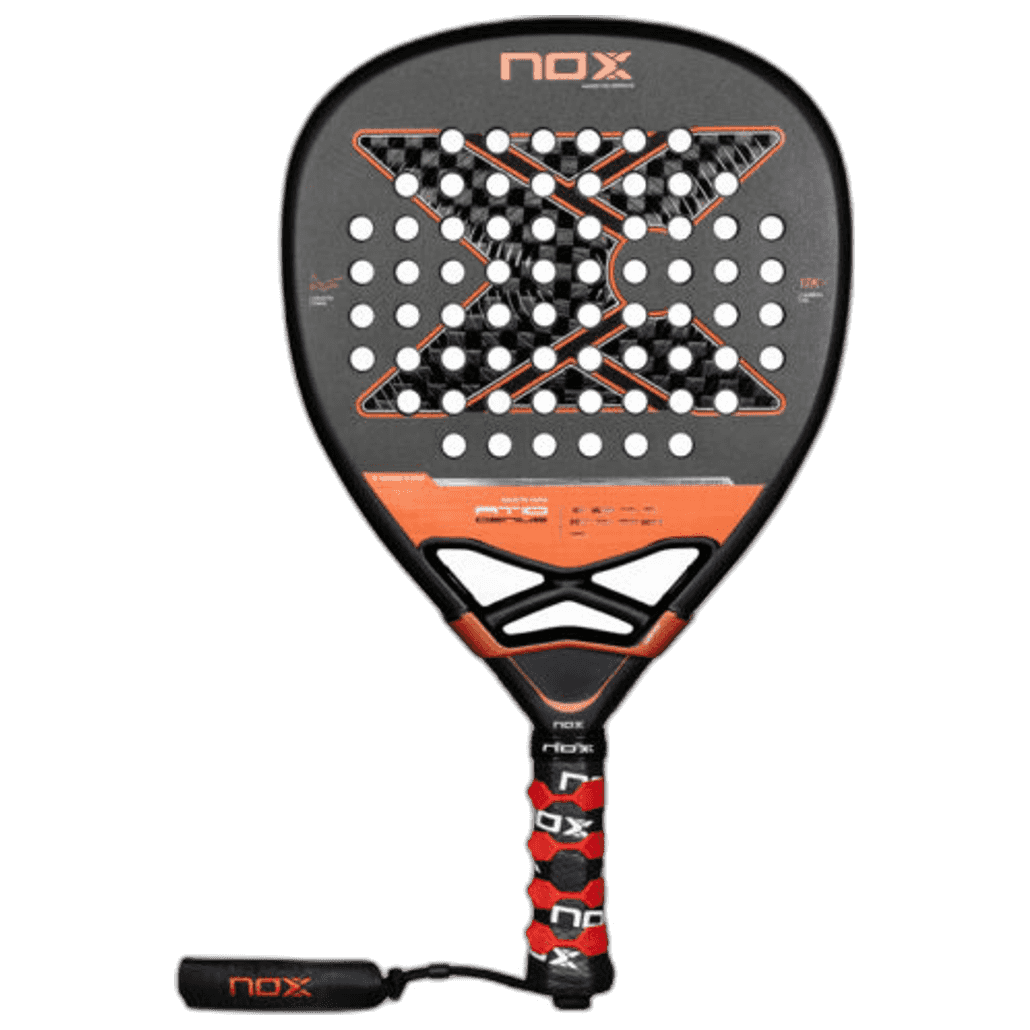 8.4
8.4Nox · 2025
Exceptional power generation
Less maneuverability due to weight
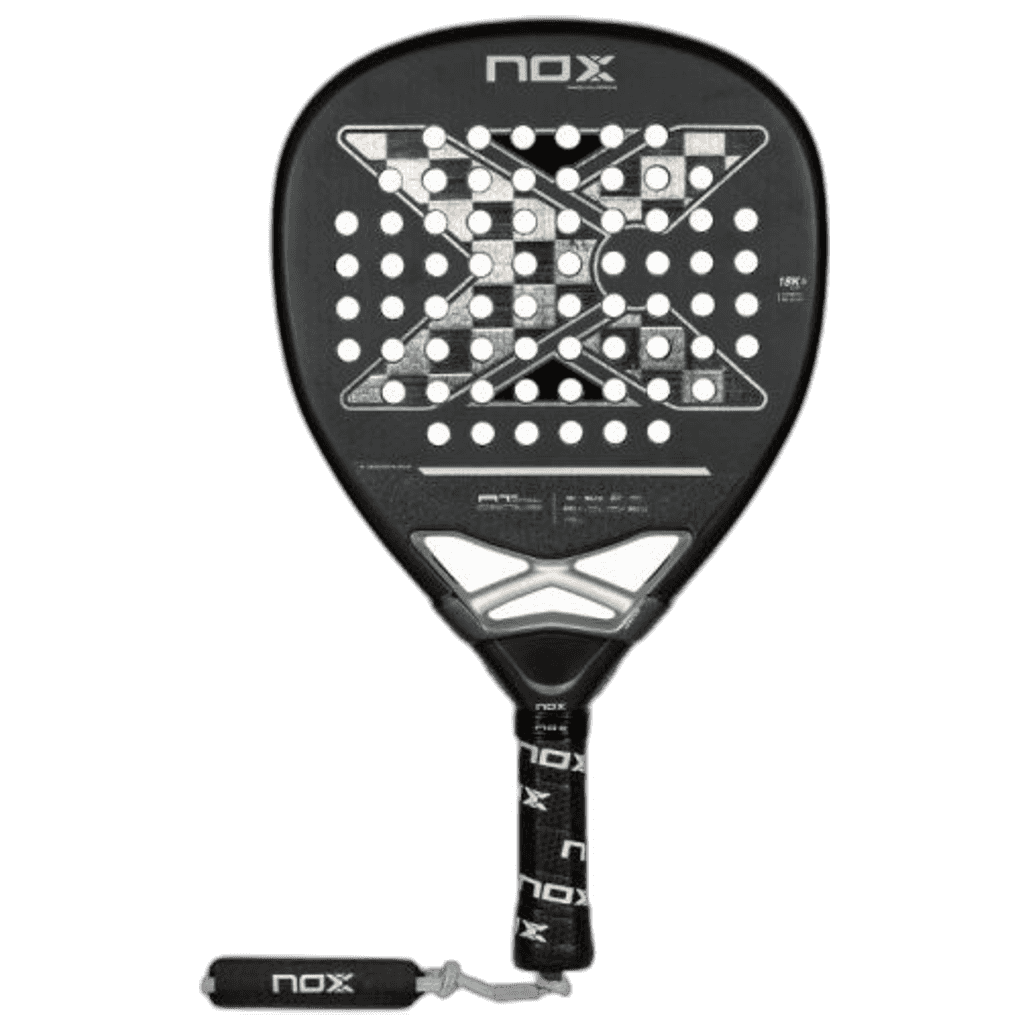 8.7
8.7Nox · 2024
Exceptional power delivery with 18K carbon faces
Premium price point
 8.2
8.2Nox · 2026
Wide, centered sweet spot
Flat smash output a step below the 12K Xtrem sibling
Want to explore more options?
Browse all rackets