
 8.2
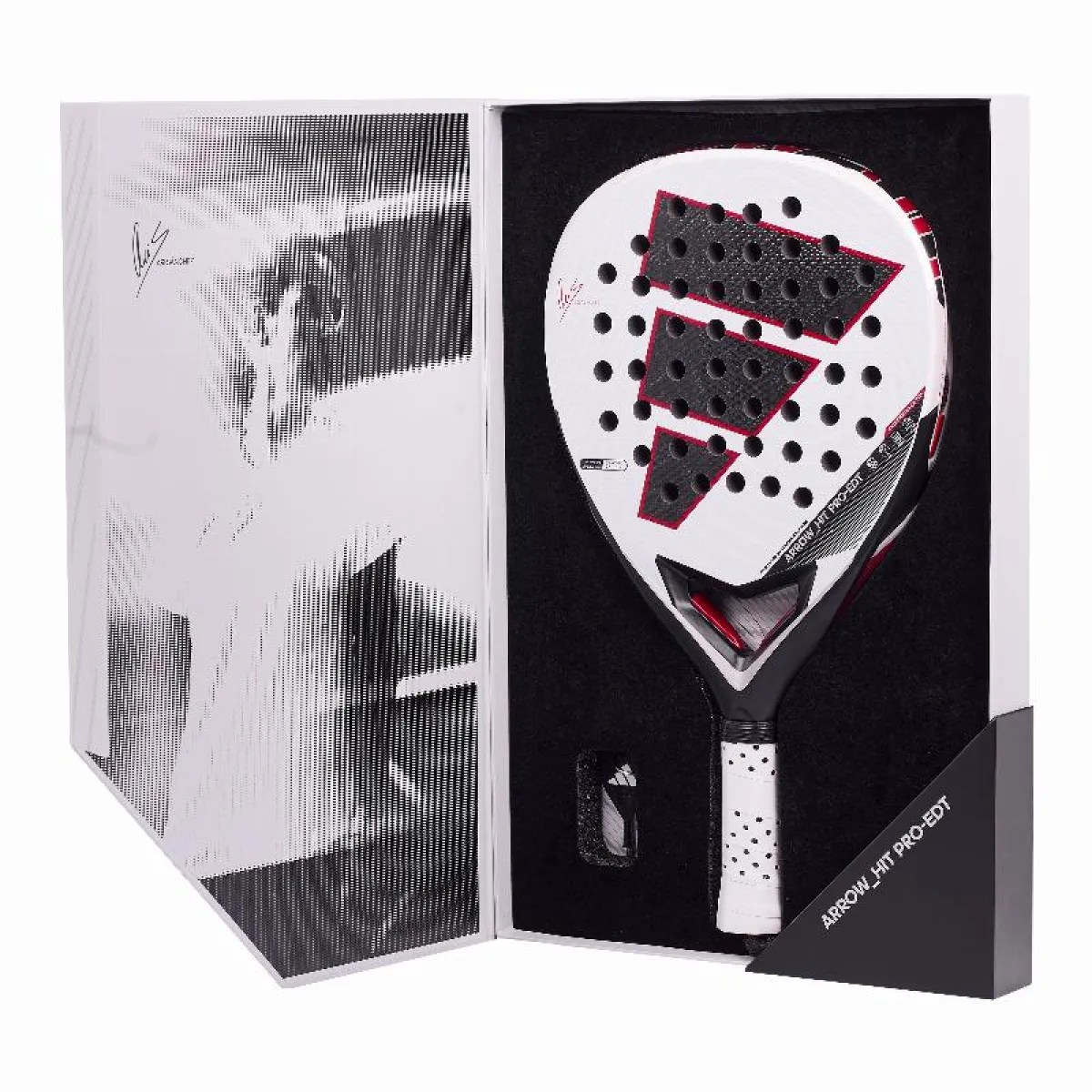
8.2Adidas Arrow Hit Pro Edt 2026 Ari Sanchez
Adidas · 2026
Precise ball placement with diamond shape
Less explosive on hard smashes than power-oriented diamonds
Premium ProAdvanced
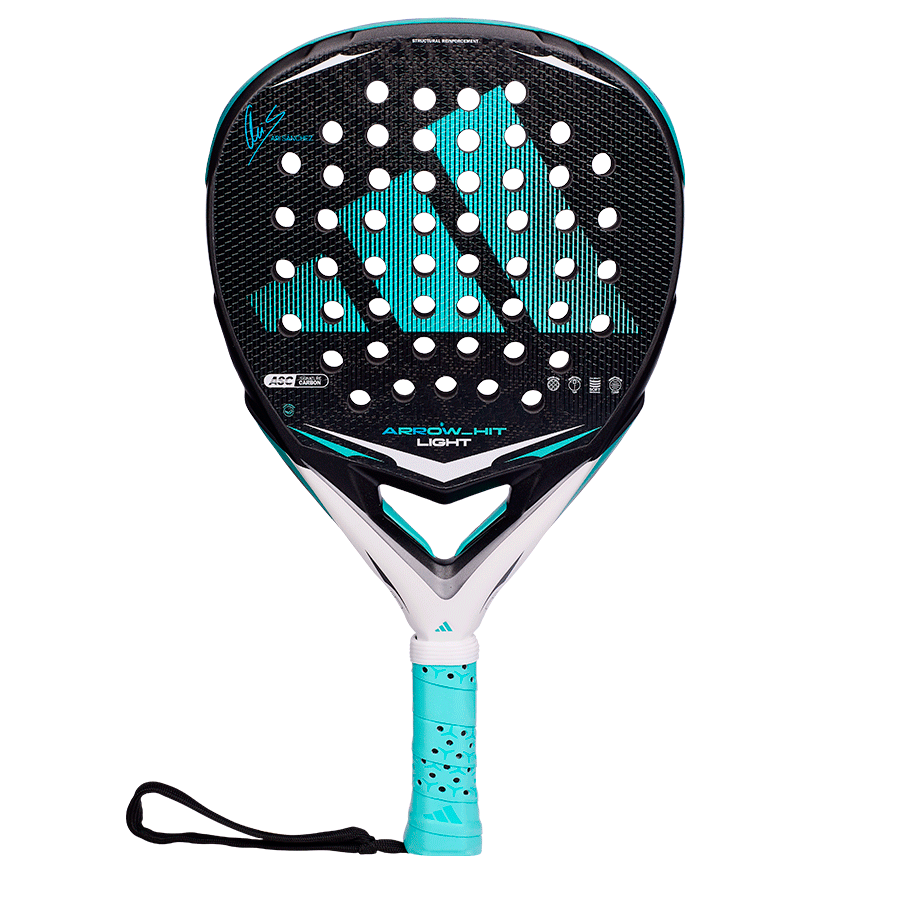 8.1
8.1Lighter and far quicker to swing than the diamond shape suggests, with a soft core that keeps the arm fresh deep into a third set. Best for strong intermediates and advanced players who win with speed and placement rather than mass. If your smash needs weight behind it, or your contact still wanders, look elsewhere.
Developing all-court player focused on consistency and comfort
Always gets an "A" for effort from the coach. That tells you enough about his technique.
Ari Sánchez left Head after seven seasons and signed with Adidas for 2026. This is the racket she actually competes with, and it only reached the shops in June, months after it first showed up in her hand on the Premier Padel circuit.
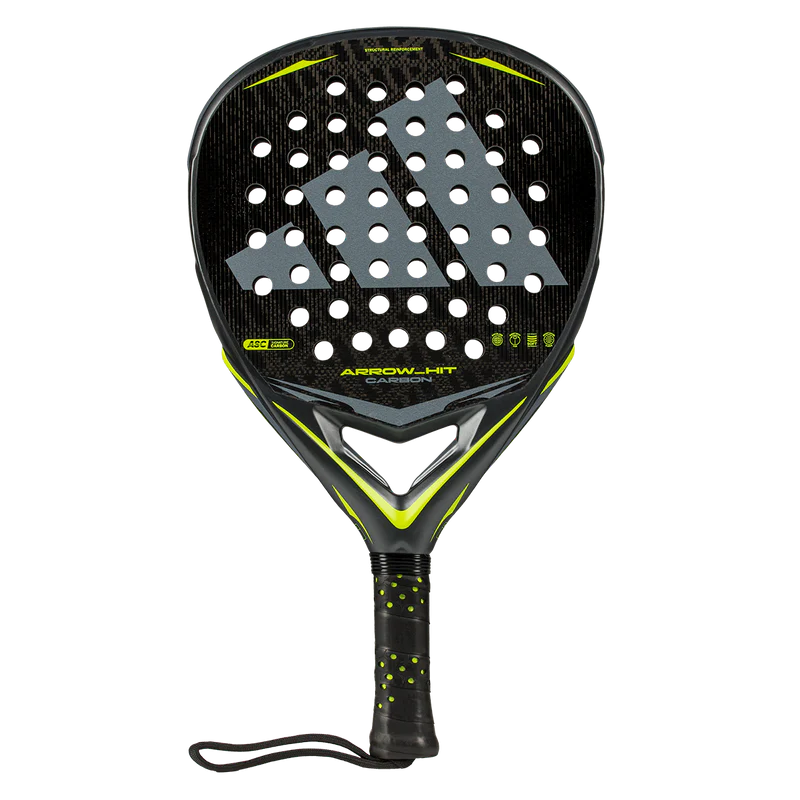
Adidas opened the Arrow Hit line earlier in the year with a control model and an attack model. The Light is the third version and the lightest: a measured unit came in at 350 grams against roughly 368 for the Arrow Hit Carbon beside it. Same diamond mould, same attacking intent, noticeably less mass to drag around. That is the whole point of it. A diamond head usually charges you slow hands for its power, and this one mostly does not.
Two things carry over from the rest of the line. The side rails let you slide the balance up before an attacking match and back down when you are the one getting run around, and the textured face is among the most aggressive Adidas currently makes. New for 2026 is an adjustable cord grip with a padded wrist strap. Adidas sells it at 300 euros; shops run it closer to 210 to 260.
What the Reviewers Say
The consensus is that the Light plays easier than a diamond has any right to. PadelVerdict measured a unit at 350 grams with a 260 millimetre balance and concluded that "it is a diamond by geometry and an all-court racket by behaviour", scoring it highest as a defensive frame rather than an attacking one, which is not what the marketing promises. Padel Addict arrives at the same place from the launch side: "if you play the back of the court with judgement, if you look to place the ball rather than hit it hard, this racket is built for you."
Where they part company is control under pace. PadelTestLab, who scored it 81 out of 100, warns that "ball exit is so lively that a blocked volley sails long unless you learn to guide it rather than punch it", and rates fine control as the weak link. Mundo Deportivo, testing it on court with La Chiquita Padel, found the opposite on blocks: firm, stable, easy to take pace off the ball. Their reservation sits elsewhere, on contact point. They note that it "asks you to hit close to the head, and if you move too far from that sweet spot you lose some of the explosiveness", adding that you can hear the difference.
Three dedicated video tests fill in what the written reviews leave out. PADELREVIEW ENG treats it as a precision tool first, and is blunt about where it shines: "at the net, this racket feels like a surgeon's scalpel." They also warn it is no cannon overhead, with smashes that are controlled rather than explosive. Fabio Ferro, who bought his own unit and weighed it bare at 343 grams, is the hardest on it: from the back "it does not hand you free ball exit, it is a racket that wants rhythm", which earned baseline play 6.5 out of 10 against a full 8 at the net. He is also the one tester who calls the face dry rather than forgiving, and tells fragile elbows to be careful despite the soft core.
Zona de Pádel disagrees on the one thing everyone else flags. Hitting it all over the court they found that "wherever I hit it, the racket responds well, there is not much difference between the middle and slightly off centre", and rated defence as its biggest surprise. The honest reading is that the face is generous on gentle contact and demanding once you swing hard, which is exactly where the testers split.
Read together: fast, precise, easy on the shoulder for its class, and still a racket that wants rhythm and a clean strike.
How it plays..
The comfort is real, but it is the low weight doing the work rather than a plush feel. A 350 gram frame means three sets without a sore shoulder, which is rare in this mould, while the ASC face itself hits dry and firm over the soft core. What it will not do is cover a poor contact. The sweet spot sits high and stays narrow, so depth drops off on wall exits and low balls more often than the friendly first impression suggests. Players who already find the middle of the face get a quick, precise racket. Players still working on that get more back from a round mould.
Defense
Better than the shape suggests. The soft core sends a defensive lob deep without loading the shoulder, and the light head lets you prepare late off the back glass and still put shape on the ball. Reviewers consistently rate the lob and the chiquita as its most comfortable defensive shots. The limit is a heavy incoming ball: with less mass behind the face, blocks give back less free depth than a 368 gram frame would.
Attack
There is real power here for 350 grams, but it arrives through head speed rather than weight. Get under a high ball with a clean swing and the diamond head plus the longer grip drive it down hard. Flat smashes from deep are where the weight saving shows: the heavier Arrow Hit Carbon keeps more margin when you are hitting through the ball from the back. The winning pattern on this one is angle and speed, not brute force.
Netplay
The strongest zone. It changes direction instantly in fast exchanges and stays alive for a second volley. The 3D texture bites properly on a cut bandeja and on the víbora, where the extra spin opens angles a smooth face cannot. The caution is the punch volley: ball exit is lively, so against a fast ball you guide it rather than hit it, or it runs long.
Our Advice for New Players
Not a beginner racket. The high, narrow sweet spot punishes off-centre contact with lost depth and vibration into the wrist, and the price puts it well outside a first purchase. Start on a round mould with a genuinely large sweet spot and come back to this shape once your contact is repeatable.
Our Advice for Intermediate Players
Where most of the audience sits, if the technique is there. A strong intermediate who has wanted a diamond but could never swing one comfortably will find this one genuinely movable, and the soft core takes the sting out of long matches. If your contact is still inconsistent, be honest about it: the racket helps your hands, it does not fix a mishit.
Competitive level
A clear fit for advanced players who win with hand speed and placement rather than mass, on either side of the court. If you attack from the net, take a lot of bandejas and víboras, and still have to defend half the match, this is the Arrow that treats both jobs as real. Advanced players whose game rests on heavy flat smashes from deep will want the extra mass of the Arrow Hit Carbon.
How It Compares
Against the Adidas Arrow Hit Carbon, the heavier sibling, the Light trades a little stability and a little smash weight for a large gain in speed, control and comfort. Pick the Carbon if your points end with a flat smash from the back. Pick the Light if they end with a víbora or a fast volley.
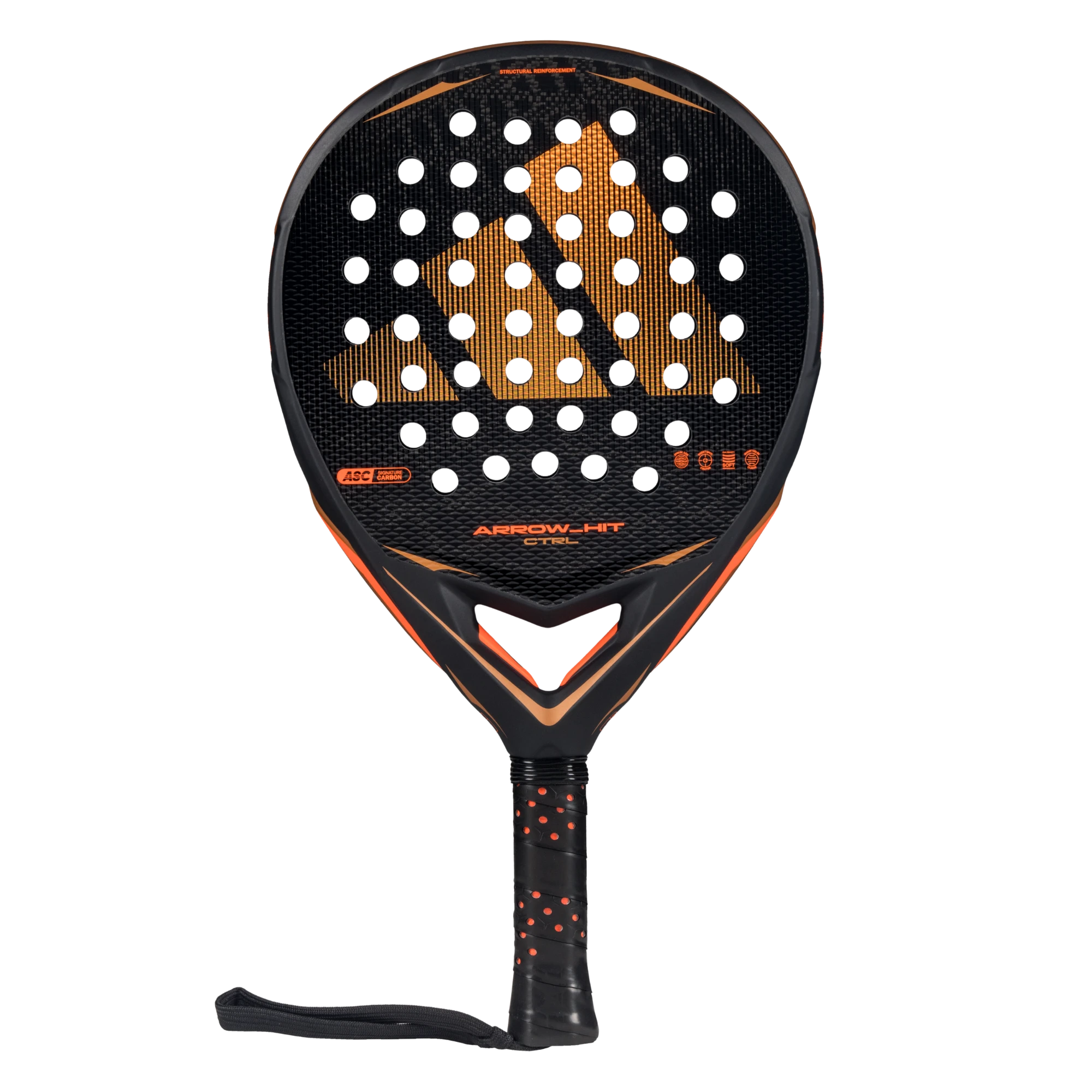
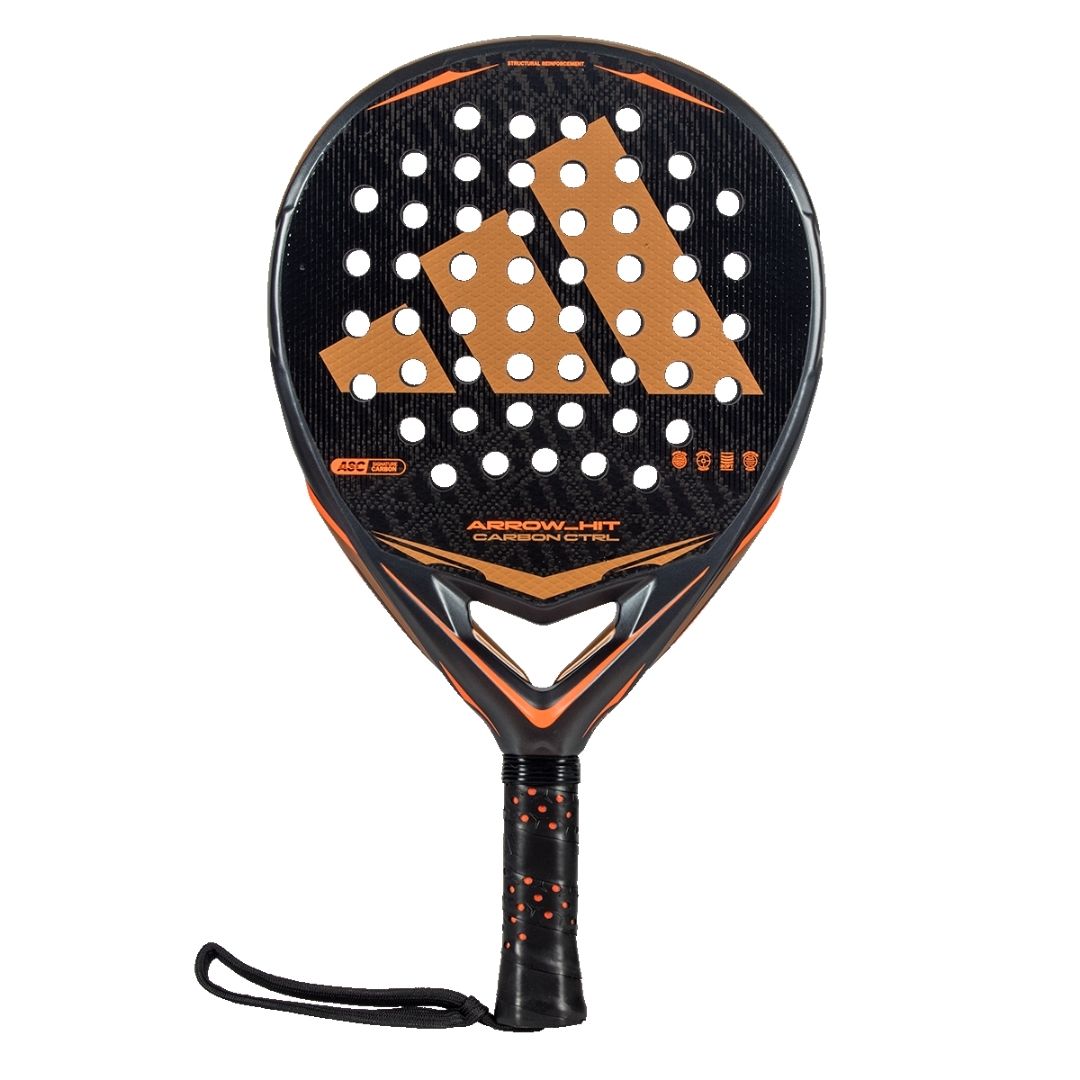
Against the Adidas Arrow Hit Carbon CTRL, the round control model in the same line, the CTRL is the better pure control racket with a far more forgiving sweet spot. Pick the CTRL if you build points and defend most of the match. Pick the Light if you want an offensive shape you can still defend with, and are willing to hit the middle of the face to earn it.
Research & References
Our mission is to help you choose the right padel racket with clear, in-depth reviews that make it easy to level up your game. We start with official specs, then break down each racket’s key properties. Finally, we bring together trusted video and written reviews—summarised into one consistent, easy-to-read overview.
Drafted by Padelguru from published expert reviews and on-court video tests, with Kaj Kloezeman's playing profile as an editorial lens, then reviewed and edited by Kaj Kloezeman. Nobody at Padelguru has play-tested this racket. Every on-court observation above comes from the sources listed.
Put the rackets you are considering side by side and keep the ones you play with in your collection.
Get the Padelguru app
Recommended for
Strong intermediate to advanced players, on either side of the court, who attack with hand speed and placement and want a diamond they can still defend with.
Skill level
High Intermediate, Advanced, High Advanced
Court position
Both sides, Net, Backcourt
Play style
Offensive, All-court, Counter-attacking, Balanced
Best at: Maneuverability (8.6/10)
Average: 8.2/10
Adidas Arrow Hit Light: Review In English, the perfect technical padel racket for Ari Sanchez
Review Adidas Arrow Hit LIGHT 2026: ¡VUELA!
Adidas ARROW HIT LIGHT: la pala che mancava?
Shape
Diamond
Weight
Light (341–355g)
Balance
Power-Oriented (Head-Heavy)
Touch
Medium Soft
Core
Soft Performance Eva
Surface
Asc Carbon With 3D Spin Blade Texture
Texture
3D Pattern
Year
2026
8 rackets with characteristics, performance and appeal close to the Adidas Arrow Hit Light Ari Sánchez 2026.
8.2Adidas · 2026
Precise ball placement with diamond shape
Less explosive on hard smashes than power-oriented diamonds
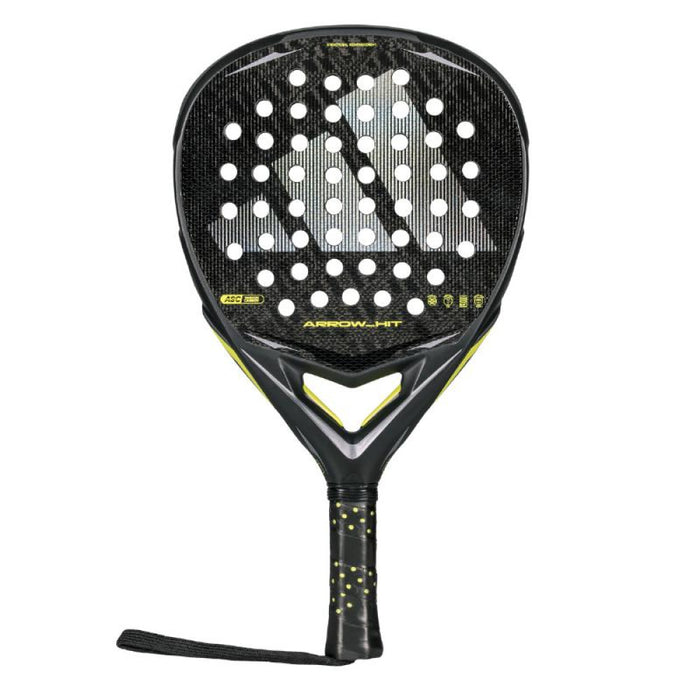 8.2
8.2Adidas · 2026
High ball exit for a diamond frame
Only works with the weights fitted
 7.5
7.5Adidas · 2026
Excellent ball feel and touch for a diamond shape
Smaller sweet spot versus the Metalbone CTRL at similar price
 8.5
8.5Adidas · 2026
Very wide, forgiving sweet spot
Limited explosive smash power vs harder options
 8.1
8.1Adidas · 2026
Very wide sweet spot for a round shape
Overheads demand full swing commitment
 7.8
7.8Adidas · 2026
Excellent maneuverability at the net
Limited smash authority vs heavier Metalbone models
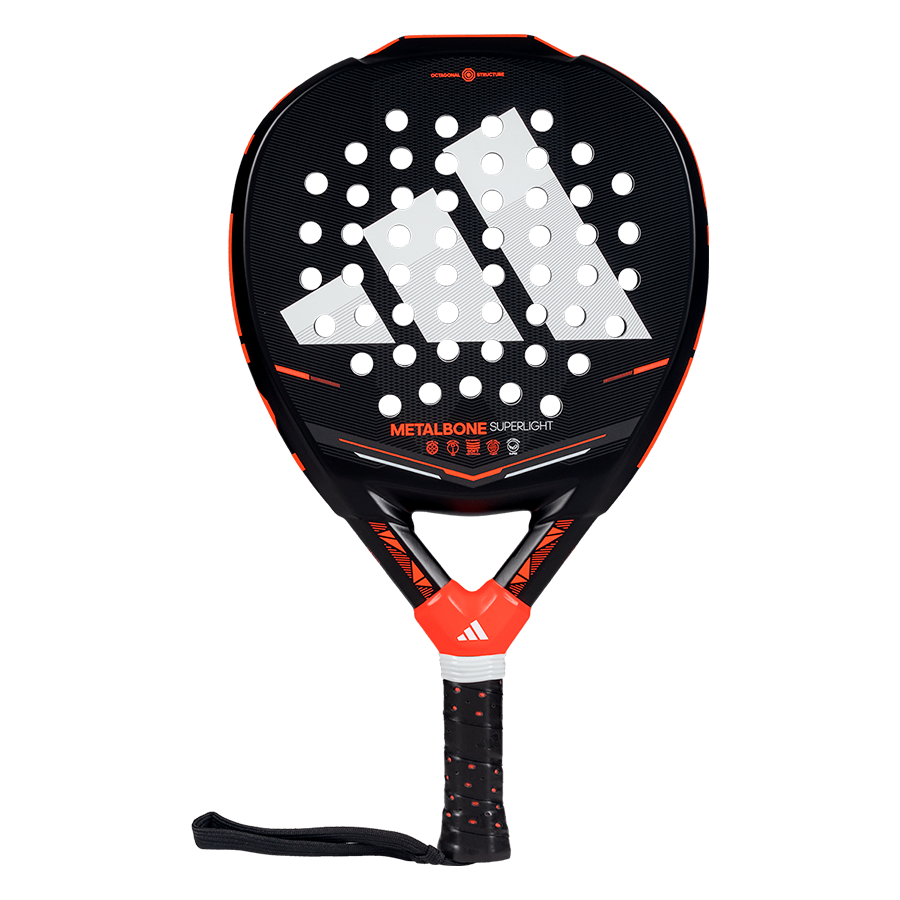 7.2
7.2Adidas · 2026
Outstanding maneuverability at the net
Limited feedback and spin for control-first players
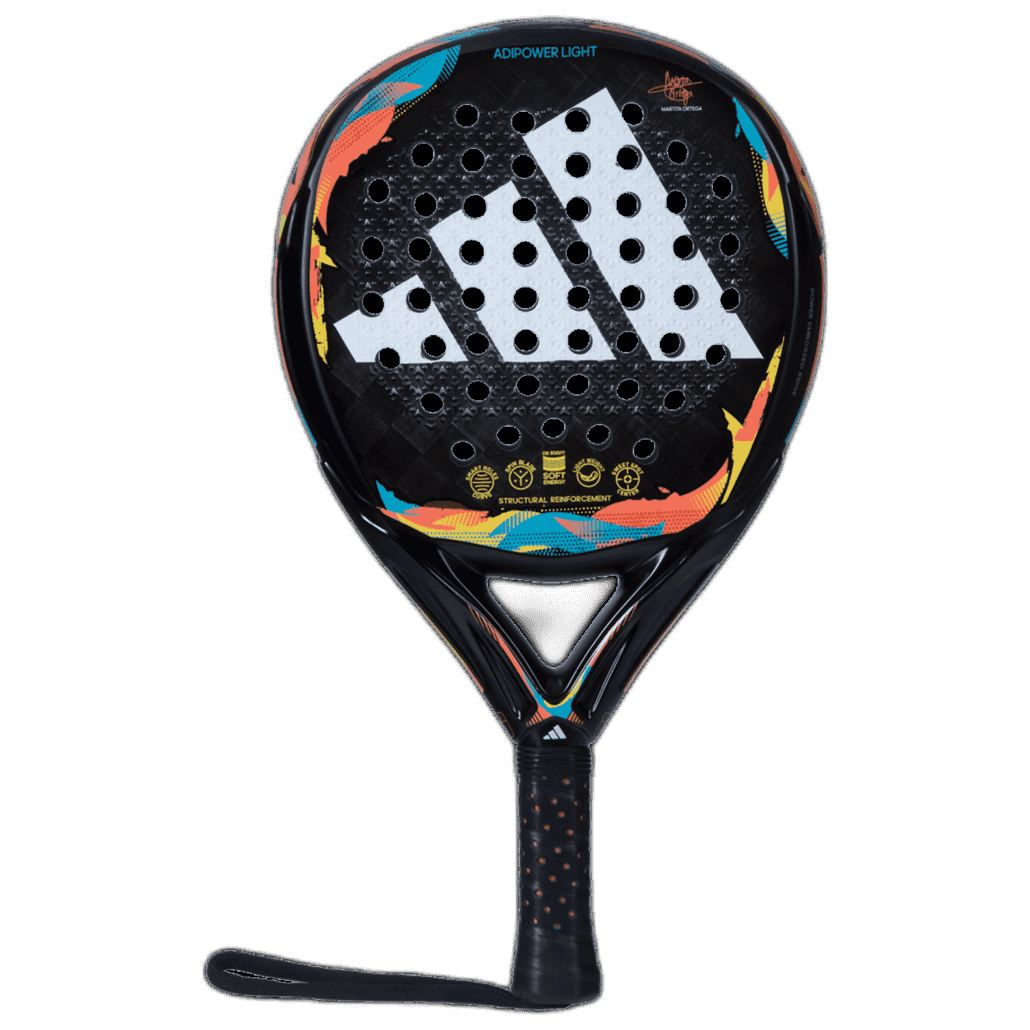 8.2
8.2Adidas · 2023
Exceptional maneuverability for quick reactions
Limited power output for aggressive shots
Want to explore more options?
Browse all rackets