
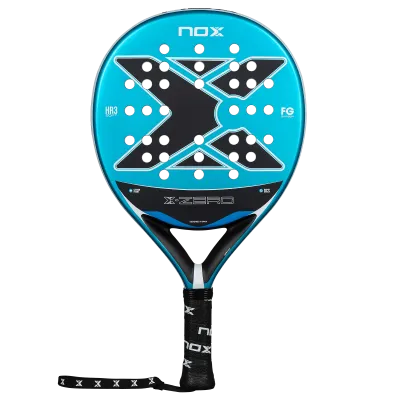
 6.5
Nox X-Zero Blue 2026
Nox · 2026
Forgiving on off-centre contact
Little help on smashes
BudgetBeginner
 7
The X-One 2026 keeps rallies alive, stays comfortable over long matches and now grips the ball well enough to learn slice. Buy it for your first year on court; skip it if you already finish points at the net. The fibreglass face mutes feedback and the power runs out early.

All-court player who prizes control, feel and spin
Bowe is convinced that the racket, shoes, court are the problem, never his own abilities.
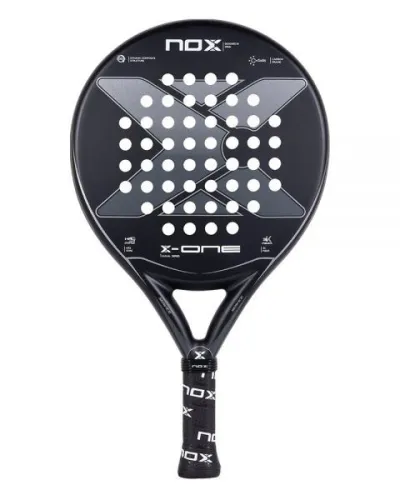
The Nox X-One is the racket many European clubs hand to new players, and the 2026 version is built for that job. It is a light, round racket of around 355 grams, with a carbon frame and 3K fibreglass faces over a soft HR3 White EVA core. Expect to pay 60 to 80 euros. Fibreglass flexes more than carbon, so the ball stays on the face a fraction longer and a mishit still clears the net instead of flying into the glass.
For 2026 the change is small. Nox gave the X-One a rough, sand textured finish and a new graphite colourway with holographic detail, but it plays in the same control class as the 2025 model. If you already own last season's X-One, there is no reason to upgrade. The rough surface is the part you notice on court: it gives a new player some grip the first time they try to cut under the ball.
What the Reviewers Say
The reviewers agree more than usual, because none of them claims the racket is more than it is. Padel Reference scores it 9 out of 10 for control and tolerance and 7 for power, and states its purpose plainly: "This is not a racket for crushing the ball, it is a racket for learning how to play." Its reviewer recommends it to anyone new to padel or coming back after years away.
The Padel Gang reach the same verdict and name the cost of all that help. The soft core and flexible face do so much of the work that you have to keep your hands quiet at the net, because a hard swing at a volley sends the ball long. In their view, the racket teaches you to rely on placement instead of force.
PadelStar is the most critical. Cristhian's review gives it 8.5 out of 10 and praises its durability and value, but says advanced players will want a racket that leans further towards power or control. He also notes that some owners expected an even wider sweet spot. That is the only point of disagreement: Padel Reference and most retailers call the hitting zone very generous, while PadelStar reports players who found it good but not exceptional.
Racketguide's spec sheet, verified by Nox, lists a medium balance, a 38 mm profile and a soft surface layer over a medium density HR3 core.
How it plays..
The X-One 2026 earns its reputation on forgiveness, not on feel. The sand finish is a real improvement and gives a new player grip for slice. The fibreglass face and soft core, though, dampen the feedback that tells you where on the face you made contact. Players who want to place the ball precisely will notice that muted response before they reach the power limit. As a first racket at this price, it is hard to beat.
Defense
Defence is where the X-One is strongest. The round head puts the sweet spot in the middle of the face, so balls taken late off the back glass still come off clean. The soft core absorbs pace instead of returning it, and blocks and resets land short and safe instead of sitting up for the net player. Lobs need a full swing to get depth, but they go where you aim them.
Attack
Attack is the limit. With an even balance and a flexible face, the racket adds little at contact, so the pace on a smash has to come from your swing. For a beginner that is useful, because wild overheads stay in. Once you hit a proper bandeja and want a víbora with bite, the X-One has nothing more to give.
Netplay
The light weight, sitting in the middle of the frame, brings the racket up quickly for reaction volleys. The catch is the one The Padel Gang describe: the face springs the ball back by itself, so a firm volley floats long. The X-One rewards a short punch and a soft hand, a good habit to learn early. The rough surface helps most on the bandeja, where you can cut across the ball without much racket head speed.
Our Advice for New Players
Buy it. Beginners are the players this racket was designed for, and it does the job better than almost anything at the price. The sweet spot covers early technique errors, the soft core keeps the arm comfortable through two hours of play, and the carbon frame with its reinforced junction to the face survives the knocks against the glass that every new player makes.
Our Advice for Intermediate Players
Only if you play control first and like long rallies. A low intermediate who wins points by keeping the ball in play and waiting for the error will still be well served. If you already finish points at the net or with a bandeja, the muted feel and the missing power will hold you back, and a racket one tier up is the better buy.
Competitive level
No. Every reviewer says the same, and they are right. The racket has too little stiffness for pace and too little feedback for precise shots at this level. Keep it as a spare or for guests, not for matches.
How It Compares
The Adidas Drive Blue 35 2026 is the closest rival: a round beginner racket at a similar entry price. The Drive has a smooth face, so choose the X-One if you want to start learning slice and spin this year. Choose the Drive if arm comfort and an easy, handle heavy swing matter more to you than surface grip.
The Adidas RX Series 2026 is the step up for players who expect to improve fast. A carbon insert in the frame adds stability the X-One does not have, which buys you another season before the racket holds you back. It costs more, and a complete beginner will not feel the difference.
Research & References
Our mission is to help you choose the right padel racket with clear, in-depth reviews that make it easy to level up your game. We start with official specs, then break down each racket’s key properties. Finally, we bring together trusted video and written reviews—summarised into one consistent, easy-to-read overview.
Written by Padelguru from the expert reviews listed above, with Bowe Frankema's playing profile as an editorial lens. Not play-tested. No video review of the 2026 model was available when this was written.
We review the rackets as they land. Get the new ones, the lessons we publish and what the creators are making, every other week.
Recommended for
Beginners and low intermediates who want a forgiving control racket for their first year, and players returning to padel with a sensitive arm or elbow.
Skill level
Court position
Both sides, Right, Backcourt
Play style
Control, Defensive, Tactical
Best at: Control (8.8/10)
Average: 7.0/10
Core
Hr3 White Eva
Surface
Carbon Fiber
Texture
Rough
Year
2026
8 rackets with characteristics, performance and appeal close to the NOX X-One 2026.
6.5Nox · 2026
Forgiving on off-centre contact
Little help on smashes
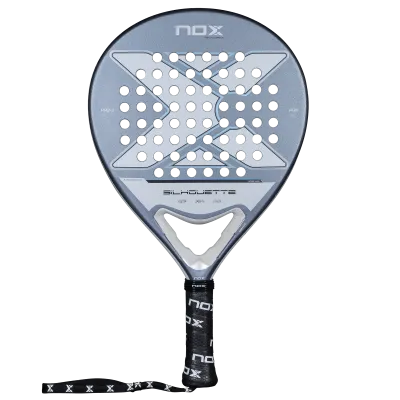 6.8
Nox · 2026
Very forgiving on off centre contact
Almost no power on smashes
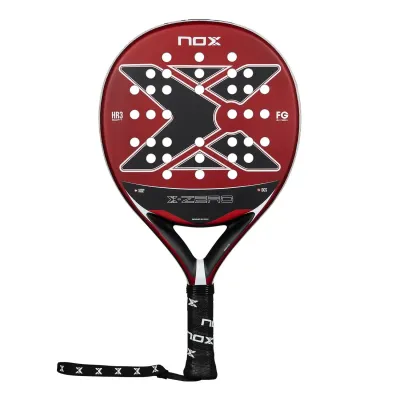 6.5
Nox · 2026
Very forgiving on off-centre contact
Almost no help on smashes
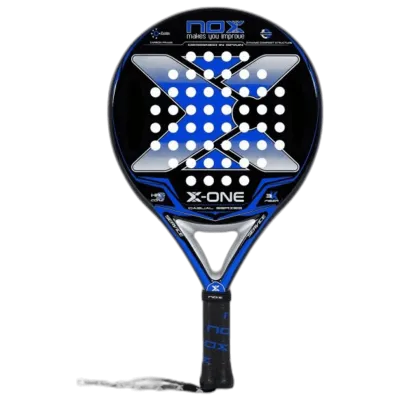 6.5
Nox · 2023
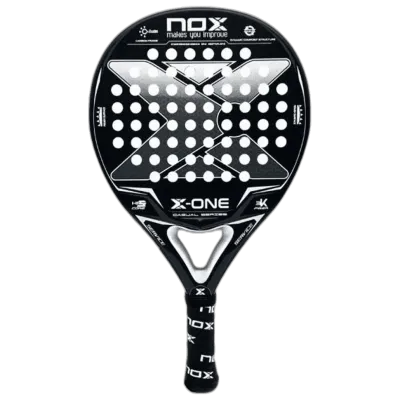
Excellent value for money
Limited power output
 8.2
Nox · 2023
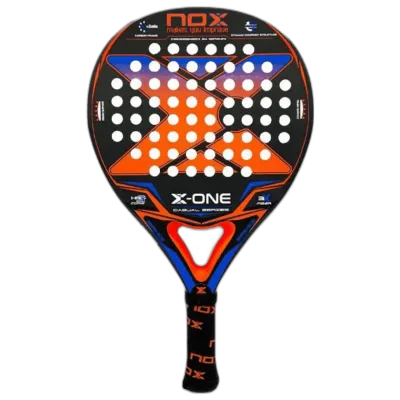
Exceptional control with 9/10 rating
Limited power potential for aggressive offensive play
 6.8
Nox · 2023
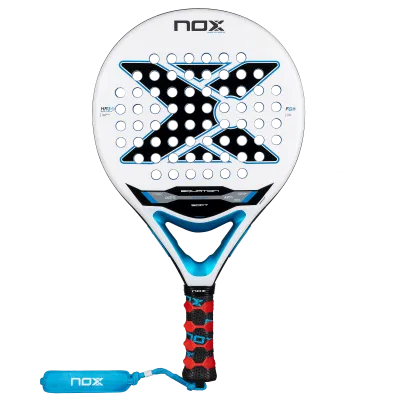
Large sweet spot for consistent play
Limited power potential
 6.8
Nox · 2023
Large sweet spot with forgiving round shape
Limited power output compared to advanced rackets
 7.5
Nox · 2026
Excellent control and placement
Limited power output for attacking players
Want to explore more options?
Browse all rackets